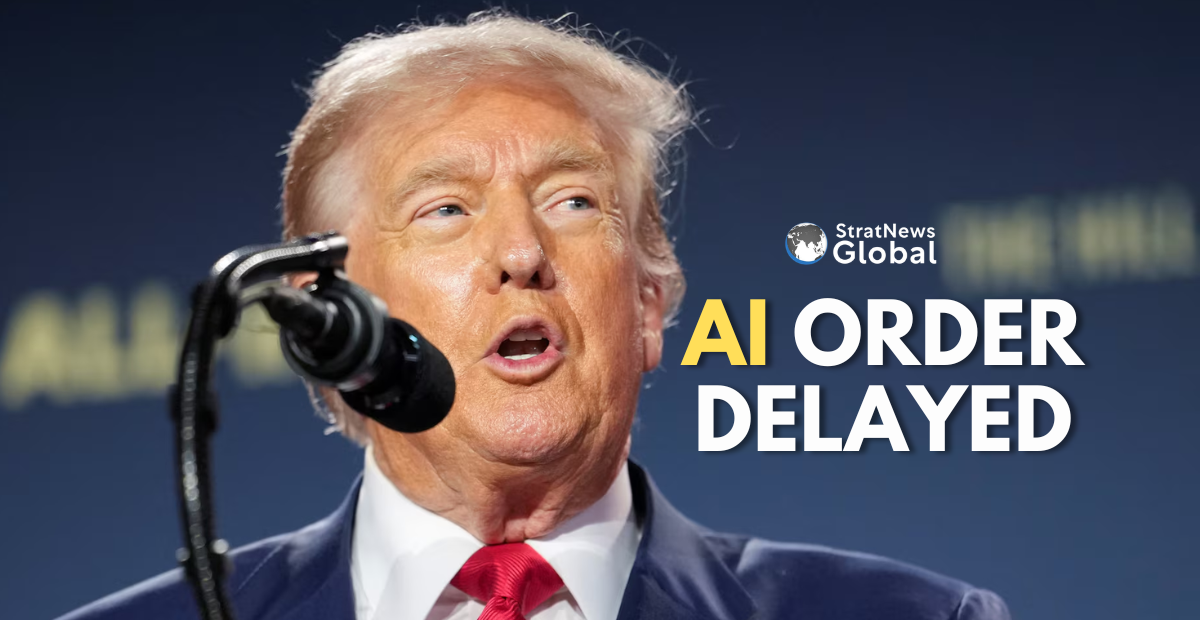
US President Donald Trump on Thursday said he had postponed signing a planned executive order on artificial intelligence, citing concerns that certain provisions could undermine America’s competitive position against China in advanced technology.
Trump was expected to sign the order at a White House ceremony attended by chief executives from major AI companies, but said he was dissatisfied with parts of the proposal.
“I think it gets in the way of, you know, we’re leading China, we’re leading everybody, and I don’t want to do anything that’s going to get in the way of that lead,” he told reporters in the Oval Office.
AI Oversight Plan Put on Hold
The proposed order would have created a voluntary framework requiring AI developers to consult the US government before the public release of advanced models. Sources familiar with the plan said it was intended to improve oversight of rapidly evolving AI systems.
However, Trump did not specify which sections he opposed, leaving the future of the policy uncertain.
Cybersecurity and Government Use of AI
The draft order also reportedly included plans for the US government to deploy advanced AI systems to strengthen cybersecurity across federal networks and critical infrastructure sectors, including banking and healthcare.
At the same time, concerns are growing within government and industry circles about the security risks posed by powerful AI models.
One example cited was Anthropic’s Anthropic model “Mythos”, which has been flagged as potentially capable of enabling more sophisticated cyberattacks, although some cybersecurity experts argue those risks may be overstated.
Industry Debate Over Regulation
Tech industry groups have warned that tighter oversight could slow innovation, delay product releases, or force companies to modify model behaviour in ways that reduce performance or profitability.
Trump, since returning to office, has generally taken a more business-friendly approach towards Big Tech compared with former President Joe Biden, while still facing pressure from some allies who argue that AI requires stronger safeguards.
Rising Stakes in the US–China AI Race
The pause reflects growing tension in Washington over how to balance AI regulation with global competition. Policymakers remain divided between prioritising innovation speed and addressing long-term security risks linked to frontier AI systems.
(with inputs from Reuters)