Pakistan’s efforts to translate its improved diplomatic ties with the Trump administration into economic assistance have been met with skepticism from economists, who argue that additional funding would do little to resolve the structural reforms Islamabad has long delayed.
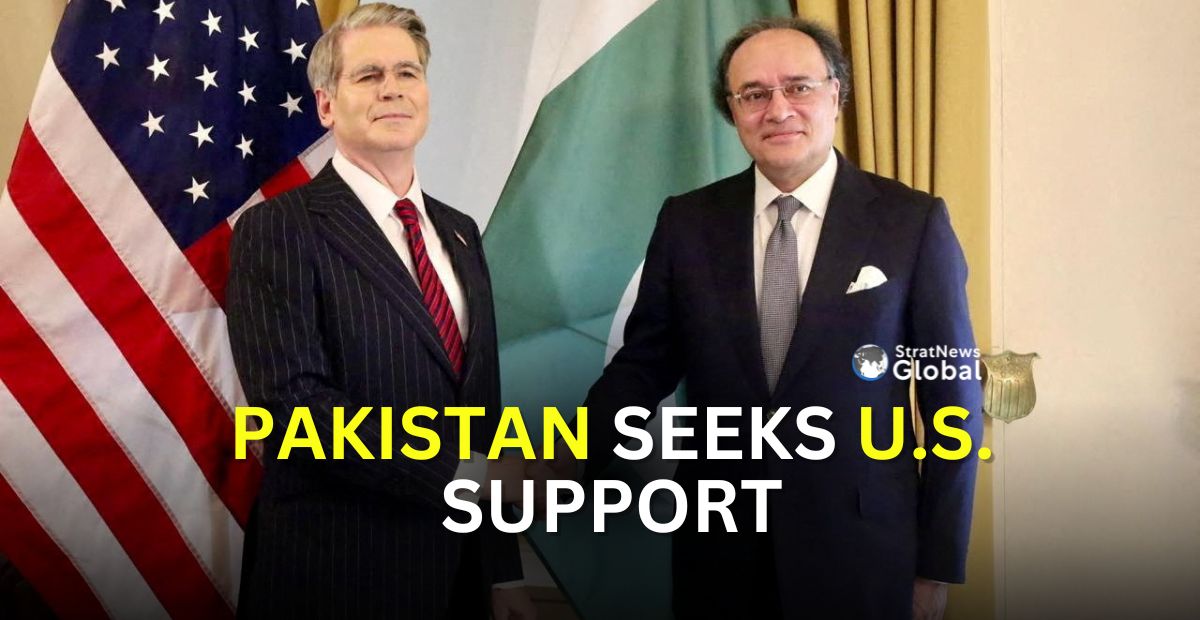
During Finance Minister Muhammad Aurangzeb’s visit to Washington this week, Pakistan sought a $10 billion U.S. exchange stabilization fund, Reuters reported, citing sources familiar with the matter who were not authorized to speak publicly.
Pakistan also proposed a separate trade-finance facility with the U.S. EXIM Bank to strengthen the rupee and reduce reliance on the IMF, China and Saudi Arabia, according to a source familiar with the matter.
Despite helping broker a U.S.-Iran ceasefire, Pakistan’s economic situation remains largely unchanged. After repaying $3.5 billion to the UAE, Islamabad relied on a $3 billion Saudi support package to shore up reserves.
Analysts say the financing could benefit Washington by expanding its role in Pakistan’s critical minerals sector, but critics question the deal’s economic value, calling it a reward for Pakistan’s geopolitical role rather than a solution to its structural problems.
‘Vital Cash Cushion’
IMF-backed reforms have begun showing results, with S&P Global Ratings upgrading Pakistan to ‘B’ from ‘B-’, citing improved fiscal and institutional conditions. However, the $7 billion IMF programme remains politically difficult due to tax hikes and spending cuts.
Analysts say a U.S. fund could provide Pakistan with a reserve cushion and reduce reliance on IMF, Chinese and Saudi financing. The EXIM Bank facility could also help U.S. exporters by allowing delayed payments.
Economists warn that new funding alone will not solve Pakistan’s problems. Without lasting reforms in taxation, energy and state-owned enterprises, the country will continue returning to the IMF. U.S. officials praised Pakistan’s reforms but did not confirm the $10 billion request.
Swap Talk
The structure of any Pakistan fund remains unclear. Experts say it would likely be a credit line rather than an upfront cash transfer, potentially backed by the U.S. Treasury’s Exchange Stabilization Fund.
However, some U.S. officials oppose the idea, arguing Pakistan has relied on IMF support for years without implementing enough reforms. Critics also question the size of the $10 billion request, saying it poses significant risks given Pakistan’s roughly $138 billion debt burden.
Not An Exit
China is unlikely to oppose U.S. support for Pakistan, as Beijing wants Islamabad stabilized but does not want to remain its only financial backer.
Analysts say a U.S. stabilization fund would not replace the IMF, which remains a key tool of American influence. Any U.S. funding would likely come with conditions to keep Pakistan in an IMF programme.
However, experts warn that additional reserves alone may only provide temporary relief without tackling the deeper economic issues behind Pakistan’s recurring financial crises.
(With inputs from Reuters)