Sri Lanka marked a grim anniversary on Thursday. On this day in July 1983, 13 Sri Lankan troops were ambushed and killed by guerrillas of the LTTE (Liberation Tigers of Tamil Eelam) in the northern part of the country. That set in motion a week long pogrom directed at the ethnic Tamil population by the majority ethnic Sinhalese.
A government commission in 2004 put the figure of the dead at 1,000 with 700,000 fleeing the country. The riots are seen as the catalyst that led to the rise of the LTTE and plunged the country into 26 years of civil war.
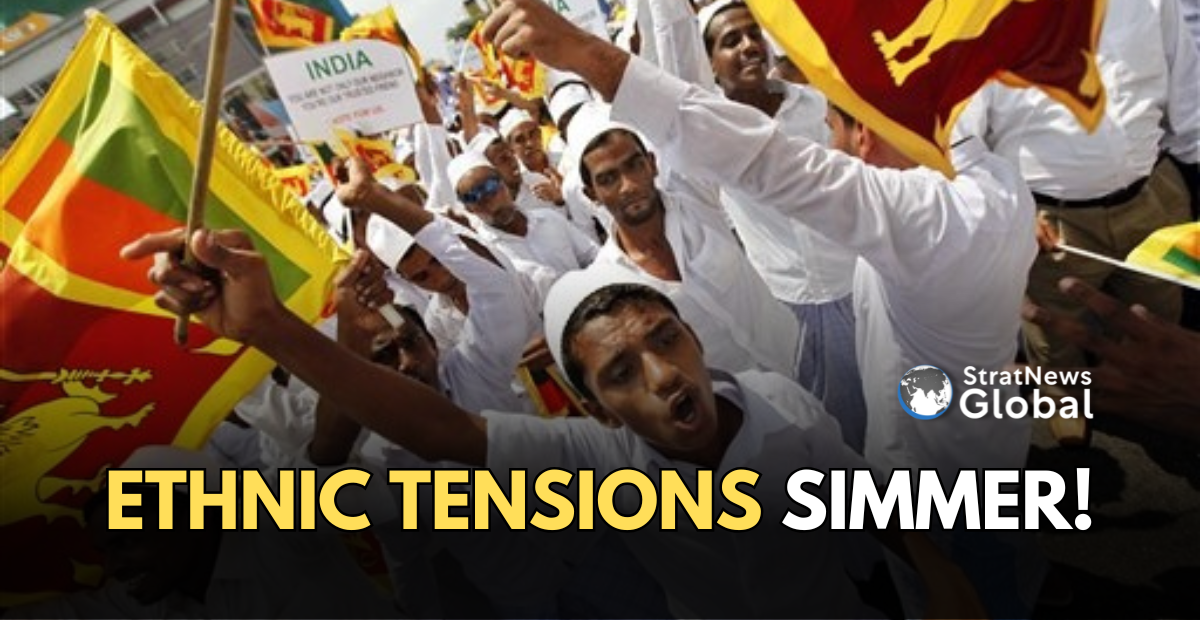
But so many years later, the issues that divided the country politically and precipitated civil war, appear to be coming back. Less than two years after the Marxist JVP (Janatha Vimukthi Peramuna) and its ally National People’s Power, swept to victory in the general elections, six parties representing ethnic Tamils and the Muslims have come together on a common platform.
Their demands are are not new: provincial council elections which the JVP had promised but is yet to deliver; repeal of the draconian Prevention of Terrorism Act; return of vast tracts of land in the north and the east owned by Tamils and Muslims but occupied by the military.
“This is a platform where Tamil-speaking parties can raise a common voice on issues that affect us all,” MA Sumanthiran, general secretary of the ITAK (Tamil Arasu Katchi) was quoted in an online journal The Federal as saying. “It is not an alliance. Each party is free to hold its own political views. But where there is common ground we will work together.”
Tamils constitute 15% of the population, Muslims 10%, not an insubstantial figure although dwarfed by the 74% Sinhalese. While nobody wants the ethnic conflict to return, the behaviour of the JVP is reviving another set of memories: in 1971 it led a bloody insurrection in Sri Lanka seeking to establish a Marxist dictatorship but failed. It tried once more in 1987 and failed again but today it is the ruling party.
According to an article in The Federal, despite their Marxist face and public commitment to equality, JVP leaders publicly pay their respects to Buddhist monks and show little urgency in tackling minority grievances.
At the same time, the JVP appears to have lost ground among the larger ethnic Sinhalese although it won the local body elections last year. Increasingly, the JVP leaders are seen as autocratic, lacking empathy. Pro-JVP media is also accusing the minorities of whipping up ethnic emotions to score political points.
As long as it does not go beyond name calling it’s fine. The point is Sri Lanka’s ethnic unity is fragile and while ethnic Sinhalese triumphalism after the LTTE’s defeat and the death of its leader Prabhakaran has been carefully muted, it may not require much to set it alight.