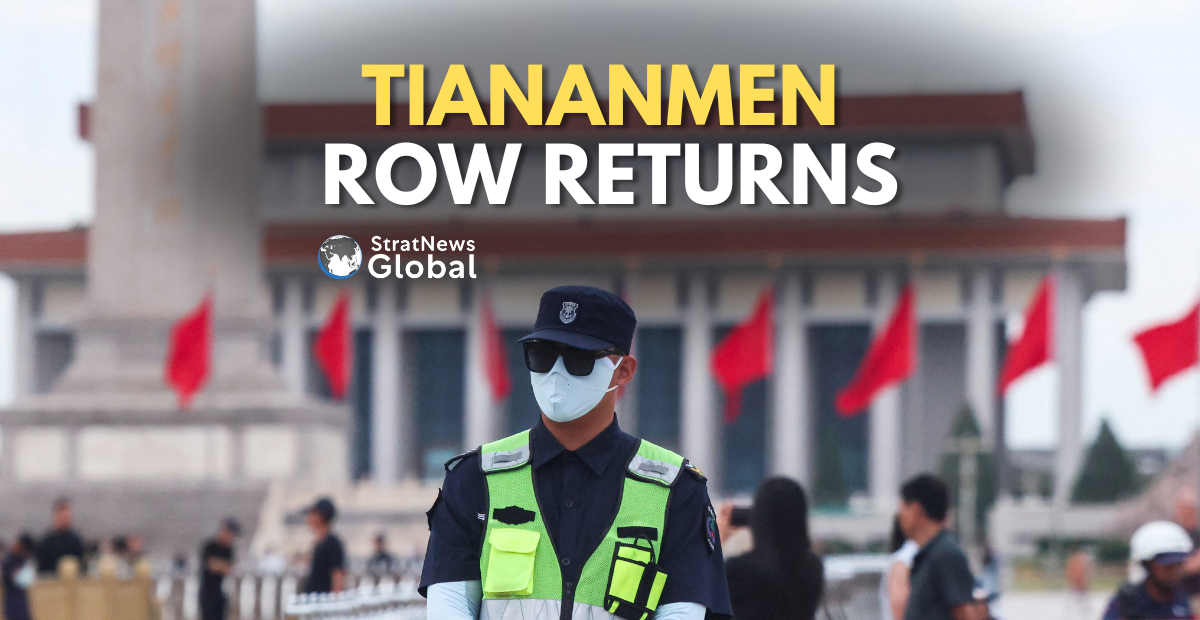
China on Thursday strongly criticised remarks by US Secretary of State Marco Rubio on the Tiananmen Square crackdown, calling them an attempt to “smear” China’s political system and interfere in its internal affairs.
The comments came after Rubio marked the 37th anniversary of the 1989 events, saying “no amount of censorship can erase the past” and paying tribute to those killed during the crackdown.
Beijing rejected the statement, with Foreign Ministry spokesperson Mao Ning saying China had long reached a “clear conclusion” on what it describes as the “political turmoil of the late 1980s”.
She accused the US of distorting historical facts and using human rights and democracy as a pretext to interfere in China’s domestic affairs.
What Happened In 1989
The Tiananmen protests began in April 1989, when students, workers and intellectuals gathered in Beijing and other cities calling for political reform, greater freedom of expression and action against corruption within the ruling system.
The demonstrations grew into a nationwide movement challenging the authority of the Chinese Communist Party.
On the night of 3–4 June 1989, the People’s Liberation Army moved into Beijing and used force to clear Tiananmen Square, with troops opening fire on civilians in surrounding areas.
China has never released a full official death toll, while rights groups estimate that casualties could range from hundreds to thousands.
Taiwan Responds, Calls For Truth
Separately, Taiwan President Lai Ching-te urged China to “face up to” the events of 1989, calling for truth, reconciliation and dialogue.
“China should acknowledge the truth, soothe the pain, and open the door to reconciliation,” he said in a Facebook post marking the anniversary.
Beijing’s Taiwan Affairs Office did not respond to his remarks. China, which views Taiwan as part of its territory, routinely labels Lai a “separatist” and has rejected his calls for talks.
Global Remembrance And Restrictions
Public remembrance of the crackdown remains strictly prohibited in mainland China, where discussion of the events is heavily censored.
In Hong Kong, once known for large-scale candlelight vigils in Victoria Park, public commemorations have been sharply curtailed following the introduction of a national security law in 2020.
Despite restrictions, vigils and memorial events continue in cities such as Taipei, London, Berlin and Sydney, organised by diaspora communities and human rights groups.
(with inputs from Reuters)