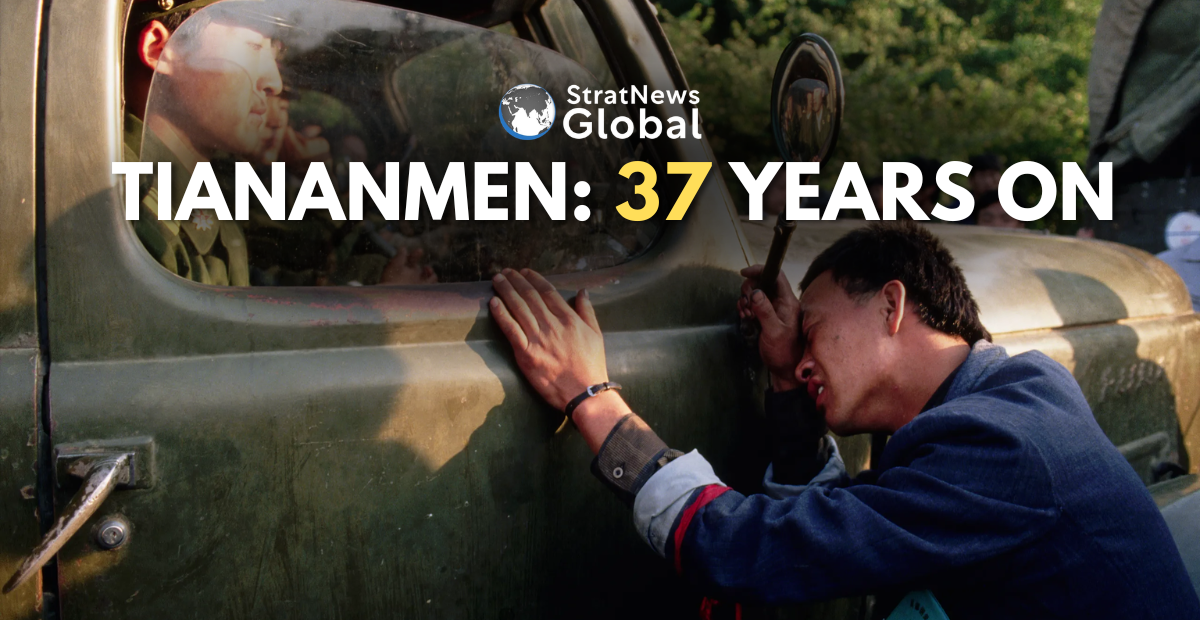
On the 37th anniversary of the Tiananmen Square crackdown, the United States, Taiwan and rights groups issued renewed calls for China to acknowledge the events of 1989, which remain heavily censored within the country.
Taiwan President Lai Ching-te said China should “acknowledge the truth” about what happened in Beijing on 4 June 1989.
“I sincerely hope that China can face up to the June 4 incident of 37 years ago, acknowledge the truth, soothe the pain, and open the door to reconciliation and dialogue,” he said in a Facebook post.
US Reiterates Criticism Of Crackdown
Separately, US Secretary of State Marco Rubio said Beijing “cannot erase memories” of the military assault on peaceful demonstrators.
In a statement marking the anniversary, Rubio said the world remembers “thousands of peaceful demonstrators” who gathered in and around Tiananmen Square to demand democratic reforms, freedom of expression and action against corruption.
“No amount of censorship can erase the past,” he said, adding that those who were killed would “be vindicated someday.”
His remarks follow a long-standing tradition of US officials marking the anniversary, often drawing sharp criticism from Beijing.
What Happened In 1989
According to rights groups and eyewitness accounts, the protests began in April 1989 when students in China, workers and intellectuals gathered in Beijing and other cities calling for political reform, transparency and an end to corruption within the ruling system.
The demonstrations grew into one of the largest political movements against the Chinese Communist Party.
On the night of 3–4 June 1989, the People’s Liberation Army moved into central Beijing and cleared Tiananmen Square, with troops opening fire on demonstrators and civilians.
The exact death toll remains unknown, with estimates from human rights groups ranging from hundreds to potentially thousands of victims.
Censorship And Memory Control
In China, references to the crackdown remain strictly censored. Public discussion, online references and commemorations are routinely blocked or removed.
According to Human Rights Watch, Beijing continues to tighten controls over historical memory while avoiding any official investigation or accountability for the killings.
In Hong Kong, once a major site for candlelight vigils, restrictions have sharply reduced public commemorations in recent years.
Global Commemorations Continue
While public remembrance has been suppressed in mainland China, events continue in cities such as Taipei, London, New York and Berlin, where diaspora communities and activists hold vigils and memorials.
In Washington, US lawmakers are expected to mark the anniversary with speeches, hearings and press briefings.
The anniversary comes amid broader US–China strategic tensions, even as diplomatic engagement continues under a fragile trade understanding between the two sides.
(with inputs from Reuters)