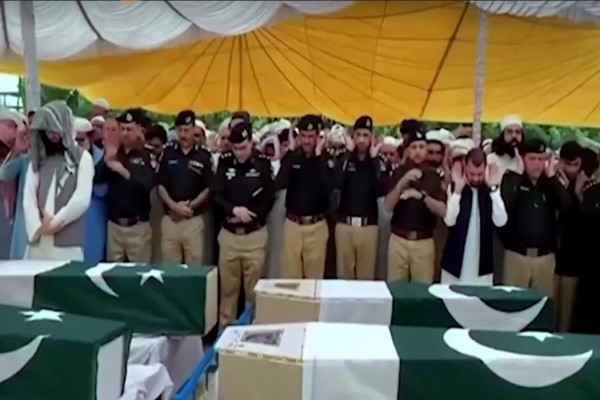
The recent New York Times article, “Why Pakistan and Afghanistan Are Still Fighting” (May 28), provides a useful account of the immediate security triggers behind renewed hostilities between Islamabad and Kabul.
However, by framing the crisis primarily as a dispute over cross-border militancy and the Taliban’s tolerance of Tehrik-e-Taliban Pakistan (TTP) sanctuaries, it overlooks the larger structural realities driving the confrontation.
This is not merely another episode of frontier instability.
It is the latest manifestation of a strategic rupture decades in the making, rooted in the unresolved legitimacy of the Durand Line, Pakistan’s failed assumptions regarding Taliban compliance, and the intensifying regional contest over Afghanistan’s post-American trajectory.
Pakistan’s security establishment long believed that the Taliban’s return to Kabul would restore strategic depth and produce a pliant western frontier. That assumption has now collapsed.
Today’s Taliban leadership has shown little inclination to formally legitimise the Durand Line as an international border while simultaneously resisting Pakistani pressure over internal Afghan decision-making. This reflects a broader Afghan nationalist impulse that transcends ideological affinities.
The issue, therefore, is not simply TTP sanctuaries. It is the failure of Pakistan’s decades-old effort to shape Afghanistan through coercive leverage.
The New York Times article also underplays the wider regional context.
Afghanistan today sits at the centre of a renewed Great Game involving competing, though often overlapping, interests among Russia, China, Iran, Pakistan and India.
One particularly significant geopolitical development omitted from much Western analysis is Russia’s formal recognition of the Islamic Emirate of Afghanistan in 2025, making Moscow the first and, thus far, only country to formally recognise the Taliban government. This was not an ideological endorsement but a calculated strategic decision reflecting Moscow’s security-first approach to Afghanistan.
China continues to view Afghanistan through the prism of Xinjiang security, concerns over extremist networks, access to critical minerals and potential connectivity through the Wakhan Corridor.
Iran remains focused on water security, particularly the Helmand basin, alongside border stabilisation and refugee management.
India, meanwhile, has quietly emerged as perhaps the most significant example of calibrated strategic re-engagement. Contrary to assumptions that New Delhi would remain constrained by the collapse of the previous Afghan Republic, India has steadily upgraded its engagement with Kabul through a series of deliberate diplomatic, political and humanitarian initiatives rooted in strategic realism rather than ideological accommodation.
The reopening of India’s diplomatic mission in Kabul marked the first major signal of this recalibration. What began in mid-2022 as a technical mission overseeing humanitarian coordination has gradually evolved into a significantly enhanced diplomatic presence. The appointment of a senior Indian representative with ambassadorial rank underscored New Delhi’s recognition that sustained engagement is indispensable to protecting India’s long-term strategic interests.
This was followed by a notable increase in formal political contacts. For the first time since the Taliban’s return to power, senior Taliban officials have engaged directly with Indian counterparts through high-level visits and structured diplomatic exchanges focused on trade facilitation, humanitarian coordination, regional connectivity, security concerns and the future of developmental cooperation.
These interactions are strategically significant. They demonstrate that India has moved beyond passive observation towards active, carefully calibrated engagement designed to preserve influence while avoiding premature political endorsement.
Equally important is Afghanistan’s diplomatic reactivation in New Delhi. The appointment of an Afghan charge d’affaires reflects Kabul’s recognition of India’s enduring strategic importance and restores a critical diplomatic channel independent of Pakistan’s strategic shadow.
This bilateral normalisation carries broader geopolitical implications. It reflects Kabul’s recognition that diversified external partnerships are essential if Afghanistan is to avoid excessive dependence on any single regional actor.
India’s engagement extends far beyond diplomacy. New Delhi has continued to provide substantial humanitarian assistance, including wheat supplies, medicines, vaccines, earthquake relief and technical support directed squarely at the Afghan people.
At the same time, India’s developmental legacy continues to generate considerable goodwill across Afghanistan. Few external powers can match India’s contributions: the Afghan Parliament building, the Salma Dam, transmission infrastructure, road networks, educational scholarships, healthcare cooperation, civil service training and institutional capacity-building.
These were not extractive investments. They were long-term contributions to Afghan state-building. That reservoir of trust provides India with a unique advantage in the evolving regional landscape.
India’s enhanced engagement is also linked to a larger geoeconomic vision. Despite disruptions affecting Chabahar Port, sanctions-related uncertainty and instability across the wider region, New Delhi continues to view Afghanistan as central to its long-term connectivity strategy linking South Asia with Central Asia and Eurasia.
Should regional conditions stabilise, India is well positioned to become a principal partner in rebuilding Afghanistan’s economic integration through Chabahar, the International North-South Transport Corridor and wider multimodal transit networks.
Unlike Pakistan’s security-centric approach, India’s model is based on trust, developmental partnership and strategic patience.
Another overlooked dimension is the paradox of Afghanistan’s financial resilience. Persistent reports of substantial weekly US dollar inflows have enabled unusual currency stability despite humanitarian distress affecting much of the population.
Afghanistan today is not being integrated into a stable regional order. It is being carefully managed as a geopolitical buffer.
The New York Times asks why Pakistan and Afghanistan are still fighting.
The more important question is why regional and global powers continue to manage Afghanistan through tactical crisis containment rather than constructing a durable political and economic compact.
India’s enhanced engagement offers one possible alternative: a long-term framework rooted not merely in threat mitigation but in regional integration and sovereign partnership.
Until the Durand Line dispute, regional connectivity deficits and Afghanistan’s political isolation are meaningfully addressed, these clashes will persist. What we are witnessing is not simply another border confrontation. It is the unfinished business of a century-old geopolitical fault line now unfolding in the shadow of a twenty-first century Great Game.