1988:
China faces rising economic instability, with inflation nearing 30%, triggering panic buying and public concern over economic mismanagement.
April 15, 1989:
Reformist Communist Party leader Hu Yaobang dies. His death becomes a catalyst for public grief and growing frustration over corruption, inequality and slow political reform.
April 17–April 27:
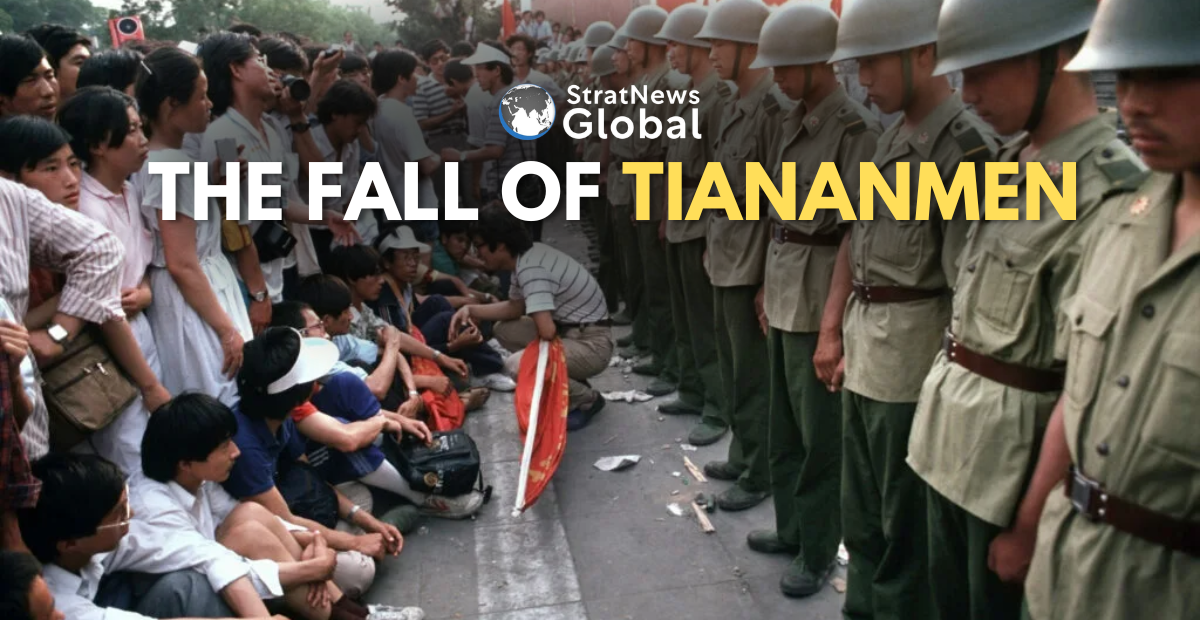
Student-led protests begin at Tiananmen Square in Beijing, quickly growing into mass demonstrations calling for democracy and reform. Attendance swells from tens of thousands to hundreds of thousands, with support spreading to other cities.
May 2–May 4:
Protests expand nationwide, including in Shanghai and other major cities, coinciding with the anniversary of the May Fourth Movement, a historic student-led reform campaign.
May 13:
Hundreds of students launch a hunger strike in Tiananmen Square, escalating the political standoff.
May 15–18:
Soviet leader Mikhail Gorbachev visits Beijing, but his arrival is overshadowed by mass protests that disrupt official ceremonies and draw global attention.
May 19:
Party General Secretary Zhao Ziyang visits protesters in Tiananmen Square. It is his final public appearance before being politically sidelined.
May 20:
The Chinese government declares martial law in parts of Beijing.
May 23–May 30:
Protests intensify, with large marches demanding political reform and leadership accountability. The iconic “Goddess of Democracy” statue is erected in Tiananmen Square.
May 31:
State-backed counter-demonstrations label protesters “traitorous bandits”.
June 3–June 4:
The People’s Liberation Army moves into Beijing, using force to clear Tiananmen Square. Troops open fire on civilians in surrounding areas during the early hours of June 4.
June 5:
The “Tank Man” incident occurs, becoming a global symbol of resistance.
June 6:
Chinese authorities report approximately 300 deaths, though rights groups and witnesses estimate significantly higher casualties, potentially in the thousands.
June 9:
Chinese leader Deng Xiaoping publicly supports the military response and blames “counter-revolutionary” forces for the unrest.
(with inputs from Reuters)