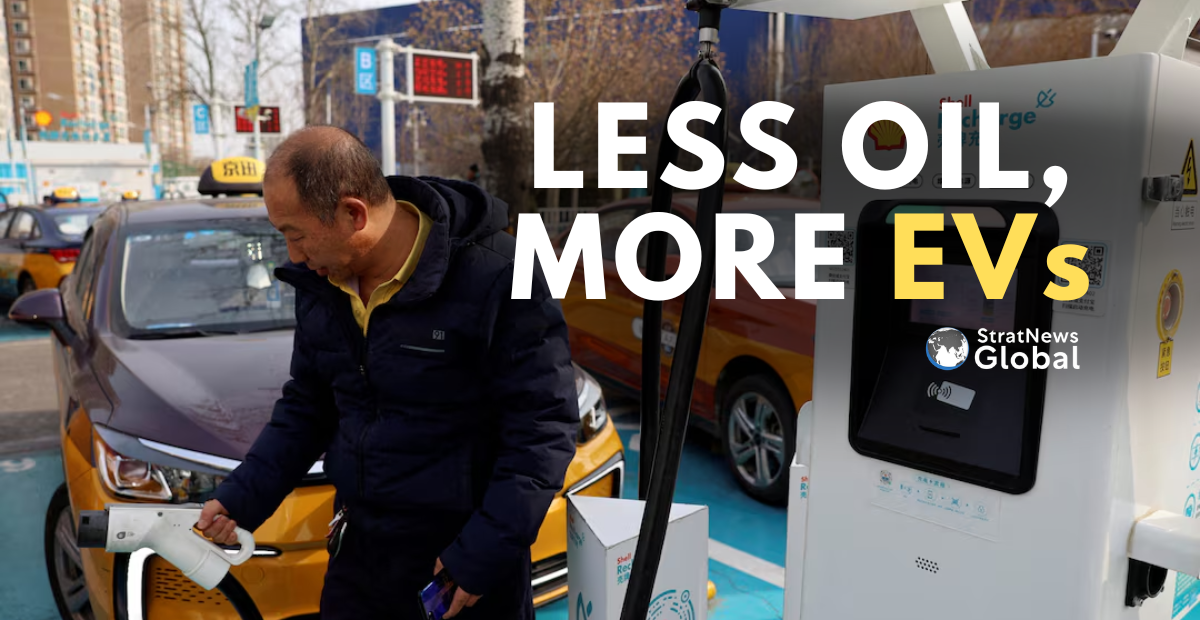
China’s rapidly growing fleet of electric taxis is becoming an unexpected buffer against global oil price shocks, helping the world’s second-largest economy reduce its dependence on petrol even as geopolitical tensions push fuel prices higher.
Across Chinese cities, taxi and ride-hailing services are witnessing strong demand. Government data shows passengers took 3.05 billion trips in May, with rides increasing by 6% since the Iran conflict escalated at the end of February compared with the same period last year.
Cheap EV Rides Attract More Passengers
Unlike petrol-powered transport, fares for electric taxis have continued to fall despite rising fuel prices.
Analysts say a sluggish job market has pushed more drivers into ride-hailing platforms, while inexpensive electric vehicles have lowered operating costs, allowing drivers to keep fares competitive.
A part-time ride-hailing driver in Beijing told Reuters that fares have dropped by 10% to 15% over the past six months because of intense competition.
Meanwhile, many motorists are choosing taxis instead of driving their own petrol vehicles.
Chinese social media users have increasingly shared that taking an electric taxi is now cheaper than paying for fuel and parking.
China’s Transport Is Becoming Less Dependent On Oil
The shift reflects China’s accelerating transition towards electric mobility.
According to the Ministry of Transport, around half of China’s 1.3 million taxis are now fully electric, while in many major cities the share is close to 100%.
Ride-hailing giant Didi said it added another 2 million hybrid and electric vehicles last year, taking its non-fossil-fuel fleet to 8 million vehicles. Electric vehicles now account for roughly 75% of all mileage on the platform.
As a result, China consumed 10% less petrol and 14% less diesel in May compared with a year earlier, despite increases in road freight and record travel during the May Day holiday.
Oil Imports Continue To Fall
The growing use of electric vehicles is also reshaping China’s energy imports.
China’s oil imports fell 41% in June compared with the same month last year, reducing pressure on global crude markets without requiring large releases from strategic reserves.
Analysts believe China’s increasing electrification has made the country structurally less vulnerable to disruptions such as potential supply interruptions through the Strait of Hormuz.
J.P. Morgan said recent geopolitical tensions may have accelerated behavioural changes that were already underway, leaving China’s transport sector less dependent on oil than many market participants had assumed.
EV Transition Still Gathering Pace
Environmental groups expect the trend to continue.
Greenpeace forecasts that 90% of taxi and ride-hailing mileage in China will be electric by 2035, further reducing demand for transport fuels.
While lower petrol prices could encourage some hybrid vehicle owners to buy more fuel, analysts expect China’s long-term gasoline demand to continue declining as electric mobility becomes increasingly dominant.
For China, the country’s expanding EV taxi network is emerging as more than just a transport success—it is becoming an important economic buffer against volatile global energy markets.
(with inputs from Reuters)