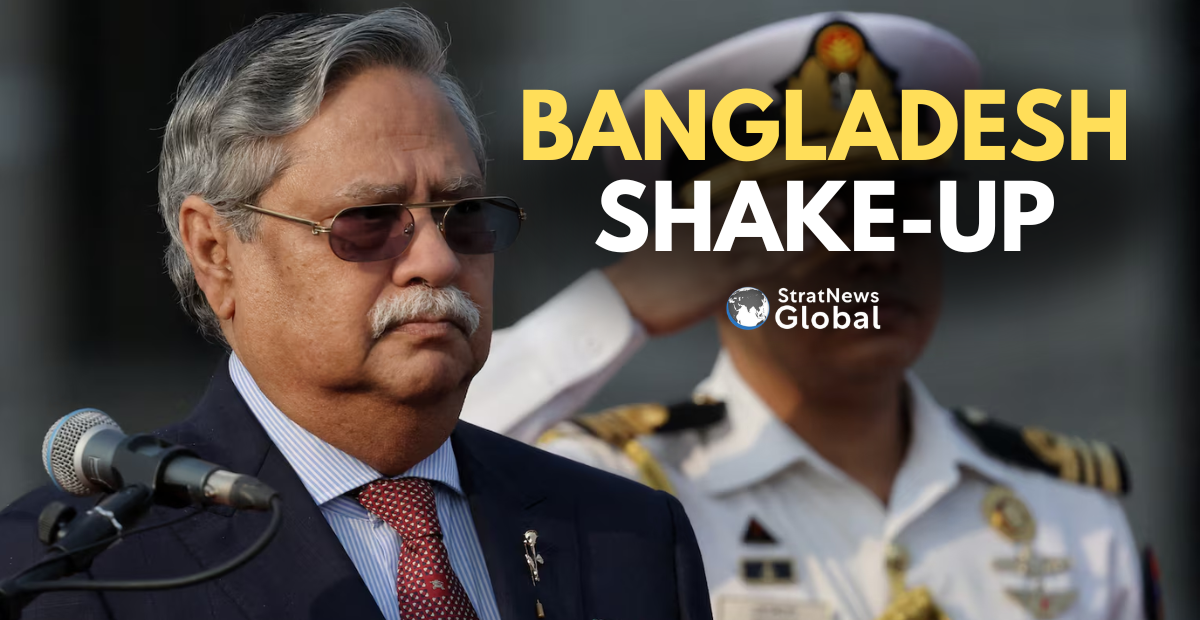
Bangladesh President Mohammed Shahabuddin will resign on Friday, according to his spokesperson, days after former prime minister Sheikh Hasina announced plans to return from exile and surrender following her conviction by a war crimes tribunal.
Shahabuddin’s departure removes one of Hasina’s last remaining allies from high office, just months before her planned return. The former premier’s Awami League has been banned, while many of its leaders and activists have been arrested or forced into hiding since the student-led uprising that toppled her government in 2024.
While the president’s office did not give an official reason for his resignation, three sources familiar with the matter told Reuters that the government had urged Shahabuddin to step down because of his close association with Hasina after she revealed in an interview with Reuters that she intended to return to Bangladesh.
The development comes as the government of Prime Minister Tarique Rahman faces growing political pressure following Hasina’s announcement that she plans to return from India around December and surrender before the courts.
“According to the Constitution, the president’s resignation becomes effective upon submission of a signed letter to the speaker,” Shahabuddin’s press secretary, Sarwar Alam, told Reuters.
“The president will tender his resignation once the speaker returns from Thailand tomorrow,” he added.
Under Bangladesh’s Constitution, the parliamentary speaker will automatically assume the role of acting president until a new head of state is elected.
Hasina’s Return Looms
Hasina’s planned return is expected to test the stability of Bangladesh, a nation of 173 million people and one of the world’s largest garment exporters, after nearly two years of political turmoil.
Last November, Bangladesh’s war crimes tribunal sentenced Hasina to death in absentia for allegedly ordering the violent crackdown on the 2024 uprising. A United Nations report estimated that nearly 1,400 people were killed during the unrest. Hasina has denied the charges.
Her decision to return has intensified calls within Bangladesh to remove the last remaining officials perceived to be loyal to her administration.
Pressure on Shahabuddin
Although the presidency is largely ceremonial, the office assumed greater significance after Hasina fled to India in August 2024, leaving a political vacuum during the country’s transition.
Shahabuddin, 76, was elected unopposed in 2023 as the Awami League’s nominee for a five-year term.
According to one of the sources, he informed Prime Minister Rahman of his decision to resign on Tuesday. All three sources spoke to Reuters on condition of anonymity due to the sensitivity of the matter.
Shahabuddin did not respond to requests for comment. However, in an interview with Reuters in December, he had said he intended to resign after the February election, claiming he had been sidelined by the interim administration that replaced Hasina’s government following the uprising.
Despite the ban on the Awami League, Hasina remains a significant political figure with pockets of support across Bangladesh. Her expected return later this year is likely to become one of the biggest political developments since her removal from power and could reshape the country’s political landscape once again.
(with input from Reuters)