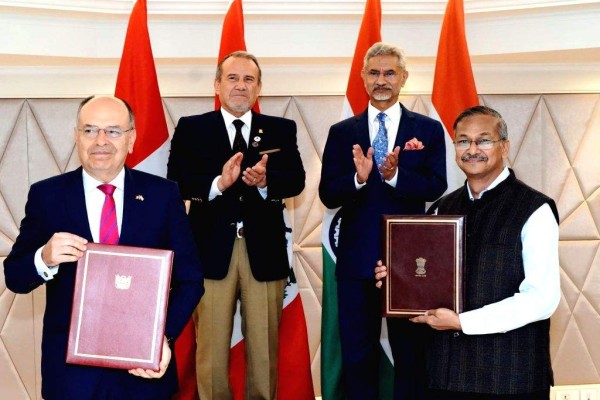
In less than a month from now, Lima capital of Peru, will host the 27th World Mining Congress. The cream of India’s mining community is expected to attend including major Indian state-run mining and metal companies. It reflects India’s need to secure long-term mineral partnerships as geopolitical competition over resource security intensifies.
Unlike traditional energy geopolitics centred around oil, the next phase of strategic competition will revolve around critical minerals. Copper will determine who can build power grids and EV infrastructure at scale. Lithium will shape battery manufacturing dominance. Rare earths will influence electronics, aerospace and defence supply chains.
Peru sits at the intersection of all three. It already ranks among the world’s largest copper and silver producers, but its untapped lithium potential is drawing attention. The Falchani lithium reserve in south east Peru, believed to be among the largest hard-rock deposits globally, is expected to produce 63,000 tons of lithium concentrate every year over its 33 year lifespan.
Indian officials indicated they want dedicated provisions related to critical minerals, investment protections and long-term supply arrangements, in any trade deal. India is looking at Peru as a strategic supply-chain partner and Peru too, sees an opportunity.
India offers a large and expanding market without some of the geopolitical baggage associated with major-power competition elsewhere.
Peru’s Ambassador Javier Manuel Paulinich told StratNewsGlobal that the evolving relationship is one built on “shared opportunities” in clean energy, technology and industrial cooperation.
Indian firms are showing interest not only in sourcing minerals, but also in participating in extraction, logistics and processing infrastructure. Discussions around ports, transport corridors and refining capacity suggest that future India-Peru cooperation may extend far beyond mining alone.
Peru needs capital, technology partnerships and diversified export destinations. India needs secure access to raw materials to sustain industrial growth and energy transition targets. That convergence is becoming increasingly important as the world enters what many analysts describe as a “critical minerals race.”
Demand for copper alone is expected to surge over the next decade as countries expand renewable energy systems, transmission networks and electric vehicle production. South America’s copper belt, led by Chile and Peru, is therefore emerging as one of the most strategically contested economic regions globally.
The Adani Group has established a branch in Peru because there is interest in copper, and Birla is also planning a delegation.