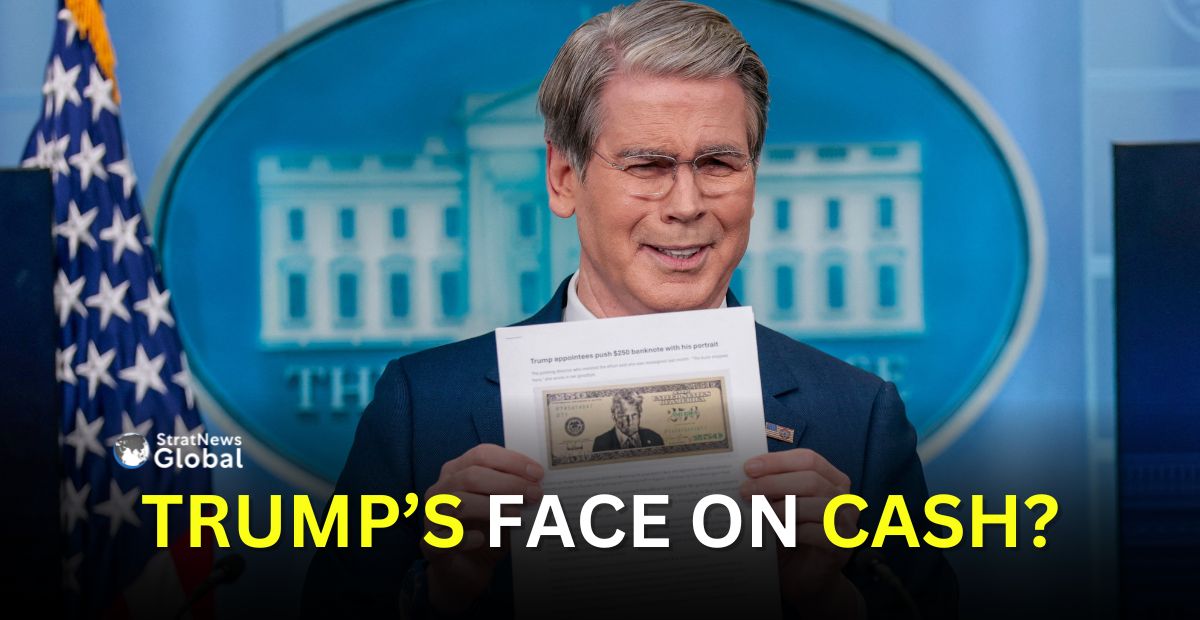
As the United States gears up to celebrate its 250th anniversary this year, a proposal to place President Donald Trump’s face on a new $250 banknote is stirring debate in Washington and beyond.
According to reports from The Washington Post and ABC News, Treasury Department appointees urged the Bureau of Engraving and Printing to begin preparing mock-up designs for the commemorative note ahead of the United States’ 250th anniversary celebrations.
Supporters Call It a Tribute
Treasury Secretary Scott Bessent confirmed on Thursday that the department has already prepared designs for the proposed note, though he stressed that Congress would first need to approve legislation allowing such a move.
The initiative is linked to legislation introduced by Republican Congressman Joe Wilson of South Carolina, who first proposed the idea in 2025 as a tribute to Trump and the nation’s semi-quincentennial celebrations.
Yet the idea has gained attention as preparations ramp up for America’s 250th birthday celebrations in 2026.
Critics Raise Concerns
Critics, however, argue that putting a sitting president on currency would break with a longstanding American tradition designed to avoid the kind of personality cults often associated with authoritarian governments.
The effort has reportedly caused friction within the Treasury Department. Patricia Solimene, the former director of the Bureau of Engraving and Printing, repeatedly warned officials about legal and procedural barriers before being reassigned from her role last month, a move that drew scrutiny from critics who questioned whether internal objections were being sidelined.
The proposal arrives at a time when Trump remains one of the most polarizing figures in American politics.
For supporters, a commemorative banknote would be a fitting tribute to a president they believe reshaped the country’s political landscape. For opponents, it raises broader concerns about the politicization of national symbols and institutions.
Whether the idea ultimately becomes reality remains uncertain. Congress would need to approve both a new denomination and an exception to existing law.
(With inputs from agencies)