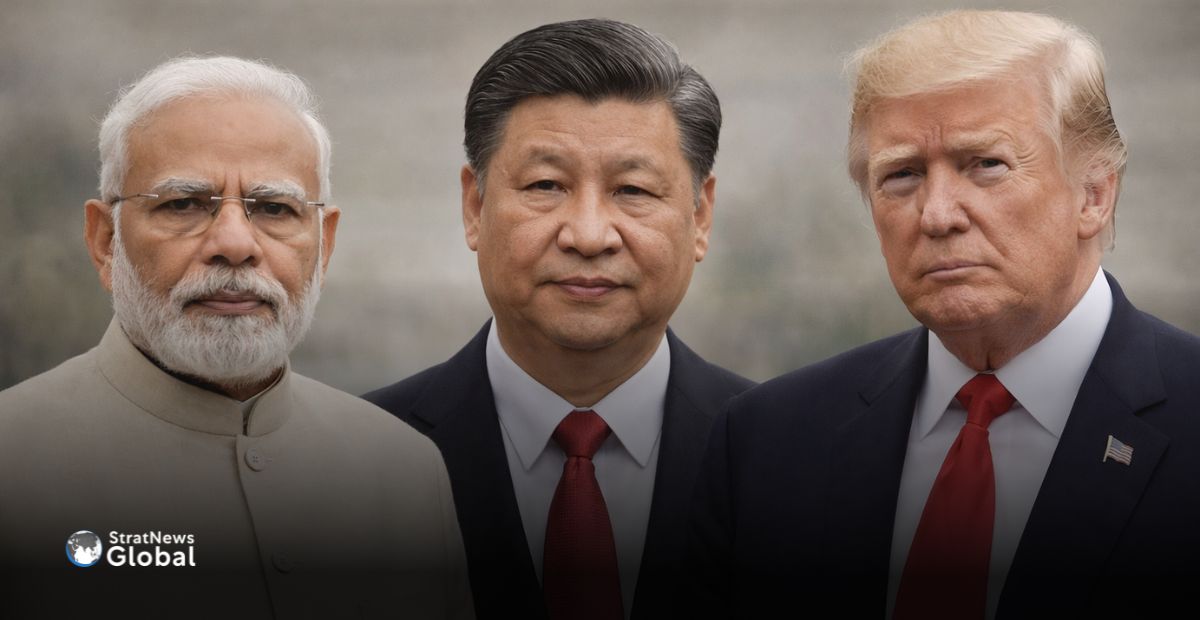
India needs a strategy that takes advantage of the growing China-US competition, says Kanti Bajpai, visiting professor of international relations at Ashoka University.
Speaking on China-US Competition and India’s Security at an event hosted by CSEP in Delhi, Bajpai argued “While the conventional position is that China-US competition is bad for Indian security, in fact there is a case to be made that it’s also good for Indian security.”
“China-US competition might actually be positive for conceptions of Indian autonomy and also for societal safety and welfare. So, oddly enough, competition might be in our interest,” he said.
“I call this ‘Ugly Balancing’ – It’s ugly because you’re stoking competition. India has an incentive to stoke the competition up to a point but it also has very strong incentive to cope, to mitigate the costs to itself.”
Bajpai said India stands to benefit from such a competition because it “strengthens India’s bargaining position by the threat of defection. Meaning India would tilt fairly decisively to one side or the other and the promise or the threat that it could do so increases its bargaining position with the other side.”
Whispering Campaign
According to Bajpai, India can also resort to a certain tactic, which he labelled as “diplomatic whispering campaign.”
“It seems to me India is too weak to coerce or bind China and the US in a wedging strategy. But India can try to drive a wedge up to a point between the two by what I call a kind of diplomatic whispering campaign, mischief making – intentionally trying to make the two sides suspicious of each other, their motives, their moves, where they are… Can the Chinese trust the Americans or vice versa? Bring up historical betrayals in this whispering campaign.”
He suggested that in order to maintain its own strategic posturing, India might assure both China as well as the US, when it comes to a conflict or a war like situation.
“We have our bilateral quarrel with the Chinese and if they’re in a real confrontation with the Americans, including a nuclear one they may be looking sideways to their west at India for what India might do. What its nuclear stance might be and what we may be doing on the border or in the maritime domain,” he underscored.
“And so it seems to me that coping with China, the more kind of sinister part of that [i.e. threat of China-US war], would require us to be reassuring to both sides that we won’t get involved, perhaps also to the Americans if they fear — it’s a structural argument but if we want to go beyond today — that we may just come out on the side of China…”