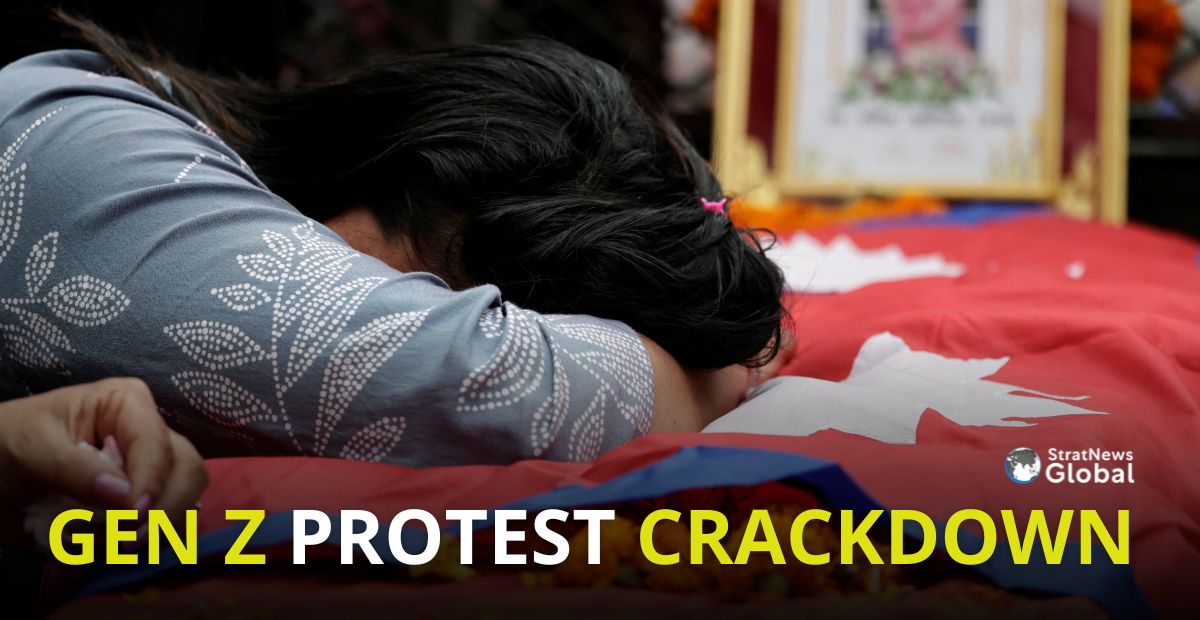
Former Nepal prime minister KP Oli has been held responsible for the loss of lives and damage to property during the Gen Z uprisings last year. The Kathmandu Post reports that the National Human Rights Commission (NHRC) after six months of investigation, concluded that the Oli government failed to anticipate the scale of the demonstrations.
A report was presented to the commission chairperson Top Bahadur Magar, on Friday. A separate inquiry into the loss of lives in the Gen Z protests was also formally submitted to the interim Prime Minister Sushila Karki. The report is expected to be made public soon, Kathmandu Post reported.
The NHRC report recommends action against the then-home minister Ramesh Lekhak, then-police chief Chandra Kuber Khapung, then-Kathmandu chief district officer Chhabi Rijal, among others. Investigation of incumbent police chief Dan Bahadur Karki was also recommended.
The commission also found that the National Security Council (NSC), led by the PM, and the Central Security Committee (CSC), led by the Home Minister, failed to carry out their duties which resulted in loss of lives.
During its investigation, the commission recorded statements from 90 individuals, including then-prime minister KP Sharma Oli, then home minister Ramesh Lekhak, and other members of NSC, CSC, and Kathmandu District Security Committee.
It also took statements from then Kathmandu mayor Balendra Shah and Rastriya Swatantra Party (RSP) chair Rabi Lamichhane. While the Chief of the Army Staff was asked to appear, a major general attended on behalf of the military.
In addition, the probe committee consulted 586 others, including protesters and victims. It examined the deployment of security forces, accountability mechanisms, and reviewed around 400 videos as part of its analysis.
The commission also studied forensic evidence to assess how bullets were fired and whether the use of lethal force was justified, focusing closely on the circumstances surrounding the September 8 incident.
According to an official, “The protest was peaceful on the morning of the first day. However, excessive use of force against the demonstrators in the afternoon turned the situation violent”.
(With inputs from agency)