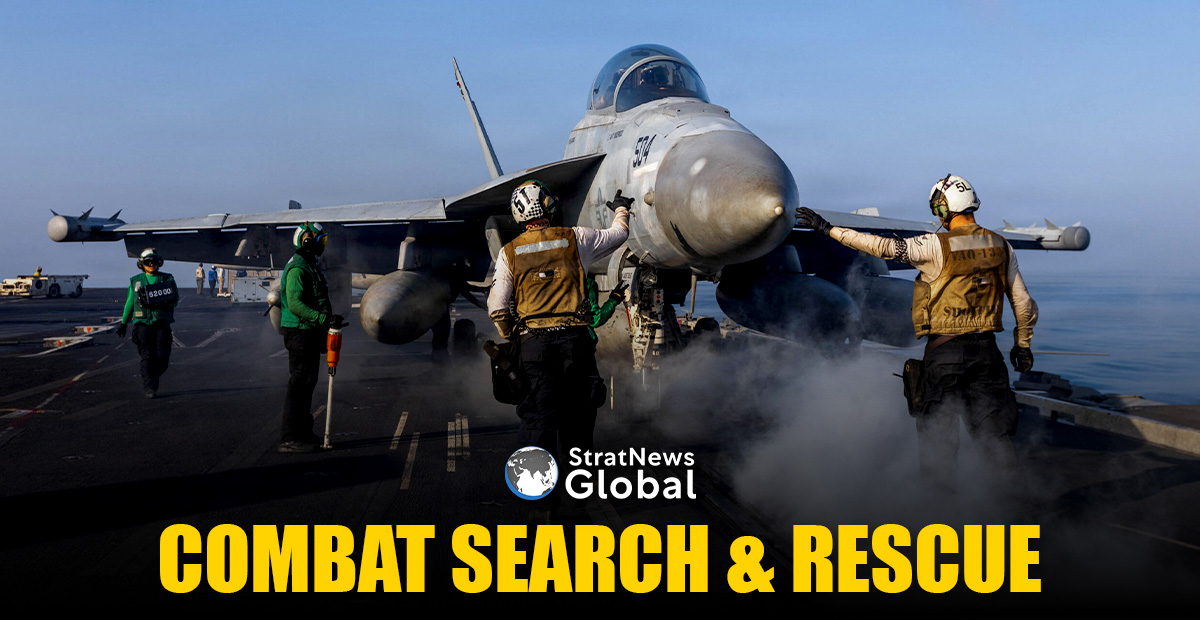
The dramatic circumstances in which a downed US airman was rescued from deep inside Iran will probably result in a film one day. But the point which stands out is the resources the US committed to getting its man out:
From special operations personnel to sophisticated Black Hawk helicopters and C-130 transport aircraft. Add to that airborne equipment and space satellites that kept tabs on the pilot, his movement and the danger posed by armed Iranian search parties hunting for the pilot.
Where does India stand in this regard? Does this country have the wherewithal to mobilise similar resources if a pilot or pilots are downed over enemy territory?
“The last war that we fought was in 1971 against Pakistan,” Air Marshal Diptendu Choudhury told StratNewsGlobal, “and during that war there were cases when our pilots ejected over enemy territory but we did not have an established Combat Search & Rescue (CSAR) capability.”
Air Marshal Choudhury who has headed TAC-DE, the Tactics & Air Combat Development Establishment in Gwalior among other operational appointments, is familiar with the training and procedures laid down for rescuing downed pilots.
The case of Gp. Capt. Abhinandan Varthman, who was shot down over Pakistan Occupied Kashmir in the wake of India’s air strike on the terror camp in Balakot in Feb 2019, is different. The dynamics of the situation did not allow for a rescue attempt and he was captured and remained in Pakistani Army custody until his release two days later.
“It underscores the point that such operations are time critical,” Air Marshal Choudhury pointed out, “requiring laid down procedures, designated assets and resources.
“Typically, armed helicopters act as rescue platforms, that are escorted by attack helicopters and fighter aircraft that set up a combat air patrol to sanitise the area. The IAF’s Garud commandos, who form the CSAR, are the rescue team.”
All combat pilots and aircrew are trained to operate their personal survival beacon and communication sets in a manner that they are not detected by the enemy. Following combat procedures are critical as it involves not only the safety of the downed aircrew, it’s equally so for the rescue team.
For any pilot in enemy territory, the key to escape, to evade is to get away from the crash site, conceal his parachute, activate their PRB and follow the escape and evasion procedures.
“When an aircraft goes down we get a fix on it, meaning we ascertain the last location to activate the CSAR. The distance of the ejection from friendly territory is a critical aspect. The speed with which we are able to mobilise the rescue effort is the difference between living to fight another day or capture,” Air Marshal Choudhury said.
The American have far better wherewithal when it comes to locating and rescuing downed airmen. By comparison, what India has may not be as advanced, but the IAF exercises regularly, training its air warriors and Garud commandos in the craft of combat search and rescue.