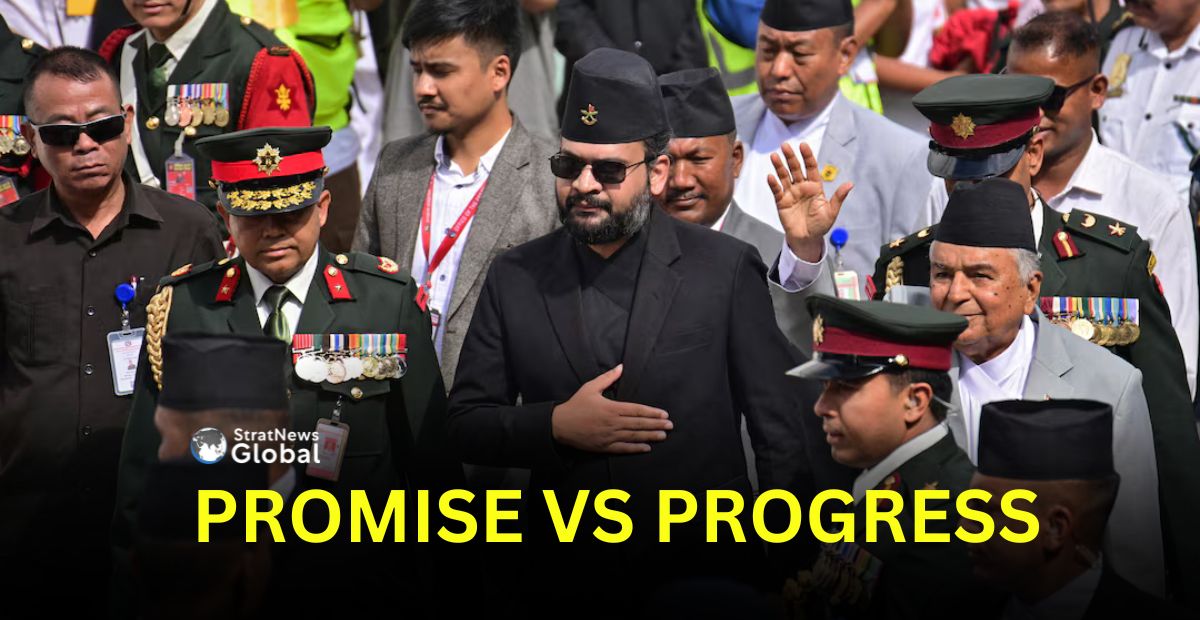
For Nepal’s Prime Minister Balendra Shah, the first hundred days have been less about policy milestones and more about understanding how an outsider governs once he becomes the establishment.
Shah came to power promising to break from the politics Nepalis had grown tired of, corruption and leaders seemingly disconnected from ordinary citizens. The overwhelming mandate he received reflected not just support for a new face, but frustration with an old system.
The urgency has been reflected in the government’s 100-day reform agenda, which outlined commitments across public administration, digital governance, anti-corruption, agriculture, infrastructure, health and education. While the government has projected the initiative as a success, reports by The Kathmandu Post suggest that only 38 of the 100 commitments had been fully implemented, with many others still at the policy or announcement stage.
Former Indian Ambassador to Nepal Ranjit Rae says the government has made noticeable improvements in the citizen-government interface, particularly in the delivery of public services, while also taking steps to reduce the number of ministries and depoliticise the bureaucracy.
The government’s early achievements, however, have been accompanied by a parallel debate over how power is being exercised within the administration.
Officials say key decisions are concentrated in the Prime Minister’s Office. While supporters call it strong leadership, critics see growing centralisation.
Rae, however, cautions against drawing definitive conclusions at this stage, describing the government as “a work in progress” and saying it is “too early to make any judgment” on its governing style.
The same debate has surfaced in the government’s handling of contentious issues. The eviction of informal settlements, arrests linked to political protests and criticism from civil society have raised questions about whether efficiency is coming at the cost of consultation. The recent self-immolation of Ganesh Nepali, which sparked protests, has only added to the pressure on the Shah government.
Rae argues that while administrative reforms are important, “Nepal has gone through such a lot of political churn over the years. So it’s very important that democratic processes are consolidated and strengthened.”
That question extends beyond domestic politics.
Foreign policy, so far, has lacked a defining direction. While Kathmandu continues its balancing act between India and China, his remarks on border issues with India, later clarified by the Foreign Ministry, hinted at a government still finding its diplomatic footing rather than setting a new course.
The first hundred days have shown that Balen Shah can make the government move faster. The real test now is whether speed can be matched by transparency and public trust. As Rae puts it, “we should look for the outcomes and the results,” arguing that delivery, not rhetoric, will determine the government’s success.
None of this suggests that Shah has lost the goodwill that swept him into office. If anything, many young Nepalis remain willing to give him time. Shah understood how to win public support in the digital age. Whether he can translate that popularity into effective governance is a question only time can answer.