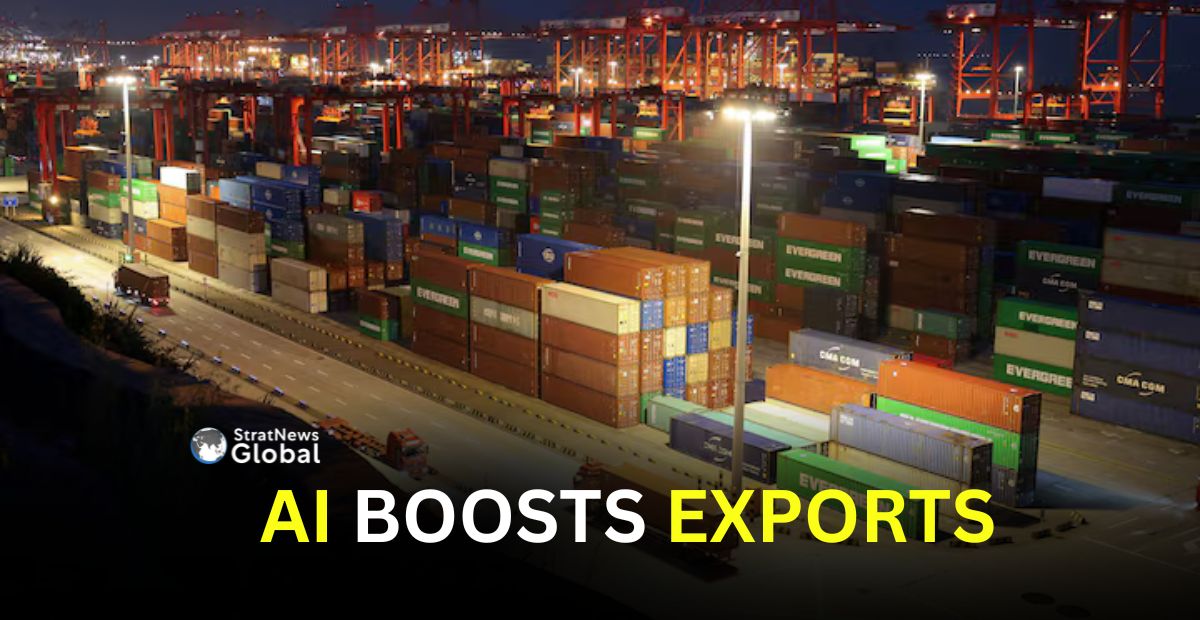
China’s exports jumped in June, driven by strong global demand for semiconductors and computing equipment powering the artificial intelligence boom, highlighting manufacturers’ growing dependence on overseas markets as policymakers struggle to revive domestic demand in the world’s second-largest economy.
The better-than-expected trade performance keeps China on course to record a trade surplus exceeding $1 trillion for a second consecutive year, with exports remaining resilient despite slowing growth in major economies and ongoing trade tensions with the United States.
Trade Surplus Widens
Exports climbed 27% from a year earlier in U.S. dollar value terms, customs data showed on Tuesday, their best performance in four months, outpacing the 19.4% gain in May and an 18.2% rise forecast by economists.
Imports jumped 36%, compared with a 27.4% gain the month before, a five-year high. Economists had forecast growth of 24% for June.
China’s trade surplus widened to $125.6 billion in June from $105.4 billion in May, while the year-to-date surplus reached $575.98 billion. With the property crisis continuing to weigh on domestic demand, manufacturers are increasingly relying on overseas markets.
According to Gavekal Dragonomics, exports accounted for 24% of China’s manufacturing sales in the first four months of 2026, the highest share since the country joined the World Trade Organization in 2001, underscoring its growing dependence on foreign demand.
Chips Cushion Economy From Crimped Consumption
The global AI boom is helping China cushion the impact of weaker exports caused by Middle East tensions, with strong demand for semiconductors supporting parts of its economy. Imports from major chip suppliers South Korea and Taiwan surged in June, reflecting robust AI-driven demand.
However, domestic demand remains weak despite signs of improving overseas orders. China’s economy is expected to have slowed to 4.5% annual growth in the second quarter from 5.0% in the first, highlighting that technology exports alone are unlikely to sustain broader economic growth.
(With inputs from Reuters)