U.S. President Donald Trump’s latest proposal to slap tariffs of 100 per cent (scaling up to 200 per cent by August 2029) on imported generic medicines is aimed squarely at countries like India, the world’s largest supplier of affordable pharmaceuticals.
The assumption is simple: America is the buyer, India is the seller, and Washington therefore holds all the cards.
That assumption is wrong.
Global pharmaceutical supply chains are far more interdependent than they appear. While the United States can raise tariffs on Indian drugs, India also controls critical links in the manufacture of several essential pharmaceutical ingredients.
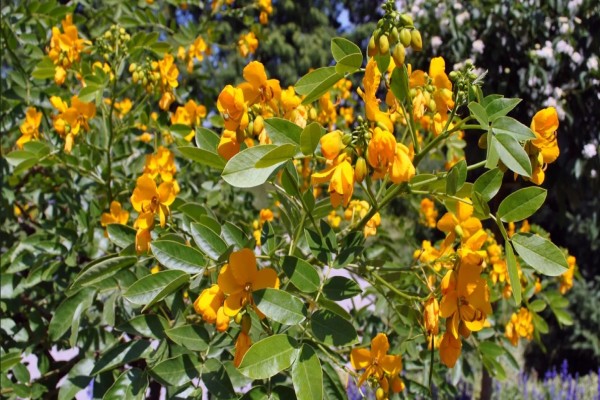
One of the clearest examples is a product that rarely makes headlines but is used every day in hospitals, nursing homes and cancer wards across America: sennosides.
Sennosides are stimulant laxatives derived from the senna plant. They are hardly glamorous medicines, yet they are indispensable. They are routinely prescribed to elderly patients, cancer patients receiving opioid therapy, people suffering from Parkinson’s disease or multiple sclerosis, intensive care patients and millions preparing for colonoscopies or gastrointestinal surgery.
The global pharmaceutical market for sennosides is worth only about US$400 million annually. Yet commercial value tells only part of the story. Their clinical importance is vastly greater.
And India dominates this supply chain.
Commercial cultivation of senna is concentrated in Tamil Nadu, Rajasthan and Gujarat. Over decades, India has built an integrated ecosystem covering cultivation, extraction, purification and export of pharmaceutical-grade sennosides. While countries such as China, Sudan and Egypt also produce senna, India remains the world’s principal supplier.
The biggest consumer is the United States.
Imagine, purely as a thought experiment, that India decided to play by the same rules now being advocated in Washington. What if New Delhi imposed export restrictions on pharmaceutical-grade sennosides in the name of national economic interest?
The immediate victims would not be Indian companies.
They would be American hospitals, pharmacies and, ultimately, American patients.
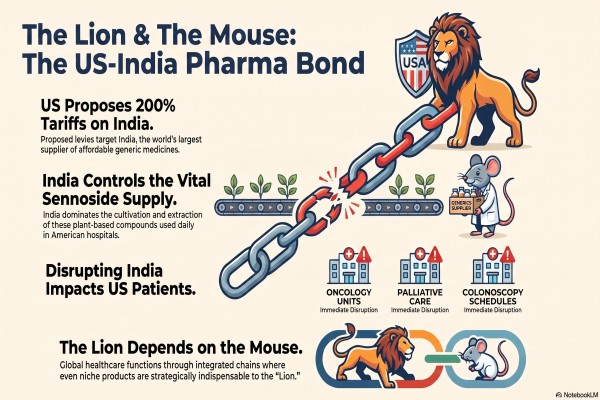
Over-the-counter laxatives would become scarcer. Hospitals would struggle to maintain supplies for oncology and palliative care. Colonoscopy schedules could face disruption. Patients suffering from chronic neurological disorders would encounter treatment difficulties.
Healthcare providers would be forced to switch to alternative medicines such as bisacodyl, polyethylene glycol or lactulose, many of which are more expensive, work differently or require different prescribing practices.
This is precisely why pharmaceutical supply chains cannot be viewed through the same lens as steel or automobiles.
Unlike consumer goods, medicines occupy a unique moral and strategic space. Even products with relatively modest commercial value can become indispensable to patient care. The smallest link in the supply chain can suddenly become the most critical.
So far, India has shown little inclination to weaponise pharmaceuticals. During the COVID-19 pandemic, despite domestic pressure, New Delhi eventually resumed exports of critical medicines and vaccines under its “pharmacy of the world” approach.
India’s pharmaceutical tradition, rooted in the ethos of Charaka, Sushruta and Dhanvantari, has generally placed patient welfare ahead of geopolitical coercion. That restraint, however, should not be mistaken for vulnerability.
Trump’s proposed tariffs expose a broader misconception in Washington—that economic dependence flows in only one direction. It does not.
Whether it is active pharmaceutical ingredients, generic medicines, vaccine ingredients or niche products like sennosides, global healthcare functions because countries specialise in different parts of highly integrated supply chains. Disrupting one end inevitably creates pressure throughout the system.
The United States may possess the world’s largest pharmaceutical market, but in several therapeutic areas it depends heavily on manufacturing ecosystems built thousands of miles away.
That is the real lesson of the sennosides story.
The Lion may be powerful. But as Aesop reminded us centuries ago, there are moments when even the lion depends on the mouse.