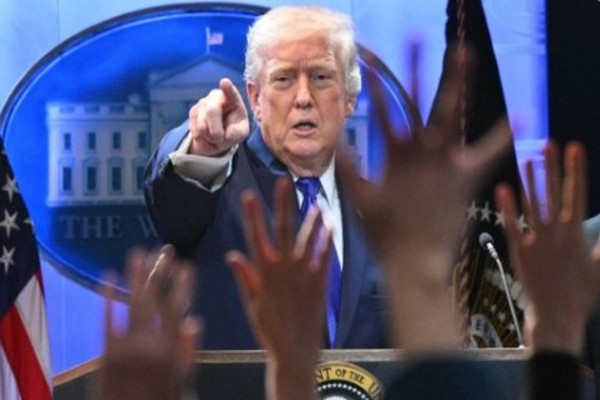
US President Donald Trump’s proposal to impose steep tariffs on imported generic medicines has sent fresh ripples through India’s pharmaceutical industry, even as New Delhi and Washington continue negotiations on a broader bilateral trade agreement.
Although imported generic medicines will remain exempt from tariffs for the next two years, Trump has proposed a 100 per cent tariff from August 2028, rising to 200 per cent a year later. The announcement has raised concerns over the long-term prospects of India’s largest pharmaceutical export market.
The proposal comes as India and the United States remain engaged in trade talks, with tariffs and market access dominating discussions. Pharmaceuticals have so far escaped the reciprocal tariff measures imposed by both sides, but Trump’s latest remarks suggest medicines could emerge as a new area of contention.
Effective August 1st, 2026, all Generic Drugs being brought into the United States will continue to have a TARIFF of ZERO PERCENT for a two year period of time, after which the TARIFF will be raised to 100% for a one year period of time, and 200% thereafter. This is done in order… pic.twitter.com/hX0citsvLj
— Commentary Donald J. Trump Truth Social Posts On X (@TrumpTruthOnX) July 21, 2026
Despite the announcement, industry experts believe India’s dominant position in the global generic drug market and the United States’ dependence on affordable Indian medicines will limit any immediate impact.
Speaking to StratNewsGlobal, Ravi Uday Bhaskar, former Director General of Pharmexcil, said India’s pharmaceutical industry retains structural advantages that cannot be replicated quickly.
“India is the third-largest producer of generic drugs in terms of volumes. Nearly 30 per cent of our $31 billion pharmaceutical exports go to the US. Manufacturing costs in the US will be 30-35 per cent higher than in India. Indian pharma need not worry too much. The US has been threatening tariffs for the past year, but as of now the rate remains zero and will continue to remain zero for another year,” he said.
Also read: Trump’s Drug Tariffs Could Backfire On America
Bhaskar noted that India also has the largest number of US Food and Drug Administration-approved manufacturing facilities outside the United States, making it difficult for Washington to replace Indian suppliers in the near term.
“Keeping tariffs at zero for now is positive. We do not know what his position will be tomorrow because he is highly unpredictable and inconsistent,” he said, adding that the administration may be trying to reassure domestic voters ahead of the US midterm elections while avoiding disruptions to medicine supplies.
Industry executives also questioned whether the United States could realistically build a competitive domestic generic drug manufacturing base within the proposed transition period.
Establishing manufacturing facilities, securing regulatory approvals and transferring product licences typically takes several years. Even then, significantly higher labour, compliance and production costs would make US-made generics more expensive than imports from India.
India exported pharmaceutical products worth more than $31 billion in FY26, with the United States accounting for over 30 per cent of shipments despite a slight decline in exports to the American market. Indian companies currently supply nearly half of all generic prescriptions dispensed in the US, underlining their critical role in the country’s healthcare system.
While analysts believe India’s cost competitiveness will continue to protect exports in the short term, they argue that the uncertainty reinforces the need to diversify both export markets and supply chains.
Bhaskar has previously argued that India should negotiate with the United States from a position of strength, pointing out that Indian generic medicines have saved the American healthcare system billions of dollars over the past decade.
Experts also believe Indian drugmakers should accelerate expansion into Africa, Latin America, Europe and other emerging markets, reducing their dependence on the US while strengthening India’s position as the “pharmacy of the world”.
Ajay Srivastava, Founder of the Global Trade Research Initiative (GTRI), said the industry’s larger strategic vulnerability lies elsewhere.
“India’s pharmaceutical industry should prepare for a bigger strategic risk than US tariffs, dependence on China. Around 70 per cent of chemical-based APIs used by Indian drugmakers and nearly 90 per cent of biologic inputs come from China. India should rebuild its domestic API manufacturing base and reduce reliance on a single supplier,” he said.
Srivastava also urged Indian pharmaceutical companies to use the current uncertainty to expand exports beyond the United States.
“Indian pharmaceutical companies should reduce their dependence on the US market by expanding exports to Europe, Latin America, Africa and Asia,” he said.