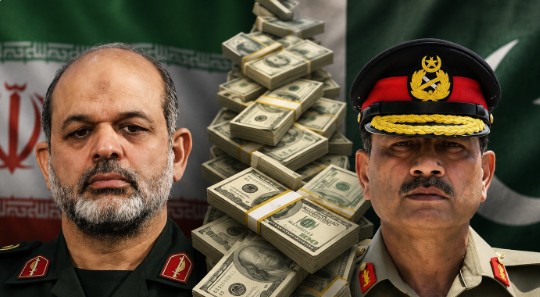
If a report by The Times of Israel is accurate, Pakistan Army chief Asim Munir may have pulled off one of the most extraordinary feats of modern geopolitics: allegedly helping Iran evade sanctions, earning millions alongside an IRGC commander, and emerging as Saudi Arabia’s indispensable protector—all at the same time.
According to the report, Munir and Ahmad Vahidi, commander of Iran’s Islamic Revolutionary Guard Corps (IRGC), operated a secret oil transport venture that moved sanctioned Iranian crude into Pakistan. With Tehran under heavy sanctions and its exports squeezed, the operation reportedly became a lucrative backdoor, generating massive profits for both men while keeping Iranian oil flowing.
But the alleged venture was more than a money-spinner. It also became a diplomatic lever.
The report claims Munir used his commercial relationship with Vahidi to persuade Tehran to stop targeting Saudi Arabia during the recent conflict. The understanding was simple: keep the missiles away from the Kingdom, and the oil—and the profits—would keep flowing.
Iranian strikes on Saudi Arabia largely ceased after the arrangement was reached. Months later, when Tehran allegedly fired another missile at the Kingdom, Munir reportedly warned Vahidi that any repeat would jeopardise their lucrative enterprise. No further attacks followed.
If the allegations are true, Munir hit the geopolitical jackpot. He allegedly profited from helping Iran circumvent sanctions, while simultaneously earning enormous goodwill in Riyadh by positioning Pakistan as the one country capable of restraining Tehran.
Vahidi, meanwhile, retained a valuable sanctions-busting export route at a time when Iran desperately needed one.
It was an arrangement in which everyone appeared to come out ahead. Iran kept selling oil. Saudi Arabia enjoyed a respite from missile attacks. Pakistan strengthened its standing with one of its most important strategic and financial partners.
And the two alleged business partners kept collecting dividends.
One Middle Eastern diplomat quoted in the report was scathing, describing the arrangement as little more than a “protection racket”.
The official argued that Iran had effectively turned regional security into a business model—rewarding those who facilitated economic benefits while sparing them from attack. Peace was not negotiated, but purchased.
Nor was Pakistan allegedly the only player.
The report cites unverified claims that other Gulf states may also have explored economic concessions to avoid becoming Iranian targets.
The UAE has been accused of releasing billions of dollars in previously withheld Iranian funds in exchange for being spared, while Qatar has faced allegations that it considered economic incentives—including reported discussions over gas production—to keep critical infrastructure off Tehran’s target list.
Both Abu Dhabi and Doha have firmly denied the allegations, and no independent evidence has substantiated them.
But if those claims were ever proven, they would point to a disturbing evolution in regional politics: deterrence by transaction. Instead of military superiority or diplomatic persuasion, security would have acquired a price tag.
If accurate, it suggests two powerful military figures allegedly transformed a regional conflict into a private revenue stream. One allegedly helped Iran keep its oil exports alive. The other reportedly convinced Saudi Arabia that Pakistan alone could keep Tehran’s missiles at bay. It was an arrangement where everyone seemed to win.
In other words, Munir played both sides and brokered the world’s most profitable ceasefire.