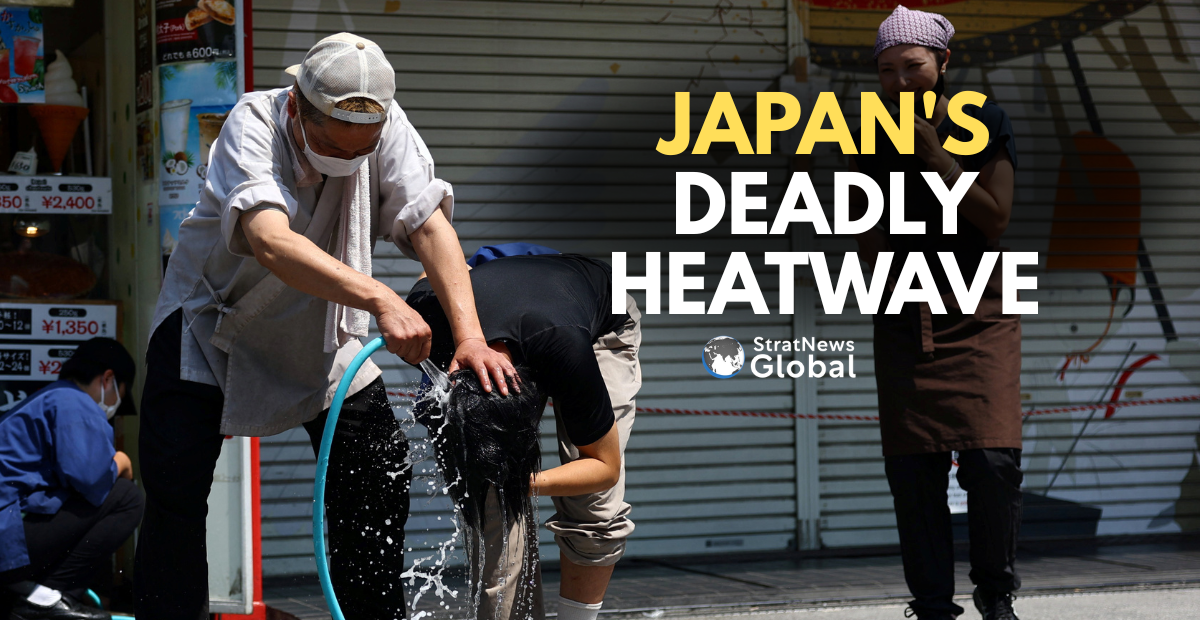
Japan’s record-breaking heatwave has pushed hundreds of people into hospitals, with Tokyo reporting its highest single-day number of heat-related emergencies since records began 16 years ago.
A total of 453 people were taken to hospital on Wednesday with heat-related illnesses, according to the Tokyo Fire Department. It is the highest daily figure recorded since data collection began in 2010. Emergency callouts also reached their highest level since at least 1963.
The surge comes as Japan continues to endure an intense heatwave that has claimed at least 14 lives over the past week and prompted authorities to issue widespread heatstroke warnings across much of the country.
Officials said the number of emergency cases rose sharply as temperatures climbed earlier this week.
“We are urging people to stay hydrated and use air conditioners,” a Tokyo Fire Department spokesperson said, noting that hospitalisations increased significantly on Tuesday and Wednesday as the heat intensified.
In Tokyo, which is home to around 14 million residents, one person has died during the current heatwave, while four others remain in critical condition and 18 are reported to be seriously ill.
The Japan Meteorological Agency forecast temperatures of up to 40°C in cities including Kumagaya, north of Tokyo, and Nagoya in central Japan, prompting the government to designate the conditions as a “kokushobi”, or “brutally hot day.”
The newly introduced classification applies when temperatures reach 40°C or higher and reflects the growing frequency of extreme heat events across the country.
Authorities have advised people to avoid prolonged outdoor activity, drink water regularly and use air conditioning to reduce the risk of heatstroke.
Japan has experienced increasingly severe summers in recent years. Last year, the country recorded its highest-ever temperature of 41.8°C, underscoring the impact of recurring heatwaves.
The latest figures suggest this summer could be equally dangerous.
Even before this week’s extreme temperatures, 4,580 people had already been hospitalised with heatstroke between July 6 and July 12, according to the Fire and Disaster Management Agency. Seven of those patients later died.
Government data also shows that more than 100,000 people required hospital treatment for heatstroke during the 2025 summer season.
Visitors have also been caught off guard by the extreme conditions.
“It’s extremely hot,” said Nick Estes, a 35-year-old American tourist visiting Tokyo’s Asakusa district with his family.
With temperatures expected to remain dangerously high in the coming days, officials continue to urge residents and tourists alike to take precautions as Japan faces one of its most intense heatwaves in recent years.
(with inputs from agencies)