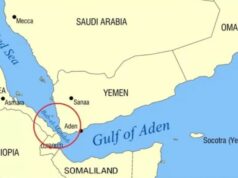
A tanker carrying Saudi crude to India is believed to have reversed course after Yemen’s Houthi rebels warned they would intercept vessels transiting the Bab al-Mandab Strait, the strategic gateway linking the Red Sea to the Arabian Sea.
Another Saudi oil tanker bound for China also reportedly turned back earlier this week.
The developments come as the Iran-backed Houthis seek to tighten pressure on Saudi shipping, threatening to further disrupt global energy supplies at a time when traffic through the Strait of Hormuz has also slowed amid renewed fighting between the United States and Iran.
Chinese Tankers Press Ahead
While some vessels altered course, supertankers carrying a combined 4 million barrels of Saudi Arabian oil are exiting the Red Sea
According to LSEG shipping data, the Singapore-flagged Xin Long Yang, which had paused mid-sea and made a U-turn on Tuesday, resumed its southbound journey late on Wednesday. It was sailing past the Yemeni coast toward the southern Chinese port of Qinzhou.
The Chinese-flagged Cosnew Lake was following behind and was scheduled to discharge its cargo at Huizhou in Guangdong province.
Both vessels loaded Saudi crude at the Red Sea port of Yanbu earlier this week and are chartered by Unipec, the trading arm of China’s largest refiner, Sinopec. Shipping data also indicated both ships have Chinese crews on board.
Their passage through Bab al-Mandab is being closely watched as an indication of how strictly the Houthis intend to enforce the blockade they announced earlier this week.
Shipping data also showed that at least two other Unipec-chartered VLCCs scheduled to load Saudi crude later this month have slowed their approach to the Bab al-Mandab Strait and are circling in the Gulf of Aden.
Hormuz Transits
Earlier on Thursday, the Houthis said they had targeted two Saudi oil tankers for violating their blockade. Saudi authorities later confirmed the tanker Encelia was attacked and caught fire in the Red Sea, though its crew was safe.
The conflict has further disrupted shipping, with vessel traffic through both the Bab el-Mandeb and Strait of Hormuz declining sharply. Data showed fewer tankers transiting the key waterways, while some ships switched off their tracking systems or altered routes amid rising security risks.
As of July 20, there were 253 laden tankers in the Gulf, including 102 oil tankers, 64 liquefied natural gas carriers and 66 liquefied petroleum gas carriers, according to LSEG data.
(With inputs from Agencies)