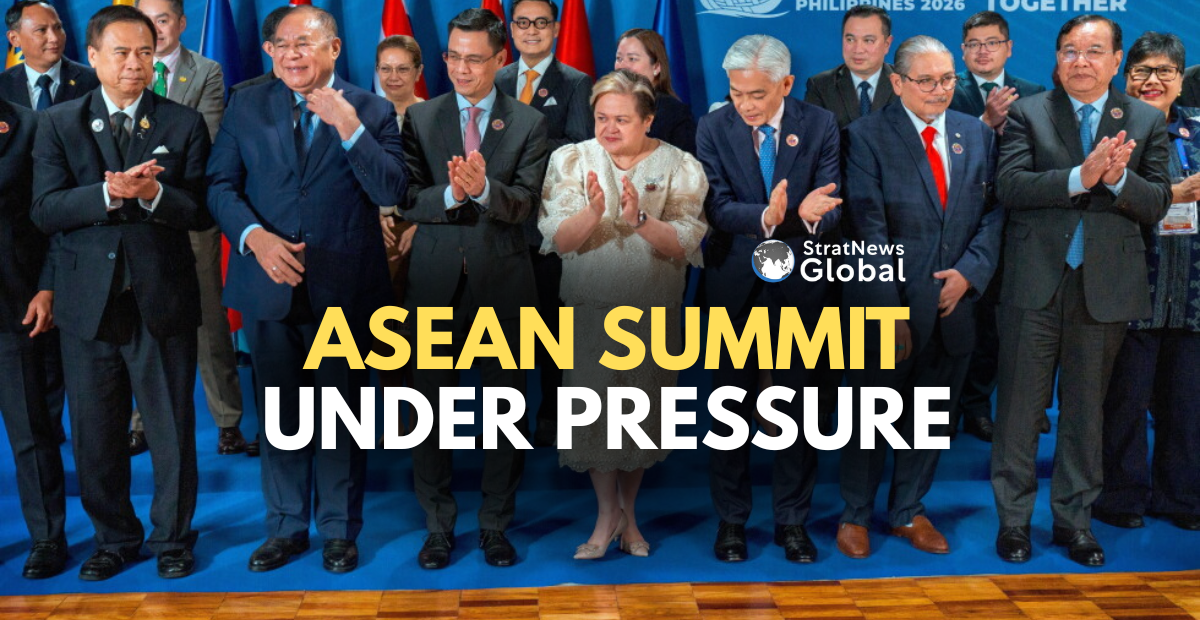
The conflict in the Middle East dominated discussions as foreign ministers from Asia, Europe and North America gathered in Manila on Thursday for the ASEAN Regional Forum, with regional leaders warning that escalating violence threatens global energy security and economic stability.
The annual security forum brought together top diplomats including U.S. Secretary of State Marco Rubio, Russian Foreign Minister Sergei Lavrov, and senior officials from China, India, Japan, Australia, Britain and the European Union.
With Southeast Asia heavily dependent on energy imports from the Middle East, ministers are expected to call for a peaceful resolution to the conflict and express concern over disruptions to global shipping routes, particularly through the Strait of Hormuz.
Opening the meeting, Philippine Foreign Secretary Maria Theresa Lazaro said the region was facing unprecedented geopolitical and economic uncertainty.
“These issues transcend borders and underscore the reality that no nation can address today’s complex security environment alone,” she said.
The gathering comes as the United States continued military operations against Iran, while Iran-backed Houthi forces claimed attacks on two Saudi oil tankers, raising fears of prolonged disruption to energy supplies through both the Strait of Hormuz and the Red Sea.
China also used the forum to call for greater regional stability. Addressing officials from ASEAN, China, Japan and South Korea, Chinese Vice Foreign Minister Hua Chunying said the world had entered a “new period of turbulence and transformation” and stressed the urgent need to preserve peace.
On the sidelines of the summit, Rubio and Lavrov held talks for nearly an hour, discussing the war in Ukraine and broader U.S.-Russia relations. According to Russia’s foreign ministry, Lavrov reiterated Moscow’s readiness for a political and diplomatic settlement of the conflict, while the U.S. State Department said both sides discussed bilateral relations and efforts to end the war.
Alongside the Middle East crisis, maritime tensions in the South China Sea remained another major focus.
China and the Philippines continue to trade accusations following a confrontation near the disputed Second Thomas Shoal earlier this week, where both sides blamed each other for an altercation involving coast guard and naval personnel.
A fresh dispute also emerged on Thursday after China’s Coast Guard accused Philippine vessels of carrying out “provocative actions” near Scarborough Shoal, another contested feature in the South China Sea. Beijing said it had blocked an intrusion into what it considers its territorial waters.
The Philippine Coast Guard, however, said one of its fisheries vessels had been conducting a humanitarian mission when it was targeted with water cannon by Chinese ships.
China claims sovereignty over most of the South China Sea despite a 2016 international arbitration ruling that rejected those claims. Beijing continues to reject the ruling.
Chinese Foreign Minister Wang Yi did not attend Thursday’s forum, instead travelling to Kyrgyzstan for another regional meeting. Before leaving Manila, Wang urged regional countries to resist what he described as interference from “foreign forces” and called the South China Sea “our common home.”
Adding to regional tensions, China on Thursday began two days of live-fire military exercises in parts of the Taiwan Strait near Fujian province, only months after conducting its largest military drills around Taiwan in December.
(with inputs from Reuters)