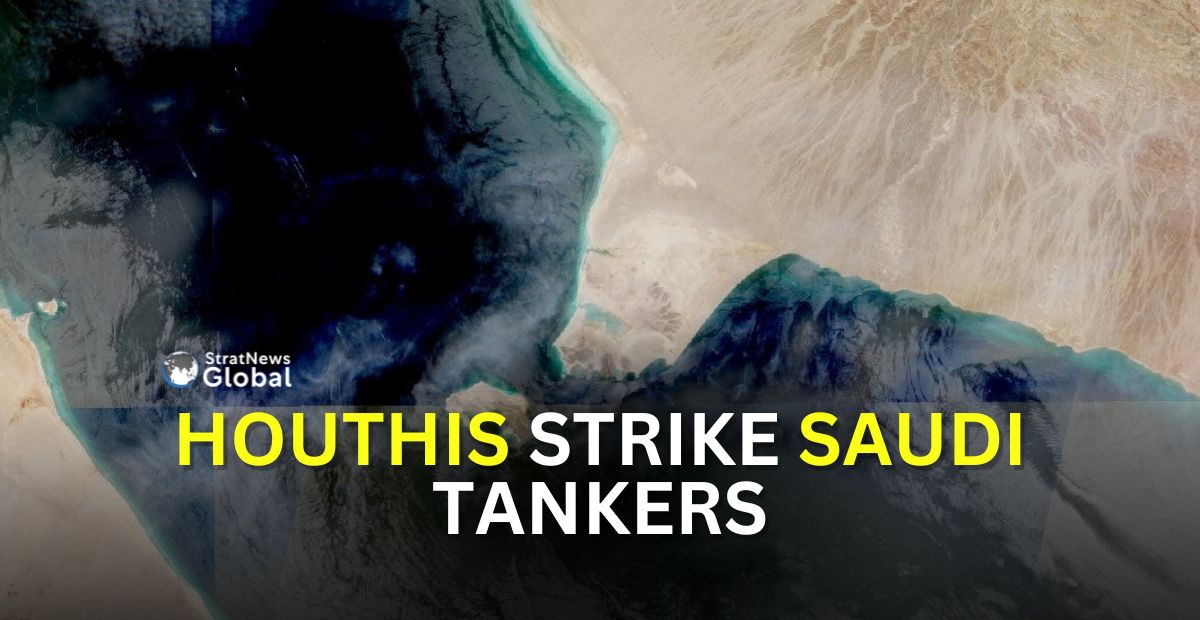
The Iran-aligned Houthis said on Thursday they had targeted two Saudi oil tankers as part of what they described as a naval blockade of Saudi Arabia, raising concerns over a potential second major disruption to global oil supplies alongside Iran’s near-shutdown of the Strait of Hormuz.
At the same time, the U.S. military carried out another wave of strikes on Iran under President Donald Trump’s orders, marking the 12th consecutive night of U.S. attacks. The strikes prompted a fresh round of retaliatory action from Iran.
U.S.-Iran Strikes Intensify
Iran said it attacked U.S. missile systems, weapons and fuel storages in Jordan, as well as U.S. military posts in Kuwait including Al-Adiri Camp, Ali Al Salem Air Base, Doha Camp and Arifjan Camp.
Even before the latest Red Sea threats, Iran’s near-blockade of the Strait of Hormuz had driven up global oil prices and inflation, increasing pressure on U.S. consumers and President Donald Trump ahead of November’s congressional elections.
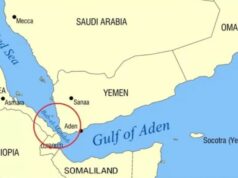
The Iran-aligned Houthis, who control territory near the Bab el-Mandeb Strait, announced a naval blockade of Saudi Arabia on Monday. Shipping was quickly disrupted, with several oil tankers rerouting or turning back.
The Houthis said they struck two Saudi oil tankers, the Encelia and Layla, with missiles and drones. Saudi authorities confirmed the Encelia was hit and caught fire, while the Layla attack was unconfirmed.
The threat jeopardizes a key route for Saudi oil exports via the Red Sea, potentially forcing shipments onto longer, costlier routes through the Suez Canal. U.S. officials warned the blockade could broaden the conflict and further strain American forces, even as two Chinese supertankers carrying 4 million barrels of Saudi crude continued toward the Bab el-Mandeb Strait.
Trump Threatens Infrastructure
Before the Red Sea escalation, President Donald Trump warned the U.S. would strike Iranian infrastructure whenever Iran targeted shipping in the Strait of Hormuz. Iran responded by threatening regional energy facilities and declaring the strait effectively closed after reporting an explosion involving oil tankers.
The U.S. has now carried out 12 consecutive days of strikes across Iran, including near Bushehr, while saying it aims to weaken Iran’s ability to threaten maritime traffic. Iran, meanwhile, has continued missile and drone attacks, striking energy and military targets in Kuwait, Bahrain and Jordan.
The conflict has inflicted heavy casualties on both sides. Iran says dozens of civilians have been killed and hundreds wounded, while the U.S. has reported 18 service members killed and more than 450 injured. Trump on Wednesday attended a ceremony honoring four troops killed in recent Iranian attacks.
(With inputs from Reuters)