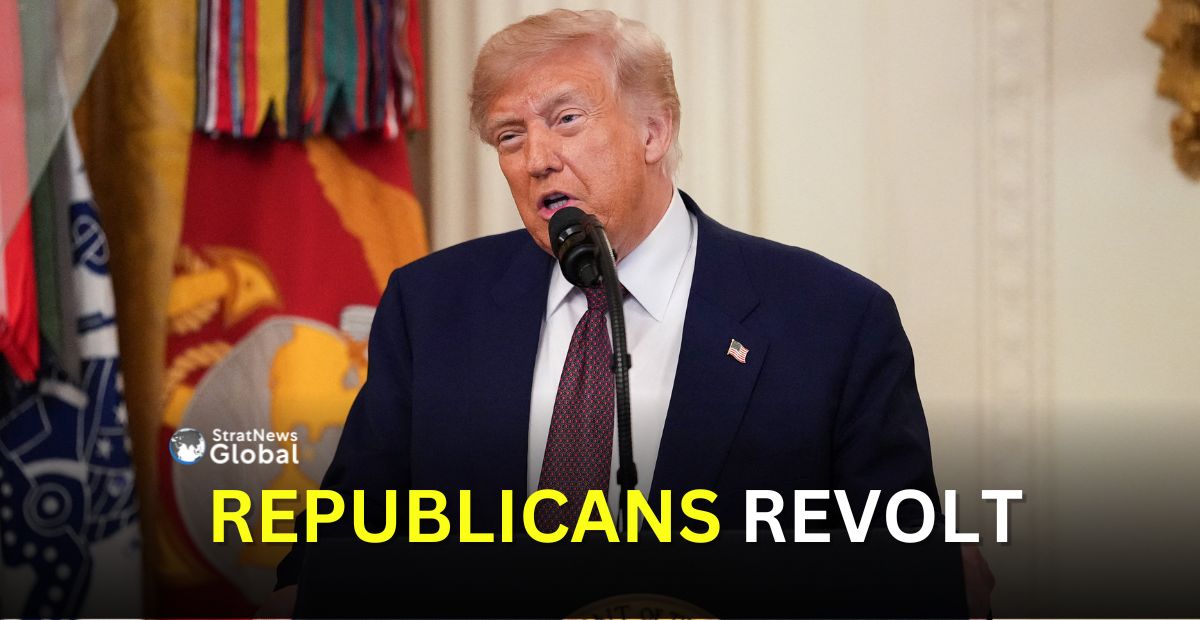
U.S. President Donald Trump’s interim deal to end the Iran war met scorching public criticism from some of his fellow Republicans as copies of the signed agreement circulated on Capitol Hill on Thursday.
One Republican senator called the framework pact the “worst foreign policy blunder in decades,” another said some reported provisions seemed “ill-advised,” and pro-Republican commentators also broke with Trump over the agreement. The criticism marked a rare rebuke from members of a party that has mostly offered full loyalty to Trump but is growing restive as the economic effects of the Iran conflict hurt their prospects ahead of November’s midterms. Democrats have also been critical of the deal.
The White House sent the text of the U.S.-Iran Memorandum of Understanding to Congress on Thursday, a day after Trump signed the preliminary deal. Lawmakers from both parties have said they want more information, and by Thursday there had been no briefings scheduled on the deal or the administration’s plans.
Some of the sharpest criticism has involved reports that Trump’s administration agreed to release frozen Iranian assets, allow creation of a $300 billion private wealth fund, and ease sanctions.
“Worst Foreign Policy Blunder”
“Iran’s nuclear ambitions were not curbed, and they have learned that threatening the Strait of Hormuz works and will undoubtedly leverage it in the future,” Republican Senator Bill Cassidy of Louisiana wrote on X. He noted that before the war, the strait was open and Iran faced steep sanctions. “Now, 13 Americans are dead, families have paid billions at the pump, sanctions will be lifted, and the bombing has stopped. This is the worst foreign policy blunder in decades,” he wrote. Roger Wicker of Mississippi, chairman of the Senate Armed Services Committee, said he worried the deal “negotiates away” U.S. military successes and opposed lifting sanctions “in exchange for Iran’s mere agreement to negotiate for another 60 days.”
Trump blasted his critics on social media: “These fools, who think I haven’t been tough enough on Iran, when the Stock Market Just Hit A RECORD HIGH, and Oil prices are ‘tumbling’ down, are either jealous, bad people, or stupid. MAKE AMERICA GREAT AGAIN!!!”
A Trade-Off Critics Call Unequal
The agreement to end the conflict and reopen the Strait of Hormuz is in some ways a positive for Trump, who needed a way out of a conflict that drove up energy prices and strained military resources. But critics argue the interim deal gives Iran significant benefits in exchange for things the U.S. already had – an open strait and a promise not to develop a nuclear weapon.
“A Disaster,” Say Commentators
Conservative pundit Ben Shapiro called the memorandum a “disaster” but placed blame on Vice President J.D. Vance for backing it, telling Fox News it “does not achieve any of the actual signal goals that were set by the administration.” Fox News commentator Mark Levin also broke with Trump, attacking Senator Roger Marshall of Kansas for suggesting Iran retain defensive ballistic missiles. “This man should never be elected dogcatcher,” Levin wrote, calling the exclusion of missiles from the deal an “outrage” and adding: “Iran is a terrorist regime that has killed our people.”
Still, many Republicans praised the agreement. Marshall, on KCMO Radio, credited Trump with choosing “a path to lasting peace – not another forever war,” noting controls on how Iran spends the funds and that none would come from U.S. taxpayers.
Congressional Review Looms
Under the 2015 Iran Nuclear Agreement Review Act, passed after the Obama-era nuclear pact, any deal involving Iran’s nuclear program and sanctions relief must be reviewed by Congress. The Trump administration has given mixed signals on whether it will comply, but several lawmakers, including close ally Senator Lindsey Graham, have said the deal must be sent to Capitol Hill.
(with input from Reuters)