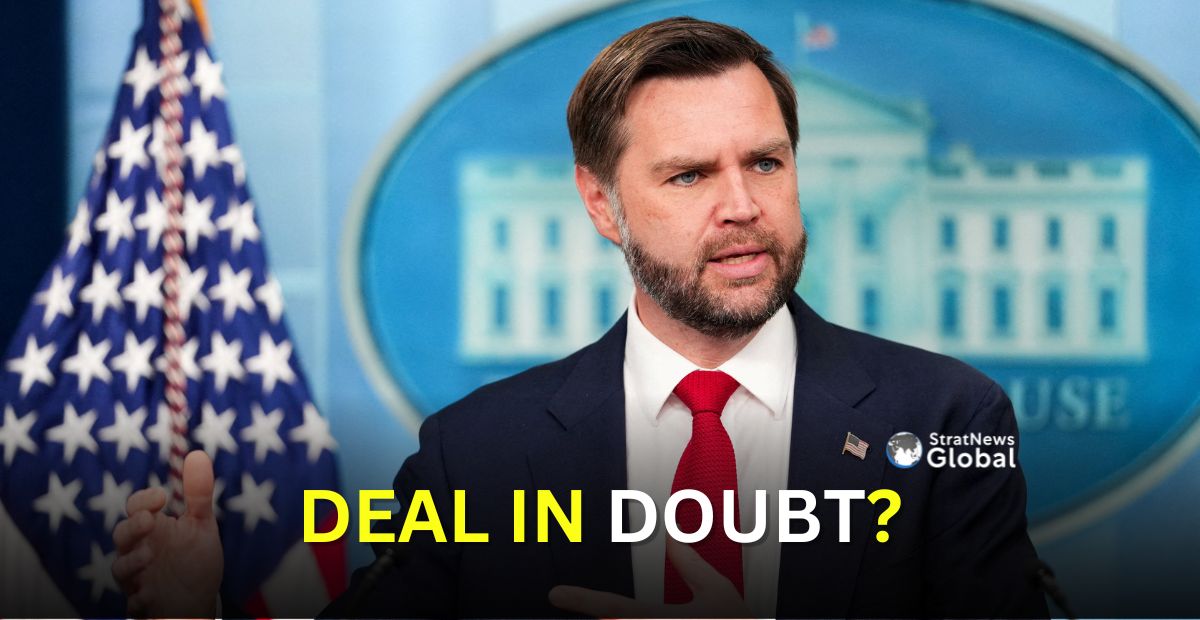
A White House spokesperson said that U.S. Vice President JD Vance canceled a scheduled visit to Switzerland on Friday, where he was expected to meet with Iranian negotiators and launch detailed discussions on carrying out the 14-point agreement reached between Tehran and Washington to end the conflict between the two countries.
Earlier this week, U.S. officials indicated that a formal signing ceremony for the agreement would take place in Geneva. However, Iran’s Foreign Ministry questioned the need for such an event, noting that the presidents of both nations had already signed the accord on Wednesday.
Iran had said it was ready to begin technical talks after the two enemies extended a tenuous ceasefire by at least 60 days with the accord. But the semi-official Tasnim news agency said earlier on Thursday, before Vance’s announcement, that Iran’s negotiators needed to see signs of implementation of the interim agreement from the U.S. before the next rounds of peace talks could begin, and that there was no confirmation that its delegation would travel to Geneva.
Vance and the U.S. delegation had been ready to depart as soon as plans for the talks had been finalized, the White House spokesperson said in a statement on Thursday night. “But the logistics of these negotiations have never been simple or predictable,” the statement said. There was no immediate response from Iran’s government.
The diplomatic back-and-forth over the planned ceremony and photo-op adds to the uncertainty over whether a lasting truce can be found to a regional war that has killed at least 7,000 people, sent energy prices soaring and shaken global markets.
Israel Continues Fight
Israel, which was not part of the U.S.-Iran peace talks, continued strikes against Hezbollah in Lebanon, raising concerns about the durability of the ceasefire. In Washington, some Republicans criticized President Donald Trump for making major concessions, including sanctions relief and asset releases, despite previously demanding Iran’s “unconditional surrender.”
Iran’s Supreme Leader Ayatollah Mojtaba Khamenei dismissed the deal as a sign of U.S. weakness and warned that future nuclear talks would be difficult. The agreement gives both sides 60 days to negotiate limits on Iran’s nuclear program while providing Tehran with economic incentives and reconstruction funding.
Critics argue the deal falls short of Trump’s original war aims, including dismantling Iran’s nuclear capabilities and curbing its regional influence. Although Iran agreed to enhanced nuclear monitoring and uranium dilution measures, it retained control of key assets and maintained its position on uranium enrichment.
Meanwhile, Israeli airstrikes in Lebanon continued despite the agreement’s call for a permanent end to hostilities there. Israel has rejected withdrawal demands, highlighting ongoing tensions that could threaten broader regional peace efforts.
(With inputs from Reuters)