When retired U.S. Marine General James Mattis affectionately called the United Arab Emirates “Little Sparta” more than a decade ago, he captured the essence of a small but fiercely ambitious Gulf state determined to punch well above its weight.
In September 2025, Israeli Prime Minister Benjamin Netanyahu took that metaphor further, declaring that Israel must become the “super Sparta” of West Asia.
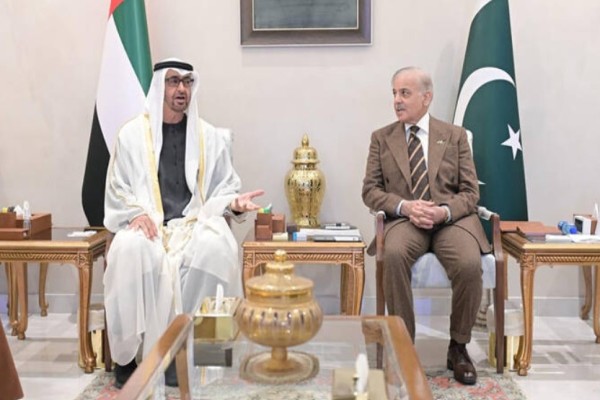
The two statements, separated by years, now feel like bookends to a new strategic reality: the UAE is projecting itself as a confident, militarized power with deepening partnerships across Israel, India, and the United States—alignments that are increasingly testing its once-warm relationship with Pakistan.
What was once a reliable economic and strategic partnership between Islamabad and Abu Dhabi has unravelled into open tension.
For years, the UAE served as a critical financial lifeline for Pakistan. Today, that support has become conditional, even weaponized, as the two sides find themselves on opposite sides of the region’s most consequential fault lines.
Historically, UAE support was generous and consistent. In December 2018, Abu Dhabi deposited $3 billion in Pakistan’s central bank to ease a balance-of-payments crisis. It rolled over a $2 billion deposit in April 2021 and added another $1 billion in mid-2023, with support extending into early 2025.
These funds, alongside remittances from more than a million Pakistani workers in the Emirates, formed a vital pillar of Pakistan’s external financing.
The turning point came in January 2026, when Abu Dhabi hesitated over a requested 12-month rollover of deposits. Weeks after the U.S.-Israel military campaign against Iran began, Abu Dhabi demanded repayment of outstanding funds—reportedly around $3.45 billion in total deposits.
Pakistan scrambled to comply, ultimately repaying the sums with emergency Saudi support of $3 billion. This episode highlighted how financial tools had become instruments of leverage amid widening strategic divergences.
In April 2026, amid the Iran conflict, Emirati authorities arrested, detained, and deported thousands of Pakistani Shi’ite workers, while Etihad Airways dismissed Pakistani staff suspected of links to Iran.
Pakistan’s refusal to align fully against Tehran—coupled with its perceived role in diplomatic efforts to de-escalate the conflict—further alienated Abu Dhabi.
Pakistan now finds itself in a precarious position: its substantial financial dependence on the UAE stands in direct conflict with Abu Dhabi’s deepening partnerships with India and Israel—two of Pakistan’s principal adversaries.
The Iran war further cemented this convergence. While Iranian missiles struck UAE territory, Abu Dhabi’s resilience and coordination with Israel and the United States only reinforced its “Little Sparta” reputation.
UAE’s Pivot Toward India and Israel
At its core, the bilateral relationship is strained by competing strategic alignments. Pakistani policymakers perceive the UAE as tilting ever closer toward New Delhi and Tel Aviv, while Abu Dhabi suspects that Islamabad consistently prioritizes its longstanding ties with Riyadh.
This mutual distrust deepened significantly with Islamabad’s signing of the Strategic Mutual Defense Agreement (SMDA) with Saudi Arabia on 17 September 2025.
The pact was concluded just days after Israel’s controversial airstrike on a Hamas leadership compound in Doha, Qatar, on 9 September 2025—an unprecedented attack on Gulf soil that heightened regional tensions and prompted a swift realignment among traditional partners.
Abu Dhabi’s strategic evolution explains much of the tension. The UAE is a founding member of the I2U2 grouping (India, Israel, UAE, United States), launched in 2022 as a platform for economic and technological cooperation in areas such as clean energy, water, and food security.
For Pakistan, this represents an alignment that embeds two existential rivals. India-UAE ties now span trade, defence, energy security, and technology. Prime Minister Narendra Modi’s visit to the UAE on 15 May this year marked his eighth visit since 2014.
Reflecting this deep partnership, bilateral merchandise trade between the two countries reached US$101.25 billion in FY 2025–26.
In late April 2026, the UAE announced its exit from OPEC—a major blow to the cartel. As OPEC’s third-largest producer with significant spare capacity, Abu Dhabi sought freedom from production quotas to maximize output amid the global energy volatility triggered by the Iran war.
The move highlights tensions with Saudi Arabia over oil policy and underscores the UAE’s prioritization of national economic interests and alignment with broader Western and Asian partners over traditional Gulf solidarity.
Broader Regional Ambitions: Yemen, Somalia, and Beyond
In 2015, Saudi Arabia and the UAE formed a military coalition against Iran-backed Houthi rebels seeking to take control of Yemen. A decade later, that alliance has frayed into open rivalry.
In Yemen, the UAE backs the Southern Transitional Council (STC)—a separatist movement seeking an independent state in southern Yemen—creating friction with Saudi Arabia, which continues to support the internationally recognized Yemeni government.
This disagreement erupted publicly in late 2025 when Riyadh bombed a UAE arms shipment destined for the STC at the port city of Mukalla. The widening rift between the two Gulf monarchies ultimately resulted in Abu Dhabi withdrawing its forces from southern Yemen under a Saudi-imposed deadline.
This intra-Gulf rivalry has also spilled into the Horn of Africa. The UAE has invested heavily in Somaliland, developing the strategic Berbera port through DP World—a Dubai-based company and one of the world’s largest port operators—while also maintaining a military presence.
These moves prioritize access to the Red Sea and the containment of Iranian influence.
Israel’s recognition of Somaliland as a sovereign state in December 2025 further complicated the situation. Although the UAE has not formally recognized Somaliland, it has begun accepting Somaliland passports.
The move angered Somalia, which cancelled defence and port agreements with the UAE in January 2026, accusing Abu Dhabi of undermining its sovereignty. Saudi Arabia, aligned with Mogadishu, has pushed back strongly against such fragmentation.
Pakistan remains caught between financial necessity and strategic autonomy. With millions of its citizens working in the Gulf and a heavy reliance on remittances, a full rupture with the UAE would be costly.
Yet its SMDA with Saudi Arabia, its neutral stance on Iran, and domestic political realities limit how closely it can align with Abu Dhabi’s preferences. Saudi bailouts have provided breathing room, but they also underscore Islamabad’s continued dependence on Gulf patronage.
For the UAE, the Iran war has reinforced its “Little Sparta” identity, positioning it as a key node in a new regional architecture—one that sidelines traditional relationships in favour of pragmatic, interest-driven partnerships with India and Israel.
The unravelling of UAE–Pakistan ties is not merely a bilateral development; it reflects broader shifts across West Asia and the Indian Ocean region.
As Abu Dhabi embraces a more assertive and diversified role—exiting OPEC, investing in Somaliland, and partnering with Pakistan’s principal adversaries—Islamabad’s strategic options are becoming increasingly constrained.