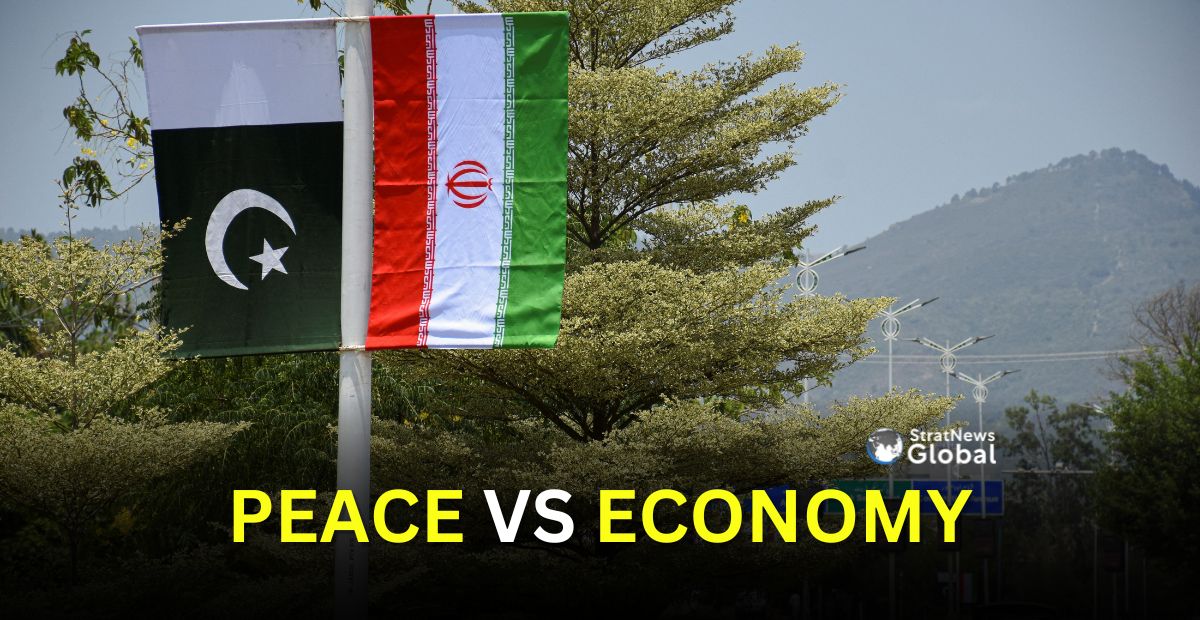
Pakistan’s role in brokering a peace deal in the Iran conflict has drawn broad diplomatic praise and could yield economic benefits, though analysts question whether it will address deeper weaknesses in the country’s economy.
Prime Minister Shehbaz Sharif and army chief Field Marshal Asim Munir attended Iran–U.S. talks in Buergenstock, Switzerland, last weekend, marking the culmination of Pakistan’s months-long involvement in the high-stakes negotiations.
Economic Opportunity
The breakthrough has raised Pakistan’s profile and analysts say the country of 250 million people has an opportunity to convert that goodwill into some gains for an economy marked by decades of boom and bust. But they said any benefits were unlikely to fix deeper structural issues including social and economic inequity, a narrow tax base and repeated IMF bailouts.
Pakistan is targeting economic growth of 4.0% and inflation of 8.2% for the coming fiscal year, compared with 3.7% projected growth in fiscal 2026 which ends in June, and 6.7% average inflation in the July-May period of the outgoing year.
Many analysts are expecting some largesse from the U.S., although there have been no signs of any such windfalls yet.
Alex Vatanka, senior fellow and director of the Iran program at the Middle East Institute in Washington, said one gain for Pakistan was the “huge potential to be a more integrated part of the broader Middle East,” and eventually forging broader economic partnerships in the region that would also encompass defence.
Another possibility was that sanctions relief on Iran could allow “huge trade between Iran and Pakistan,” particularly through their Balochistan land border, said Miftah Ismail, a former finance minister.
Limited Economic Gains
After the September 11, 2001 attacks and the U.S. invasion of Afghanistan, Pakistan’s alignment with Washington brought debt rescheduling, IMF support, and U.S. aid, but analysts say structural weaknesses prevented lasting gains.
Commentators note the current situation is similar but different, with Pakistan now acting as a peacemaker rather than a frontline state, giving it diplomatic leverage with multiple powers including the U.S., Iran, Gulf states, Turkey, and China.
Former officials and economists say while Pakistan’s role has boosted its global standing, it has not resolved core issues such as weak exports, high costs, and heavy external debt, keeping the country reliant on the IMF. They argue that long-term gains require domestic reform and productivity improvements rather than short-term financial relief.
Some Western officials have signalled interest in expanding trade and economic ties following Pakistan’s diplomatic engagement, though analysts caution that sustained benefits depend on internal economic stability.
‘Peace Pivot’
Atif Mian, a Princeton economist, said Pakistan should not treat diplomacy as a path to IMF-style relief, but instead pursue a “peace pivot” focused on regional trade, energy links with Iran, and deeper integration with the Gulf and Turkey through exports and technology transfer.
Analysts warn that without structural reforms, Pakistan’s long-term outlook remains fragile. Adeel Malik of Oxford University said failure to reform could lead to future instability, citing rising inequality, elite dominance, and growing discontent among young and middle-class populations.
(With inputs from Reuters)