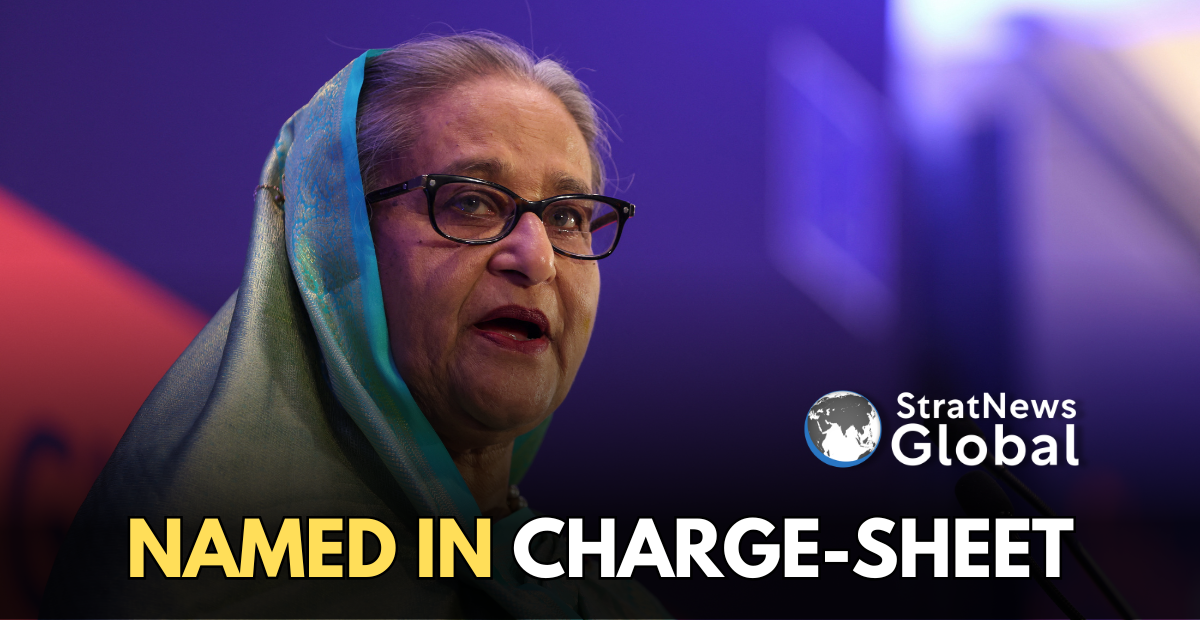
Ousted former Bangladesh prime minister Sheikh Hasina is named in a charge sheet along with 31 others in the killing of a truck driver during the 2024 mass uprising against the Awami League government.
The charge sheet was submitted by the police Anti-Terrorism Unit, which claims the killing was part of a wider plan to suppress the uprising. Hasina is accused along with ex-home minister Asaduzzaman Kamal and party general secretary Obaidul Quader.
The charge-sheet explicitly claims that the killing was carried out under the “orders, directives, planning and inciting statements” of these leaders. The plan was implemented by three others who were also named.
The charge sheet says the truck driver, Sujon, was killed as he parked his vehicle in the Mohammadpur area of Dhaka. Two of those named in the killing are Tariquzzaman Rajib and Asif Ahmed, both of the Awami League.
The charge-sheet says the move for quota reform (ending the privileges given to families of the liberation war), began on June 5th, 2024 and nine days later Hasina referred to the protesting students as “Razakars”, an insult since it was a paramilitary unit set up in 1970 by the Pakistan Army before it before it launched the crackdown on the movement for independence.
Sheikh Hasina, who remains in exile in Delhi, has not responded to the allegations in the charge-sheet. But last week, her lawyers had written to the International Crimes Tribunal in Dhaka against the guilty verdict passed on the former prime minister.
They said the ICT proceedings “are fundamentally incompatible with basic international standards for fairness and due process and violate her fundamental rights under international law.”
The verdict claimed she ordered the use of drones and helicopters on unarmed crowds and authorised the use of lethal weapons against them.
The letter to the ICT faulted the legitimacy of that body, saying its judges lacked experience, had links to political parties and made prejudicial comments, suggesting they had already decided her guilty.
It named the chief prosecutor of the ICT as actively campaigning for the ban on the Awami League, Hasina’s party, and that she was given no meaningful opportunity to defend herself.
It noted that a trial of this nature involving a capital sentence needs a higher level of procedure and process, which were missing.