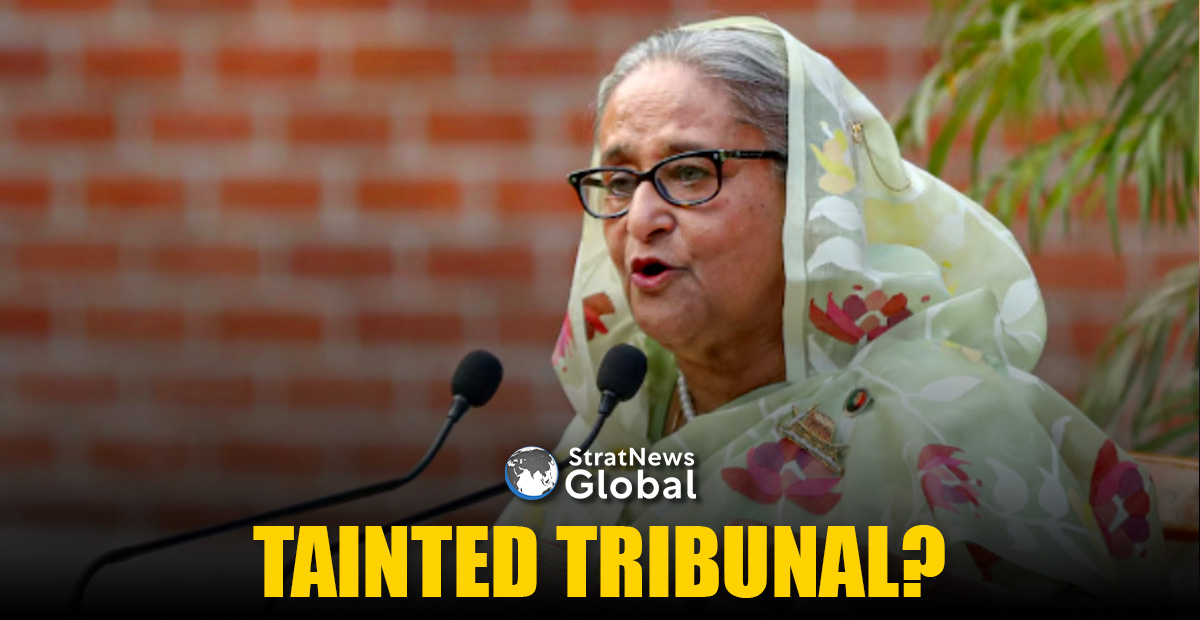
Lawyers acting on behalf of Sheikh Hasina, ousted former prime minister of Bangladesh, have written to the International Crimes Tribunal (ICT) in Dhaka, saying that its “proceedings are fundamentally incompatible with basic international standards for fairness and due process and violate her fundamental rights under international law.”
Last November, the ICT had found Hasina guilty on three of five charges related to preventing justice and ordering killings. The verdict claimed she ordered the use of drones and helicopters on unarmed crowds and authorised the use of lethal weapons against them.
The letter to the ICT however faults the legitimacy of that body, saying its judges lacked experience, had links to political parties and made prejudicial comments, suggesting they had already decided her guilty.
It named the chief prosecutor of the ICT as actively campaigning for the ban on the Awami League, Hasina’s party, and that she was given no meaningful opportunity to defend herself.
It noted that a trial of this nature involving capital sentence, needs a higher level of procedure and process, which were missing.
It made the point that the ICT “lacks jurisdiction to try Sheikh Hasina for the alleged
offences. The International Crimes (Tribunals) Act 1973 (“the ICT Act”) was enacted to
prosecute genocide, crimes against humanity, war crimes and other crimes under
international law committed during the 1971 Liberation War.
“The tribunal was established with a clear temporal and substantive mandate limited to atrocities of that specific historical period.”
The letter wondered why Hasina was not tried under the Bangladesh criminal justice system, casting doubts on the constitution of the ICT, the qualifications and affiliations of the appointed judges and the “systematic disregard of safeguards that international law requires.”
It pointed out that the chair of the ICT, Justice Golam Mortuza Majumder, was re-appointed to the High Court bench after nearly 6 years of inactivity (he had retired as a District and Sessions Judge in January 2019) and has alleged affiliation to Bangladesh Jamaat-e-Islami.
Justice Mohitul Haq Enam Chowdhury was also long retired before his reappointment to the bench (also formerly a District and Sessions judge), also has alleged affiliation to
Bangladesh Jamaat-e-Islami.
Justice Shofiul Alam Mahmud, a lawyer before his appointment, was only appointed a High Court judge 6 days before his allocation to the ICT tribunal and has overt ties to the Bangladesh Nationalist Party (“BNP”).