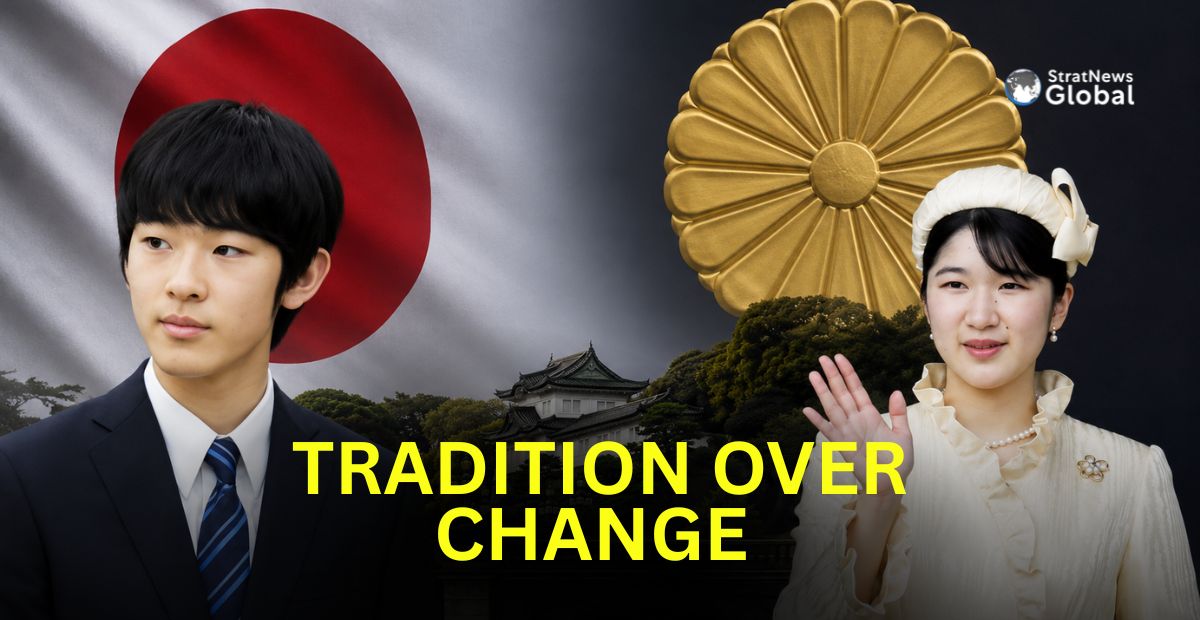
Japan’s parliament has approved the most significant reforms to the Imperial House Law in decades, opting to preserve the country’s centuries-old male-only succession system while addressing the shrinking size of the Imperial family.
The legislation introduces two key changes. Female members of the Imperial family will now be allowed to retain their royal status after marrying commoners, although their husbands and children will continue to be treated as ordinary citizens under existing law. The reforms also permit the future adoption of distant male relatives from the paternal Imperial line to help sustain the pool of eligible heirs.
Crucially, however, the law leaves untouched the rule that only men descended through the paternal Imperial bloodline can ascend the Chrysanthemum Throne.
The decision means Princess Aiko, Emperor Naruhito’s only child and one of the Imperial family’s most popular members, remains ineligible to succeed her father. The line of succession will continue through Crown Prince Akishino, the Emperor’s younger brother, followed by Akishino’s son, Prince Hisahito. Beyond him, the only remaining heir is Prince Hitachi, the Emperor’s 90-year-old uncle.
The reforms come as Japan’s Imperial family continues to contract. The family now has just 16 members, only five of whom are men. Under the previous law, princesses who married commoners were required to leave the Imperial family, steadily reducing the number of royals available for official duties.
Former Imperial Household Agency chief Shingo Haketa has warned that the monarchy after Prince Hisahito remains “extremely unstable” because of the limited number of male heirs.
Debate over the succession has persisted for years. In 2005, Japan considered allowing women to inherit the throne, but the proposal was shelved after Prince Hisahito’s birth in 2006, the first male heir born into the Imperial family in nearly four decades.
Prime Minister Sanae Takaichi has defended the male-only succession as essential to the Emperor’s legitimacy. Conservative lawmakers also support the return of male descendants from former Imperial families stripped of their status after the Second World War, arguing it strengthens the continuity of the monarchy. Critics, however, contend that allowing women to inherit the throne would be a more practical and modern solution.
(With Inputs from Agencies)