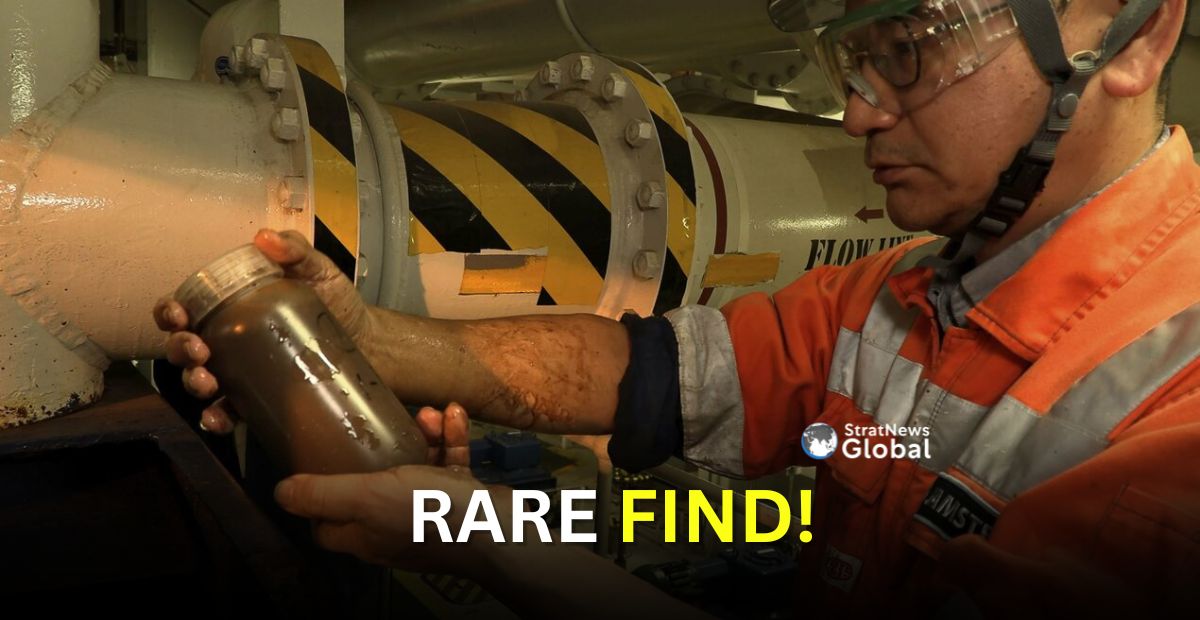
An analysis of rare earth-rich mud retrieved from the deep seabed off a remote Pacific Island earlier this year found medium and heavy rare earth elements accounted for about 54% of the total rare earth content, Japan’s government said on Friday.
But it did not disclose the size of the content or the deposits, saying the data was insufficient due to the limited duration and geographic scope of sampling.
Japan’s Diversification
The Japanese scientific drilling vessel, Chikyu, completed a month-long mission in February near Minamitori Island, about 1,900 km (1,200 miles) southeast of Tokyo, marking the world’s first successful attempt to continuously lift rare-earth-bearing seabed mud from depths of around 6 km (4 miles).
The project comes as Japan seeks to diversify critical mineral supplies amid tightening Chinese export controls on heavy rare earths and related magnets, which are crucial for the defence and automotive industries.
About 50 metric tons of mud were recovered. The analysis identified yttrium, used in aerospace, energy and semiconductor applications; gadolinium, used in magnetic resonance imaging and other high-tech applications; and dysprosium, used in high-performance magnets for electric vehicles, according to the Cabinet Office’s national platform for innovative ocean development.
Mining Trial
Japan plans a month-long large-scale mining trial in the same waters from February 2027, aiming to dredge 350 tons of mud a day. The material will be dewatered at Minamitori Island and will be processed on the mainland to test separation, refining and smelting technologies.
The trial is expected to verify the feasibility of domestic rare earth production, with a comprehensive assessment of industrialisation prospects due by March 2028, said Kazushige Kikuchi, project manager at the Japan Agency for Marine-Earth Science and Technology, which operates the Chikyu.
Beijing imposed export controls on some heavy rare earths and related magnets in April 2025 and tightened restrictions on exports to Japan in January, and twice again the following month, targeting major conglomerates.
(with inputs from Reuters)