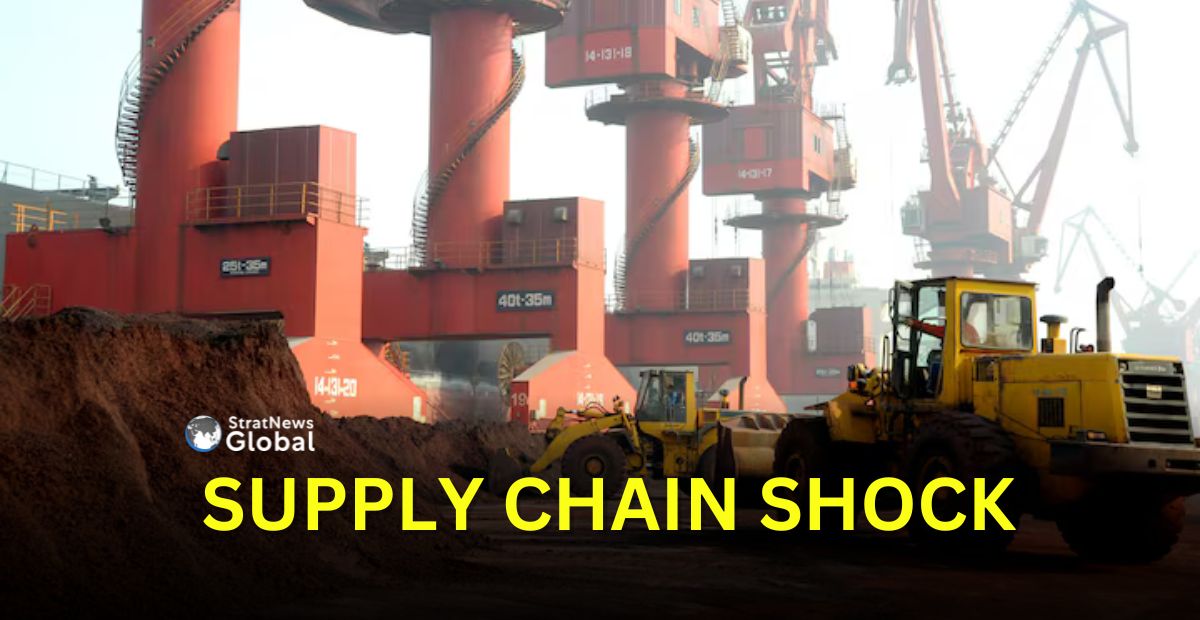
A shortage of critical minerals is beginning to impact Japan’s broader economy, increasing pressure on Prime Minister Sanae Takaichi’s government to secure alternative supplies after China curbed exports, according to recent corporate filings.
China dominates the global rare earths market, supplying minerals essential for products ranging from electric vehicles to advanced weapons, and has increasingly used its control over these resources as diplomatic leverage.
Beijing has restricted shipments of several key minerals to Japan since Prime Minister Takaichi drew China’s ire with remarks in November about defending Taiwan.
Supply Crunch Raises Business Concerns
Recent surges in the Nikkei stock index to successive records and buoyant corporate sentiment in the Bank of Japan’s Tankan survey point to an economy on an upswing. But an unprecedented increase in corporate Japan’s notices about critical minerals is flashing a warning signal for the quarters ahead.
Japan’s economy was hit by China’s trade restrictions in 2010, but economists warn the impact could be greater this time as rare earths have become essential for AI, electric vehicles and other industries.
Chinese customs data show no exports of terbium or dysprosium oxide to Japan from November through May, while shipments of yttrium oxide have been minimal since December, disrupting supplies needed for high-performance magnets.
Corporate concerns are also mounting. Mentions of rare earths in Tokyo Stock Exchange filings have doubled since May, with more than two-thirds of nearly 200 filings warning that China’s export controls are already affecting business or could pose future risks. While companies such as Citizen Watch and Omron said production has not yet been significantly impacted, analysts say the disruption is spreading across industries as existing stockpiles run low.
Supply Search
Tokyo has been racing to line up alternatives. In a statement, Japan’s industry ministry said it is using investments and subsidies to work with allies and companies to secure stable supplies of rare earths and other critical minerals.
Takaichi signed a framework with U.S. President Donald Trump in October to coordinate on critical minerals and rare earths, including joint stockpiling and rapid-response supply arrangements. And the two governments have discussed joint development of deep-sea deposits; commercial-scale output, however, remains years away.
Takaichi is also banking on a plan agreed to by Group of Seven nations in June to step up coordination of stockpiles, and Japan has also begun some rare-earth recycling projects.
But when those efforts will come online and how much they can yield remain unclear, said Yuriy Humber, CEO of Tokyo-based Yuri Group, a consultancy.
(With inputs from Reuters)