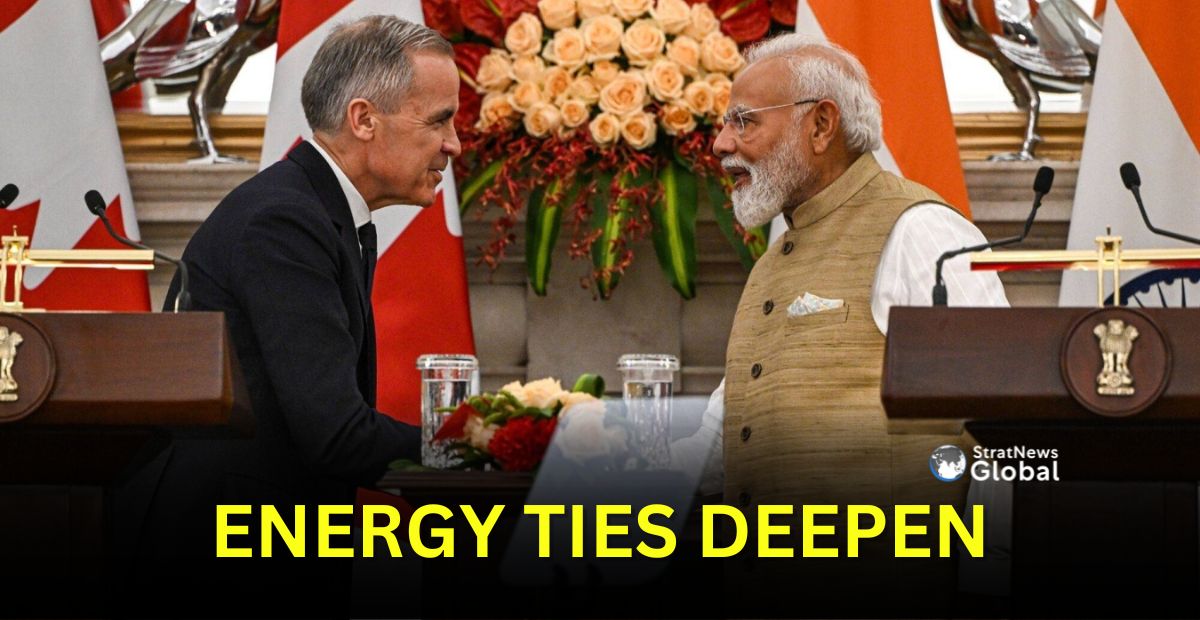
India and Canada plan to conclude negotiations for a free trade agreement within six months. The push came during talks between Prime Minister Narendra Modi and his Canadian counterpart Mark Carney on the sidelines of the G7 Summit in Evian.
Energy emerged as a key topic during the discussions. Modi and Carney reviewed developments in commercial arrangements involving liquefied natural gas (LNG), liquefied petroleum gas (LPG) and metallurgical coal.
India has been actively seeking to broaden its energy basket following repeated disruptions in energy supplies triggered by geopolitical tensions and conflicts in West Asia. This has led New Delhi to build partnerships with resource-rich countries such as Canada, a leading exporter of crude oil.
While most of Canada’s crude currently flows to the United States, Ottawa has been working to grow its export footprint. Canada is also among the world’s leading exporters of LNG and petroleum gases.
Current energy trade between the two countries is still modest. India has bought only crude oil worth about $46.3 million in 2025-26.
The meeting also reviewed progress in the civil nuclear sector. During Carney’s visit to New Delhi in March, India’s Department of Atomic Energy signed a long-term agreement with Canadian uranium producer Cameco for the supply of 11 million tons of reactor fuel.
Beyond trade and energy, the two leaders agreed to begin negotiations on a General Security of Information Agreement, a framework that would facilitate deeper defence and security cooperation.
The leaders also welcomed growing engagement between businesses and institutions on both sides. A Canadian trade delegation led by the country’s minister of international trade is expected to visit India later this year. Carney also invited Modi to visit Canada later this year.