India and the European Union are poised to conclude their long-pending Free Trade Agreement (FTA) later this month with Prime Minister Narendra Modi confirming that it is “going to materialise soon”.
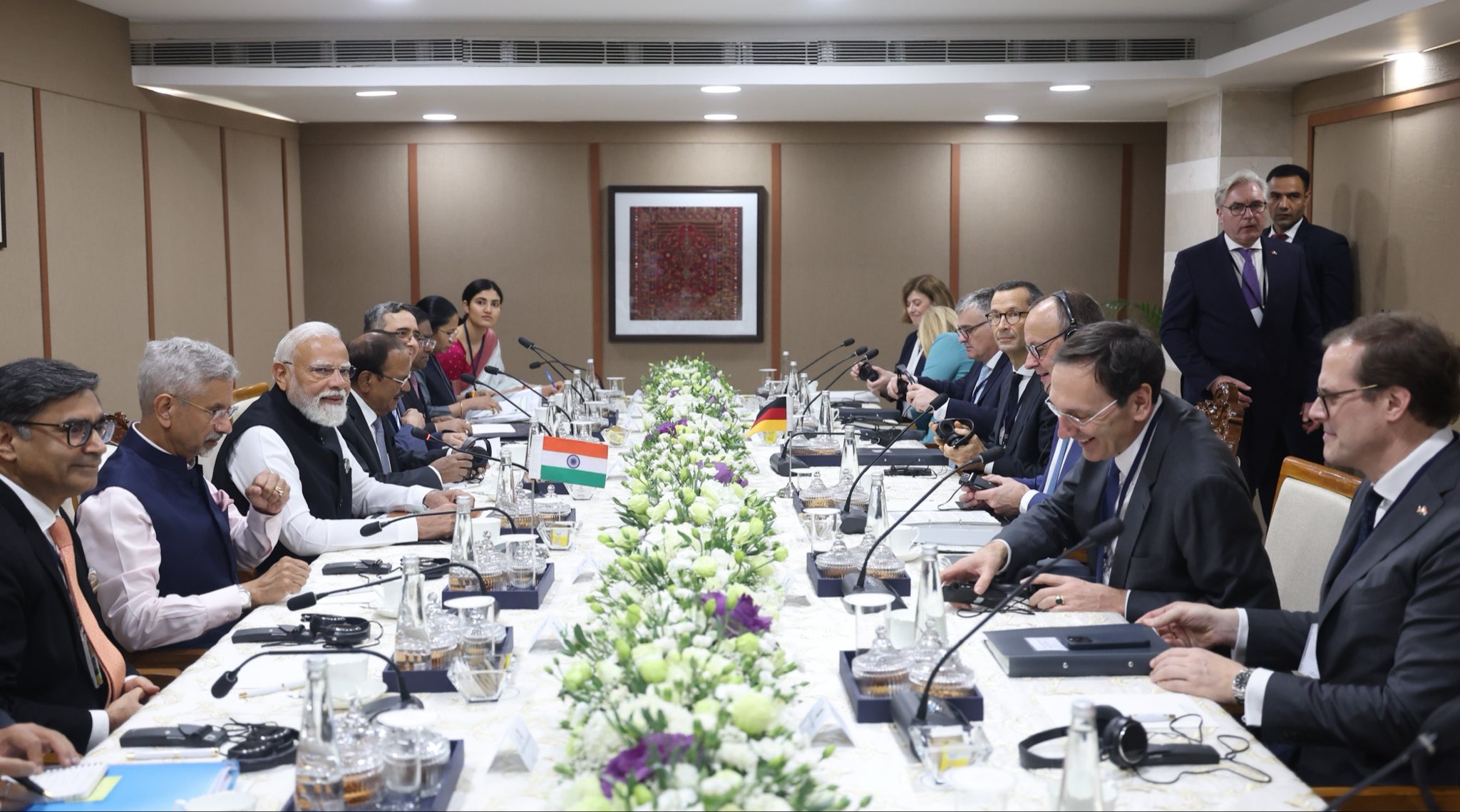
During talks with German Chancellor Friedrich Merz, he underlined that the agreement “Will open a new chapter for our trade, investment and partnerships. The path is clear.”
Chancellor Merz described the FTA as critical “To fully realise India–Germany economic relations, it is important to conclude the free trade agreement between India and the European Union.”
At a joint press briefing in Gandhinagar, he described India as both a “desired partner” and a “partner of choice” for Berlin.
Modi made a strong pitch for European industry to make and export from India. He assured that New Delhi remains committed to predictable policies, trust-based engagement and a long-term vision for economic cooperation.
Parallel to these high-level engagements, trade negotiators from India and the EU have intensified efforts to close remaining gaps.
Last week in Brussels, Commerce and Industry Minister Piyush Goyal and EU Trade Commissioner Maros Sefcovic held detailed discussions. Both reviewed progress across key areas including services, rules of origin and market access for goods. And at the end of the discussions, the two sides reiterated political resolve to resolve outstanding issues and fast-track the agreement.
One major sensitive issue under discussion is the EU’s Carbon Border Adjustment Mechanism (CBAM), which India has flagged as a potential disadvantage for its steel and aluminium exporters.
The timing is significant. The EU is currently India’s largest trading partner, with bilateral merchandise trade crossing $90 billion in 2024–25. Once completed, it would rank among India’s most comprehensive trade deals, deepening integration with one of its largest economic partners and setting the framework for cooperation in trade, technology, sustainability and global supply chains in the years ahead.