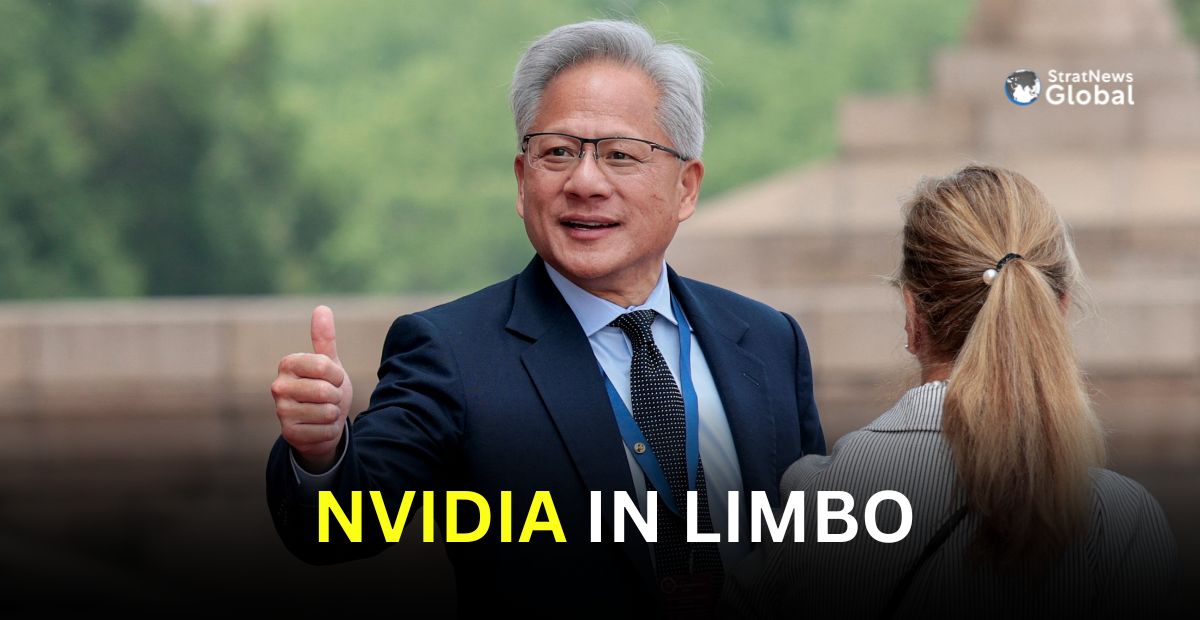
The United States has reportedly approved about 10 Chinese companies to purchase Nvidia’s H200 AI chips, but no shipments have been completed yet, according to three sources familiar with the matter. The delay has left the potential tech deal unresolved as CEO Jensen Huang looks to make progress during his China visit this week.
Huang, who was not initially listed in a White House delegation to Beijing, joined the trip after an invitation from President Donald Trump, a source said.
U.S.-China tech Rivalry
The stakes are significant, highlighting how the U.S.-China tech rivalry is now snarling even approved trade, leaving the world’s most valuable company and dominant chipmaker caught between dueling national priorities.
Before U.S. export curbs tightened, Nvidia commanded about 95% of China’s advanced chip market. China once accounted for 13% of its revenue, and Huang has previously estimated the country’s AI market alone would be worth $50 billion this year.
The U.S. Commerce Department has approved around 10 Chinese companies including Alibaba, Tencent, ByteDance and JD.com to purchase Nvidia’s H200 chips, according to the sources.
A handful of distributors including Lenovo and Foxconn have also been approved, sources said. Buyers are permitted to purchase either directly from Nvidia or through those intermediaries and each approved customer can purchase up to 75,000 chips under the U.S. licensing terms.
Thorny Conditions
The path to a completed sale has been obstructed by a tangle of requirements on both sides. U.S. rules issued in January require Chinese buyers to demonstrate they had installed “sufficient security procedures” and would not use the chips for military purposes.
Nvidia must also certify sufficient inventory in U.S.
Trump negotiated an arrangement under which the U.S. would receive 25% of the revenue from the chip sales, a structure that requires the chips to pass through U.S. territory before being shipped to China, as U.S. law does not permit the direct imposition of export fees.
The arrangement has prompted unease in Beijing over potential tampering or hidden vulnerabilities, even as sources describe it primarily as a workaround to legal constraints.
Scrutiny in China has also intensified after the State Council issued two recent supply chain security regulations, prompting a government-wide effort to identify and eliminate potential foreign dependencies in critical technology infrastructure, the fourth source said.
(With inputs from Reuters)