China’s social media has posted some interesting takes on Operation Sindoor and these tend to reflect the politically close ties between Beijing and Islamabad. Let’s begin with Chen Feng, a Chinese-language commentator and online writer known for his analysis of international affairs including military aviation and geopolitics.
In a post on Baidu (Screenshot below), he writes that Pakistan should commemorate air force day on May 7th and not Sept 7th as it is now. He believes that the “5.7 air battle” (5 meaning May and 7th the date) last year between Indian and Pakistani air forces ended in a decisive win for the latter with a 6:0 kill ratio.
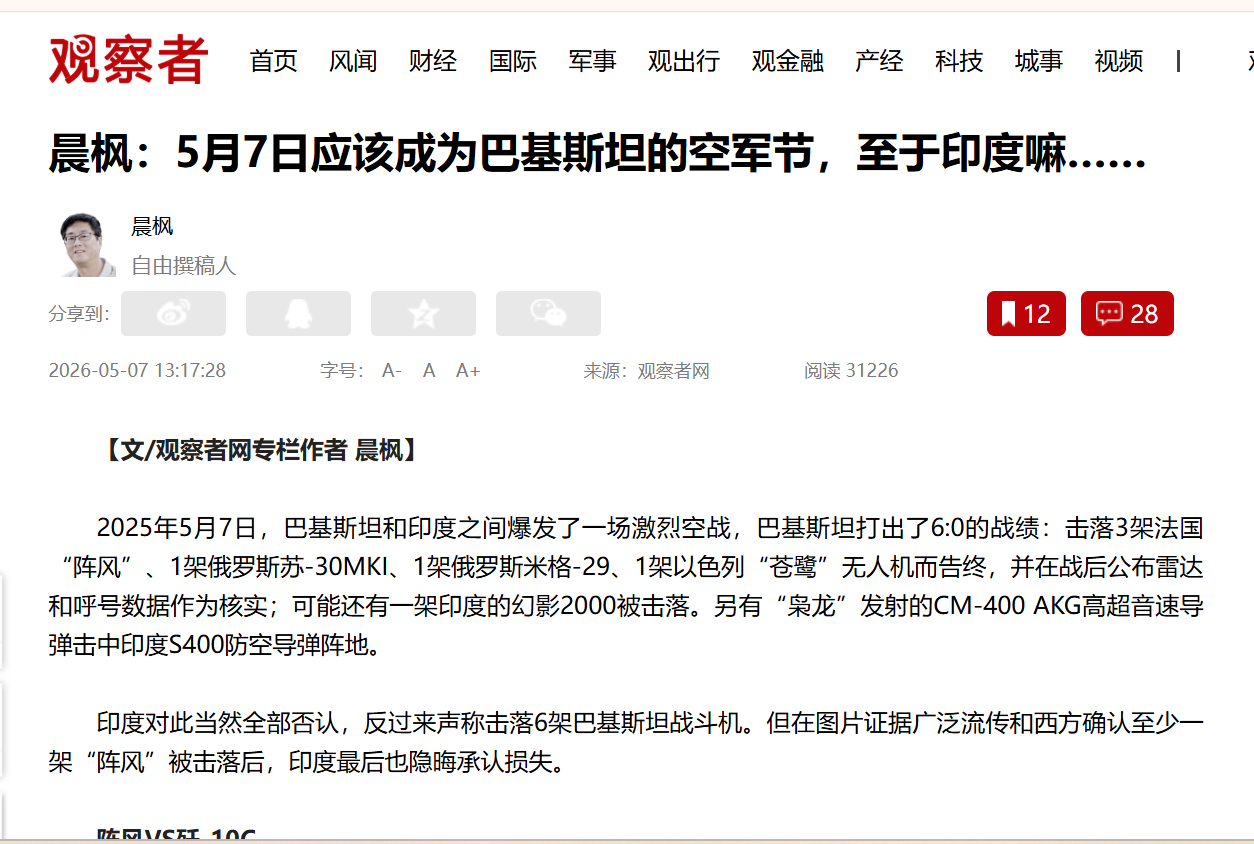 He attributes Pakistan’s success to integrated sensors and data links that enabled early detection and longer-range strikes, framing the outcome as an example of “system warfare” over individual aircraft performance. He claims that India downplayed its losses while Pakistan released supporting “radar data”, though these claims remain disputed and unverified.
On Weibo, a hashtag posted by a verified account “#Did They Really Win Or Just Act Like They Won?”, focused on whether India truly won.
The post (Screenshot shot) noted that India’s Ministry of Defence released a documentary marking the first anniversary of “Operation Sindoor,” presenting it as a proud victory. However, it noted that some international observers questioned India’s claims of inflicting significant damage while sustaining minimal losses.
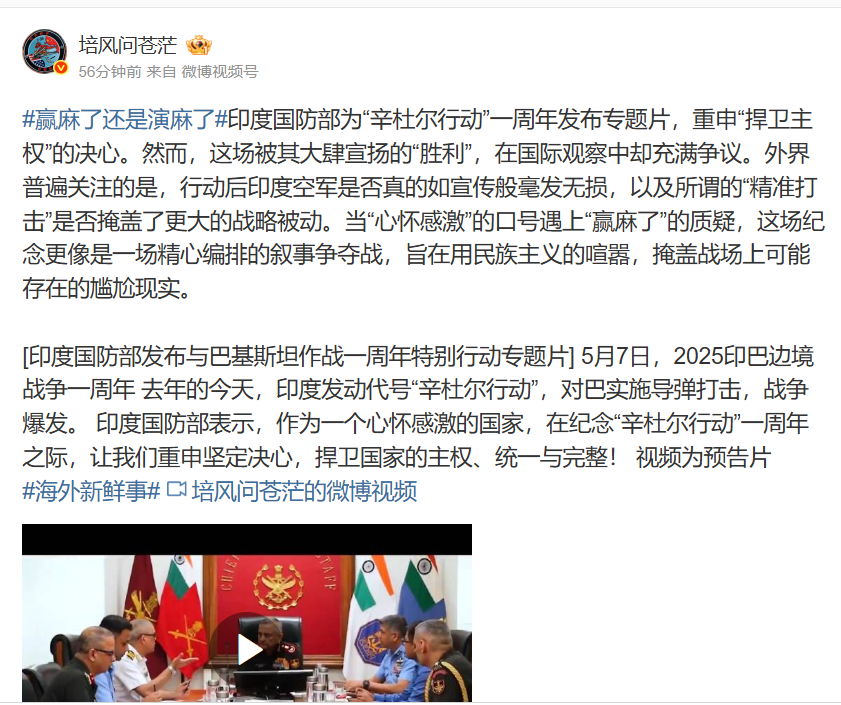
It argued that the commemoration is not only about military facts, but also about shaping public perception, using nationalist messaging to project victory and deflect attention from possible strategic setbacks.
The irony here is the Chinese Communist Party’s use of deception, outright lies and exaggeration when it comes to shaping a narrative, whether for the domestic audience or the external one. It is something discerning Chinese are familiar with and wary of countering. Better go with the flow. In any case, India is seen in adversarial terms.
A writer on India-related issues Chen Jing, added to the churn by arguing that India’s military confrontation with Pakistan reflects a “strategic setback”. He says India’s battlefield performance exposed weaknesses, leading to stronger domestic messaging around operations like “Sindoor” to reinforce public confidence.
In his view, this has subtly shifted the Indian discourse, reducing confidence in challenging China and prompting a reassessment of Pakistan’s military strength. Pakistan has gained diplomatic and psychological advantage, while India’s regional standing has weakened. (Screenshot below)
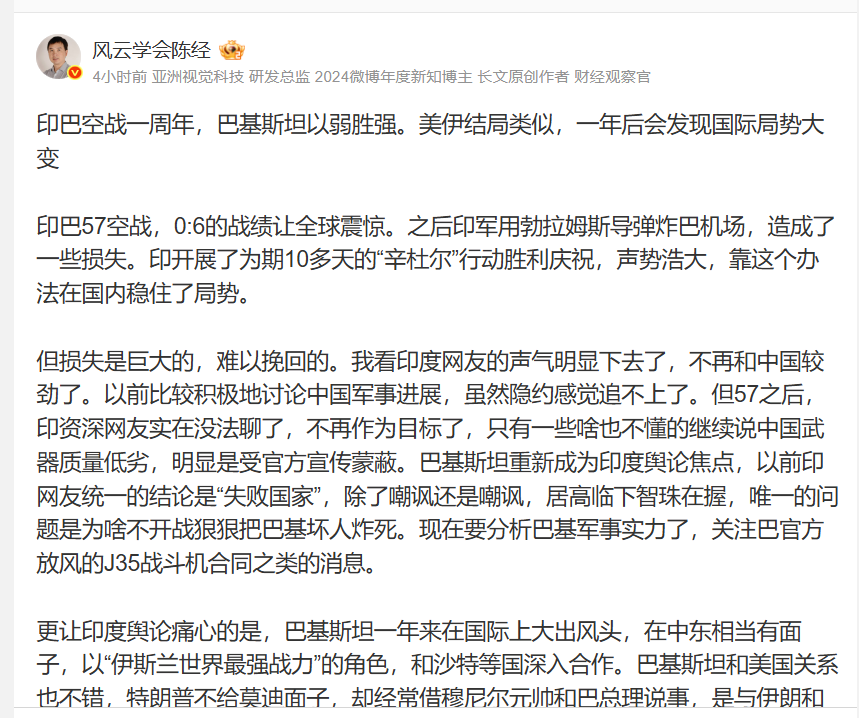
More broadly, he suggests that when stronger powers fail to decisively defeat weaker opponents, it erodes perceived dominance and signals a shift towards a more multipolar global order. That comment may have been made with an eye on the US.
That sparked comments from several netizens: one arguing that Sun Tzu’s Art of War emphasised that battle should only be taken up when one is confident of victory. The hint was that the United States and India are facing consequences for recklessness. That may make sense with respect to the US which seems to have gone to war against Iran with no clear goals or an exit strategy.
It would hardly apply to India which only responded to a terrorist attack. In that regard, a bizarre comment on Weibo was that the Pahalgam attack was the work of an “India-linked” terror group. Of course, no group was named.
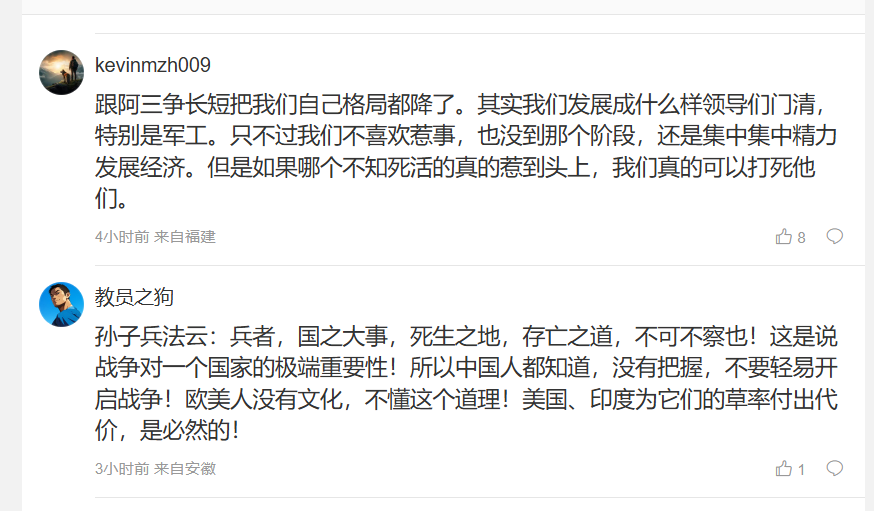
Another comment argued that although Pakistan’s domestic governance is weak, its diplomacy is comparatively stronger than India’s, allowing it to maintain good relations with major global powers. That may have more to do with geopolitics and Pakistan’s ability to influence the narrative at least initially.
A word on the China clone of Wikipedia, called Baidu Baike. A post on it claims (Screenshot below) that on May 7, 2025, there was an “India–Pakistan air battle”. It claimed that “Western media” described it as one of the largest air battles since World War II.There is no evidence, official or otherwise, from either capital about such an air battle. And it’s not clear which “Western media” it is referring to. Clearly, Baidu Baike (like Wikipedia) is an open-edit platform where unverified or false information can be posted.
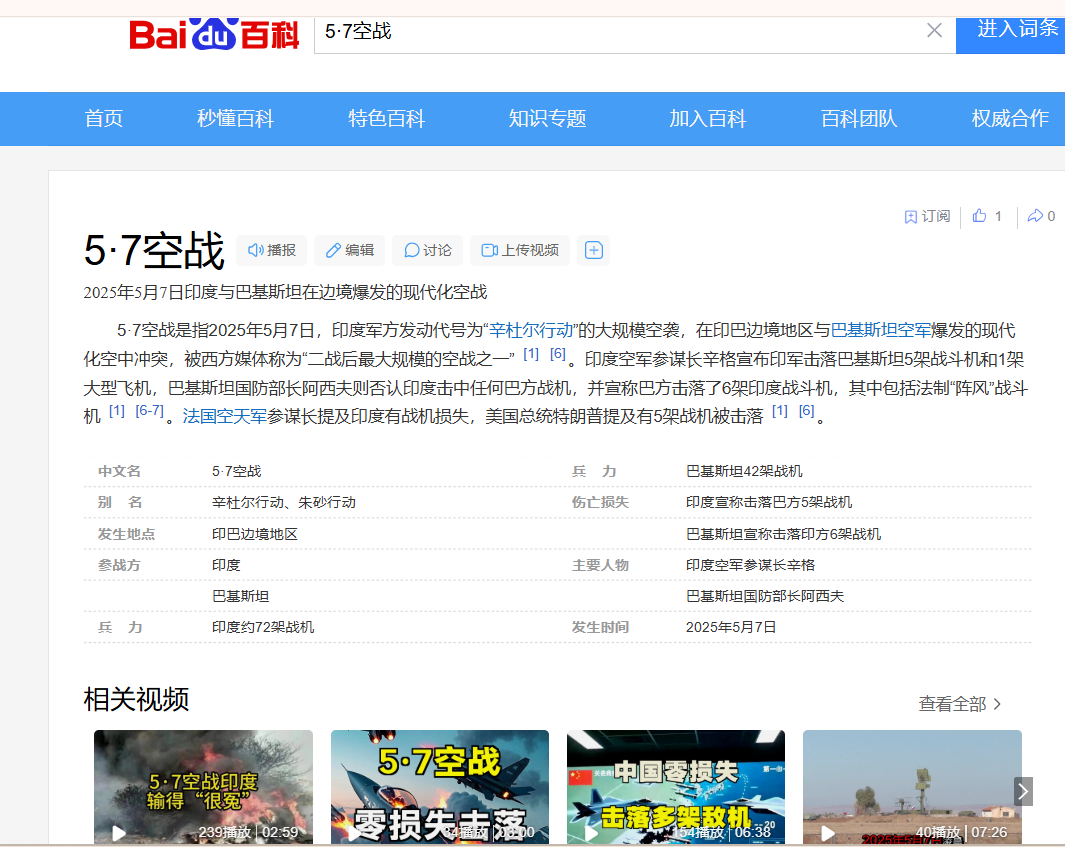
India has till date, not given any details as to how many aircraft were lost during Operation Sindoor. Baidu Baike says the Indian air chief claimed that five Pakistani jets and one large aircraft were destroyed. But Pakistan has denied any losses and claimed to have destroyed six Indian fighter jets, including French-made Rafales.
The true picture will emerge as time heals and memories fade. But one thing is certain: China’s netizens see Pakistan as a friend, India as an adversary and that reflects what they post.