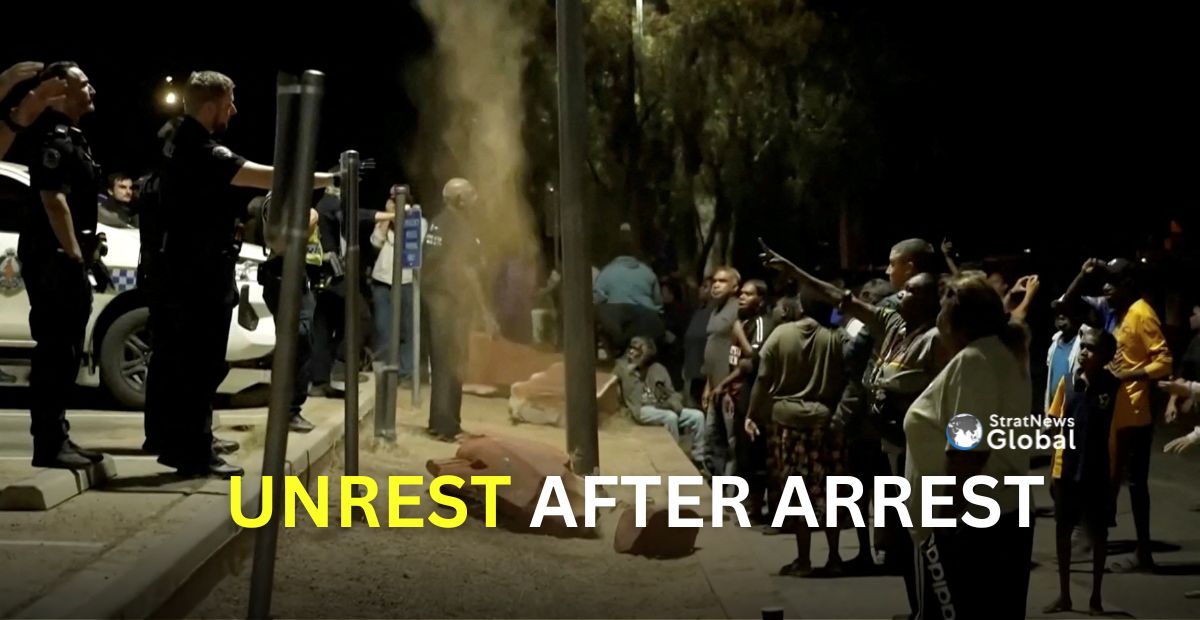
Hundreds of protesters clashed with emergency services in a remote Australian town after the arrest of a man suspected of killing a five-year-old Indigenous girl, police said on Friday.
Anthony Albanese, along with the Northern Territory’s police commissioner and a spokesperson for the victim’s family, urged calm after an angry crowd of about 400 Indigenous residents gathered outside a hospital where the suspect was taken after being beaten unconscious by locals.
Footage of the protests from public broadcaster ABC showed members of the crowd calling for payback, which refers to traditional, mostly physical, punishment in Aboriginal societies.
They threw projectiles and lit fires, injuring a number of police officers and medical workers, while also damaging police vehicles, ambulances and fire trucks. Police used tear gas to disperse the protesters.
Girl Was Missing Since Late On Saturday
Jefferson Lewis, 47, whom police believe abducted and killed the girl, turned himself in at a town camp in Alice Springs, where locals assaulted him in an act of vigilante justice, police said.
The child, referred to by her family as Kumanjayi Little Baby, had gone missing days earlier and was found dead in nearby bushland. Lewis, previously identified as a suspect, has a history of violent offences and was recently released from prison.
Suspect Moved To Darwin For Own Safety
Authorities urged calm after the unrest, with police commissioner Martin Dole calling the violence an “aberration” and confirming the suspect was moved to Darwin for his safety and is likely to be charged soon.
Anthony Albanese said he understood public anger but appealed for unity, while community leaders asked for restraint as the family mourns.
Officials have imposed alcohol restrictions and increased police presence to prevent further escalation.
The incident also highlights longstanding challenges faced by Indigenous Australians, who remain disproportionately affected by social and economic disadvantage, particularly in remote communities like those around Alice Springs.
(With inputs from Reuters)