It could be funny if it wasn’t so serious. Journalist and Bangladesh watcher Deep Haldar, wrote recently on the Bangladesh Army “turning religious”, and quoted a Pakistani journalist and security analyst Ali Chisti as saying:
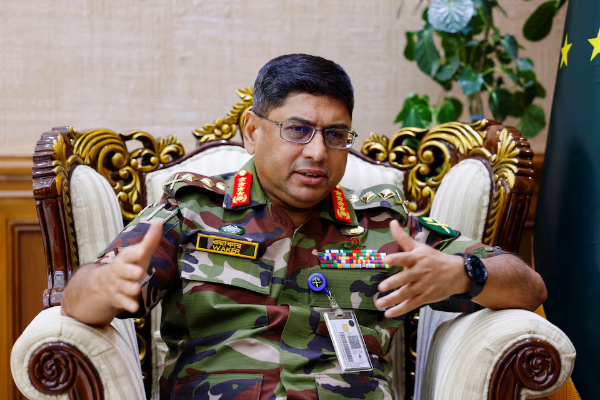
“Interesting transformation in Bangladesh Army Chief General Waker-Uz-Zaman. Once clean-shaven, he’s now sporting a full beard and in his last two speeches, he’s urged the military to embrace Islamic values.”
The context of those remarks is also interesting. For the first time in the history of the Bangladesh Army, a newly-raised battalion has four companies named after the companions of the Prophet Mohammad: Umar, Abu Bakr, Ali and Usman.
Traditionally, army units in Bangladesh have been designated by geographical, numerical, or administrative terms. Apparently, even the battle cry has been changed from “Joy Bangla” to “Allahu Akbar”.
Some observers here believe this is this linked to growing Pakistani influence. But a cross-section of Indian diplomats and army officers who served in Bangladesh told StratNewsGlobal, that even during the years of Sheikh Hasina, every officer in the Bangladesh Army saw India as the “enemy country”.
“It is in the psyche of every young officer and is expected to gain ground as Islamisation grows,” one of them said. “It may not be that the army as an institution is pushing the case for Islamisation and in fact the annual confidential report of every officer takes note of it although there is no detailed reference to his beliefs.”
But as the officers move into higher ranks, beards become more visible, wives of officers tend to cover their hair and namaz is observed.
“The higher leadership may not want it and in fact two generals were sidelined because of their orientation towards the Jamaat-s-Islami which wants Sharia law in the country,” a retired army officer who served there said.
But changes made in promotion procedures could see more Islamic-oriented officers rising to the top. In Sheikh Hasina’s time, the national security adviser decided on senior level promotions, giving him the power to eliminate Islamists. Now promotions are decided by senior generals sitting together.
Does that make it easier for the odd Islamist to rise to higher rank? Anything is possible more so when the trend favours Islamisation. As it is, rank and file soldiers are known to be deeply religious.