U.S. and Iranian officials said they had reached a preliminary framework aimed at ending the conflict, lifting the U.S. blockade on Iran, and reopening the Strait of Hormuz. The announcement pushed oil prices lower, though key questions surrounding Iran’s nuclear programme remain unresolved and will be addressed in future negotiations.
“The Deal with the Islamic Republic of Iran is now complete,” U.S. President Donald Trump wrote on his Truth Social platform around 5:30 p.m. ET local time in Washington (2130 GMT) on Sunday.
His post came shortly after Pakistani Prime Minister Shehbaz Sharif, whose country has served as a mediator, announced a deal had been struck early on Monday local time.
The memorandum of understanding is scheduled to be officially signed on Friday in Switzerland.
The precise terms were not immediately known. Sharif said in a post on X that the pact called for “the immediate and permanent termination of military operations on all fronts, including in Lebanon.”
Iran’s Supreme National Security Council said hostilities would cease from Monday night, while Deputy Foreign Minister Kazem Gharibabadi said broader issues, including sanctions relief and Iran’s nuclear programme, would be negotiated during a 60-day ceasefire. Israel, which has said it was not part of the U.S.-Iran talks, did not immediately comment on the announcement.
Strait To Reopen
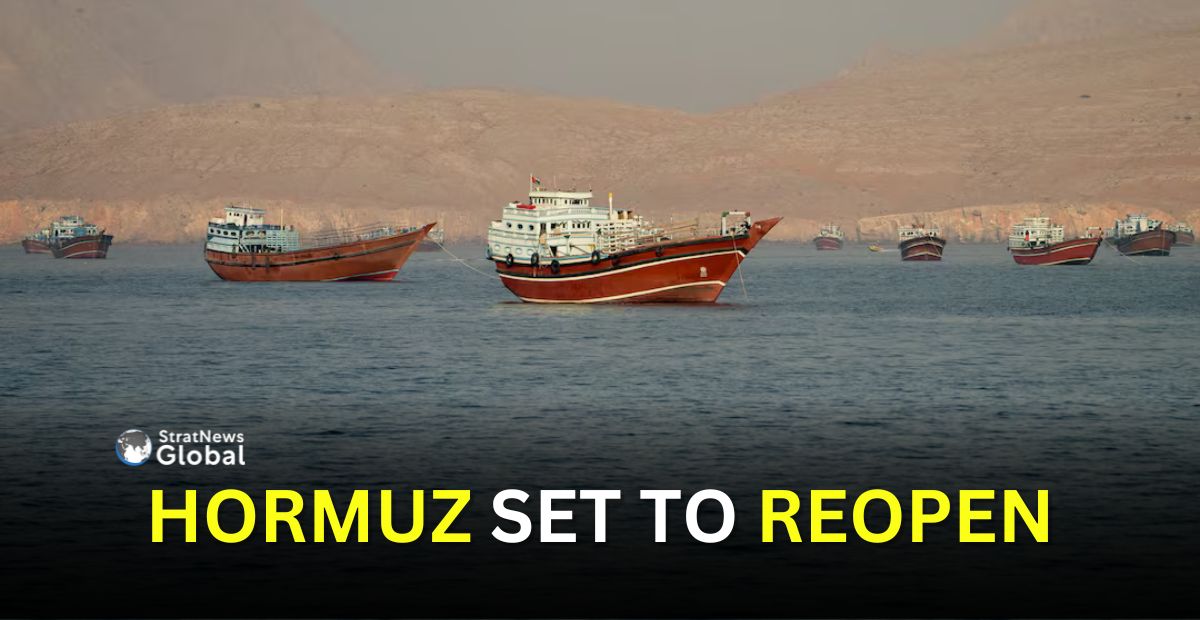
Trump said the Strait of Hormuz, a major shipping route for global oil and gas supplies that Iran has effectively shut down for months, would open on Friday, and that he had ordered the end of the U.S. blockade of Iranian ports.
Oil prices fell on the news. Brent crude futures fell 4% in early trading on Monday, while U.S. West Texas Intermediate slid more than 4.6%. Stock markets in Asia jumped.
Former Biden administration State Department spokesperson Matthew Miller said Trump had made important concessions to Iran to achieve the status quo that existed before he launched the war.
“We have no assurances the nuclear program will ever be addressed, but Iran has shown the world it can take the global economy hostage and get something from the U.S. in return,” said Miller.
Hurdles Remain
The deal was reached despite an Israeli strike in Lebanon on Sunday that drew criticism from Iran and President Donald Trump. Israeli Prime Minister Benjamin Netanyahu has resisted U.S. calls to scale back operations in Lebanon, while Iran has insisted on a ceasefire there as part of any agreement.
European leaders welcomed the breakthrough, with Britain, France, Germany and Italy signalling readiness to ease sanctions if Iran takes verifiable steps to limit its nuclear programme.
Reports suggest negotiations also include discussions on frozen Iranian assets and the future of Iran’s enriched uranium stockpile, though details remain unresolved.
(With inputs from Reuters)