South Korea wants to be more than a spectator in the Arctic, positioning itself as a key enabler of the region’s development and governance.
Its push reflects a broader Asian turn towards the Arctic, where China is pursuing ambitious commercial and strategic interests while India steadily expands its scientific and diplomatic presence.
For much of the past decade, South Korea has described itself as a “responsible observer” in the Arctic, a status it adopted after gaining observer status in the Arctic Council in 2013.
But according to a new analysis by Nima Khorrami of the Arctic Institute, Washington D.C. and Andreas Raspotnik Director of High North Center, Nord University, Seoul’s growing capabilities and interests now warrant a more ambitious identity: that of an Arctic “enabler”.
Writing for June edition of the SIGA-HUFS JMCE Bulletin, a joint publication by the Seoul Institute of Global Affairs (SIGA) and the Jean Monnet Centre of Excellence (JMCE) at Hankuk University of Foreign Studies, the authors argue that influence in the Arctic is increasingly determined not by geography but by contribution. For countries outside the Arctic Circle, legitimacy is earned through science, infrastructure, governance support and practical engagement rather than physical proximity. In that environment, South Korea has emerged as a far more consequential player than its official rhetoric suggests.
The argument comes at a time when the Arctic is undergoing profound change. Rising temperatures are opening new shipping routes, exposing previously inaccessible resources and drawing greater attention from governments and businesses alike. What was once viewed primarily as a scientific frontier is increasingly becoming a geopolitical and economic theatre where influence is tied to participation.
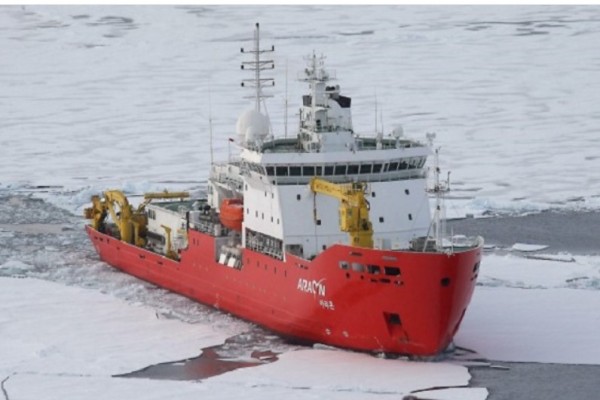
South Korea’s credentials are substantial. It is one of the world’s leading builders of ice-capable vessels and LNG carriers that are critical for Arctic shipping and energy projects. Seoul is also developing artificial intelligence-powered sea-ice forecasting systems designed to improve navigation along Arctic sea routes. Beyond industry, it contributes to the development of maritime regulations through the International Maritime Organization’s Polar Code and has played a role in facilitating multilateral cooperation through conferences linked to Arctic fisheries governance.
Taken together, these contributions make South Korea something more than an observer, the authors argue. Rather than merely participating in Arctic discussions, Seoul is helping build the infrastructure, systems and governance frameworks that enable others to operate in the region.
The distinction matters because diplomatic narratives shape perceptions. A country that defines itself as an observer signals caution and restraint. A country that presents itself as an enabler highlights what it brings to the table. According to Khorrami and Raspotnik, South Korea’s existing description increasingly understates its capabilities and may even create confusion as its commercial interests in Arctic logistics, shipping and energy continue to expand.
The proposed “enabler” identity is intended to close that gap. It would present South Korea as a country that facilitates cooperation, provides infrastructure and develops technologies that help Arctic states and institutions pursue their own objectives more effectively. In doing so, Seoul would make its interests more transparent while strengthening its diplomatic standing.
The approach also helps distinguish South Korea from other Asian actors pursuing Arctic ambitions.
China’s Arctic strategy has attracted particular scrutiny over the past decade. Beijing has invested heavily in Arctic infrastructure, shipping networks and energy projects under its Polar Silk Road initiative. It has also described itself as a “near-Arctic state”, a term that has generated unease among several Arctic governments that see it as implying rights or influence derived from strategic interest rather than geography or contribution.
Khorrami and Raspotnik argue that South Korea’s proposed “enabler” framework offers a clear contrast. Rather than focusing on what Seoul believes it is entitled to receive from the Arctic, the concept centres on what South Korea can contribute. It is a model based on service, capability and cooperation rather than status.
India has adopted a different path altogether.
Since obtaining Arctic Council observer status in 2013, New Delhi has gradually expanded its Arctic engagement from a largely scientific endeavour into a broader strategic undertaking. According to a recent analysis of India’s Arctic policy, the country’s 2022 Arctic strategy identifies six key pillars: science and research, environmental protection, economic development, transportation and connectivity, governance and international cooperation, and capacity building.
India’s presence is anchored by the Himadri research station in Svalbard, which supports research into atmospheric systems, glaciers and ocean processes that directly affect South Asian climate patterns. Arctic warming has implications for India’s monsoon, Himalayan glaciers and coastal vulnerabilities, giving New Delhi a strong scientific rationale for sustained engagement.
At the same time, India is increasingly examining the Arctic’s economic potential. The Northern Sea Route could shorten shipping times between Asia and Europe, while Arctic resources hold long-term significance for energy security and critical mineral supply chains. New Delhi has also deepened cooperation with Russia on Arctic logistics and connectivity while maintaining strong scientific partnerships with Nordic countries.
Unlike China, however, India has largely framed its Arctic role around scientific diplomacy and multilateral engagement. The result is a presence that remains modest but increasingly influential, particularly as India seeks to connect Arctic developments with concerns shared across the Global South.
For South Korea, the challenge now is to convert capability into influence.
The authors note that Seoul’s industrial strengths, governance contributions and technological expertise already give it a meaningful role in Arctic affairs. What is missing is a diplomatic framework that accurately reflects those capabilities and allows Arctic states to understand South Korea’s value proposition more clearly.
Whether the “Arctic enabler” concept gains traction will depend on how consistently it is reflected in policy documents, diplomatic engagement and future projects. But as the Arctic becomes more strategically important, the debate itself underscores a larger reality: the region is no longer the exclusive domain of Arctic states.
For countries such as South Korea, China and India, the Arctic is increasingly viewed as a critical component of future trade, climate security, technological innovation and geopolitical influence.
Seoul’s effort to redefine itself may be an early indicator of how the next phase of Arctic competition and cooperation will be shaped by a growing cast of actors from Asia and beyond.