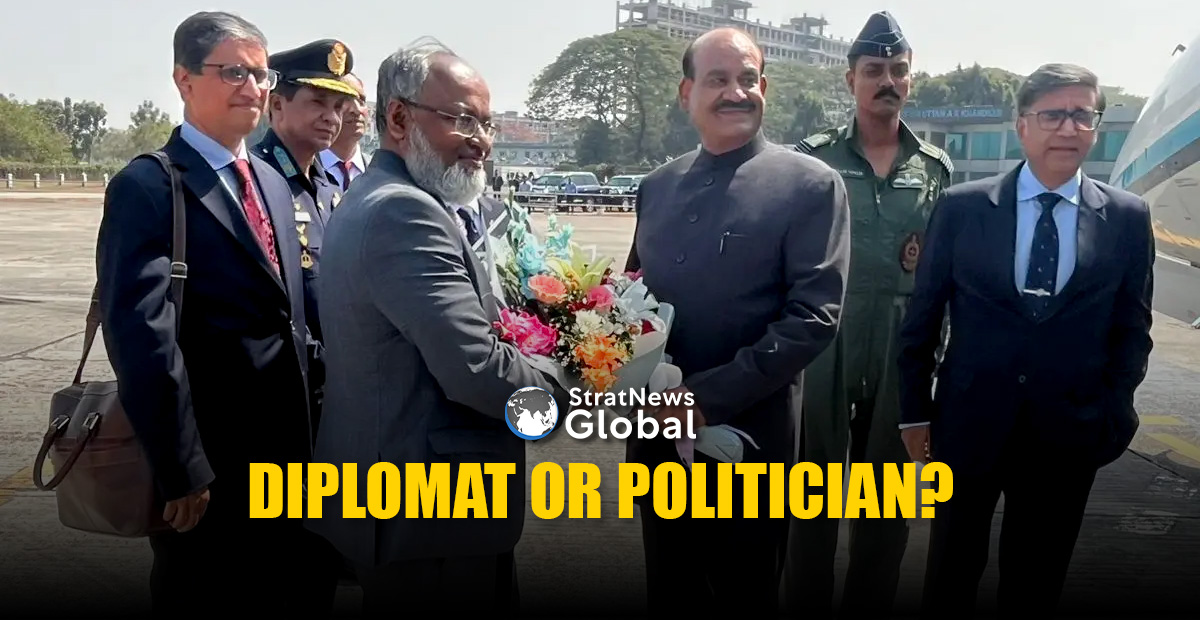
It’s been two days since veteran politician Dinesh Trivedi’s name surfaced as India’s possible high commissioner to Bangladesh. The word is his name has been forwarded through diplomatic channels to Dhaka and a response is awaited.
As a political appointee, Trivedi will bring many advantages notably a direct line to Prime Minister Modi. It means a quicker and smoother exchange of proposals and ideas with fewer interventions by rule-bound bureaucrats.
Trivedi can cut corners, he will be sensitive to political ramifications and is a past master of the art of deal-making, a former diplomat said. This is crucial when at some point, his remit will include negotiations over renewal of the Ganga Waters Treaty which expires at the end of the year.
Add to that the on-again, off-again negotiations over sharing the waters of the Teesta River that have floundered over West Bengal Chief Minister Mamata Bannerjee’s objections.
If a BJP government emerges in Kolkata after the assembly elections later this month, Trivedi could well be the key man in India’s outreach to Dhaka. One who can be counted on for keeping the bilateral relationship stable, the conversation going and pulling off a water sharing deal that’s fair to all.
Mind you, the Ganges Treaty is political, also any deal on sharing of Teesta waters. Both have ramifications in West Bengal and other parts of India. It has implications for India in Bangladesh, where this country has for long been viewed with distrust.
As a former diplomat and high commissioner to Bangladesh told StratNewsGlobal, Trivedi’s long political innings has seen him move from the Congress Party in the 1980s to the Janata Dal and the Trinamool Congress before finally settling on the BJP five years ago.
“That makes him a survivor,” he said, “maybe even a butterfly in some respects but there’s no doubting his political instincts. His experience with all manner of politicians and political issues could stand him in good stead in Dhaka where he will have to deal with the ruling BNP, on the one hand, and the Jamaat-e-Islami on the other.”
Add to that anti-India sentiment seen in the attacks on Hindu minorities, the exclusion of the Awami League from politics, the courting of Pakistan, China’s growing influence, America’s role and so on.
Others are not so impressed. While they give him credit for his long innings in West Bengal, he is also seen in some quarters as a “spent bullet”, meaning that his political life is over and being sent as ambassador to Bangladesh is the end of the road.
Of course, Dhaka could reject his nomination. That may see the resurrection of another politician Arif Mohammad Khan, whose name briefly figured in the media as envoy to Dhaka. Or would Bangladesh prefer a professional diplomat?
Sandeep Chakravorty, currently India’s ambassador to Indonesia, had been mentioned as a possible ambassador to Bangladesh before being supplanted by Arif Khan and now Trivedi.
Clearly, government is weighing the options. There’s a lot at stake in Bangladesh and India needs to carefully think through its options before deciding on the best bet.