What happens if the Islamic regime in Iran collapses? In an interview broadcast on Sunday, India’s former ambassador to Iran Gaddam Dharmendra, had argued that while people in the streets don’t like the regime, there is concern about what will replace it.
“We have to keep in mind one in 2019, when we had a big protest against petroleum hikes, they quickly became political anti-regime, you know, anti system. But it stops short of a dramatic, what do you say, tipping point. So everyone kind of pulls back.
“We saw this in 2022 also with the Mahsa Amini riots when people came out in the streets all over the country but after a time everyone pulled back. The security forces pulled back. The people also pulled back.”
Ambassador Dharmendra believes there is an “elasticity” in the system where there is a push but people don’t wan’t the system to collapse as happened in Afghanistan or Iraq or Syria.
Given that, it’s hard to say how long these demonstrations will carry on, more so because these are organic, there is no leadership nor is there any singular focus. People are angry over falling living standards, they want the regime to spend more money on improving people’s lives rather than on foreign adventures.
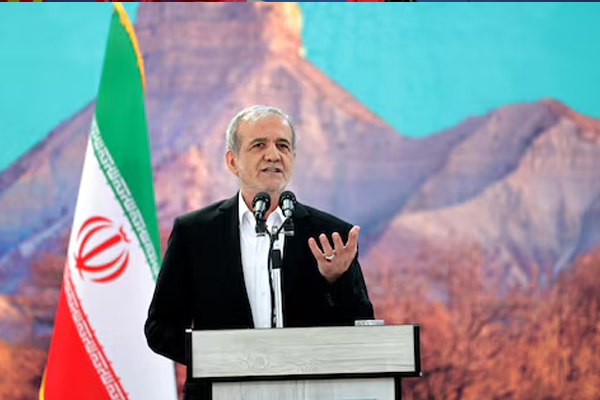
Right now it’s not clear the regime is listening although President Pezeshkian has struck a conciliatory note and $7 (Iran rial equivalent is over 11.3 mn)is being distributed among the people.
Who could succeed the regime if it collapses? The most obvious is Reza Pahlavi, son of the late Shah of Iran who lives in the US and is believed close to the establishment. He has not called for restoration of the monarchy, rather pushing for democracy.
“I have therefore stepped forward to lead and serve in that capacity: not as a ruler-in-waiting, but as a steward of a national transition to democracy,” he has promised.
While he has some support in Iran, it’s not clear if it is significant or even credible. There are indications the US is talking to former Iran president Hassan Rouhani.
“They’re listening to his telephone. They are watching him. So therefore they believe that the Americans are talking with people” inside Iran, said Ali Reza Nourizadeh, an activist.
Another probable is Sayed Hossain Moussavian who was Iran’s ambassador to Germany under President Hashemi Rafsanjani, spokesman for Iran’s nuclear negotiators from 2003 to 2005, and did a stint at the Princeton School of Public and International Affairs.
But others say “It’s not going to be a person per se. What forces can come in and take control of the streets?” said Iran scholar Alireza Nader, president and senior adviser of the Nader Research Group in DC. “Ultimately, it’s forces on the ground,” he continued.“As long as the regime sticks together, they’re going to kill a lot of people before it comes to that.”