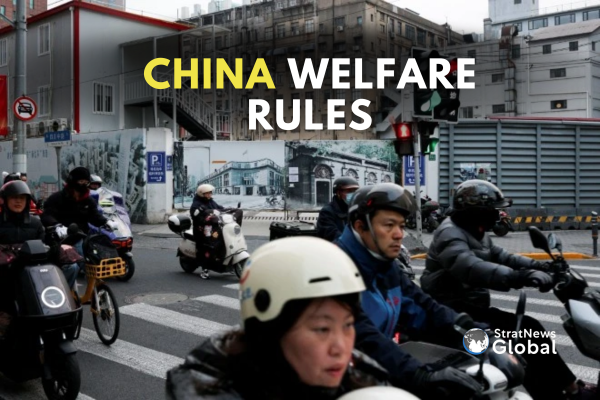
China’s push to enforce social insurance payments is seeing mixed results, with firms and workers responding in different ways after a 2025 court ruling made it illegal to avoid contributions.
The ruling, issued by the Supreme People’s Court, aims to strengthen the country’s welfare system by requiring employers and employees to make mandatory payments.
However, six months on, compliance remains partial.
Interviews with workers and factory owners show many firms are restructuring wages to reduce their contribution burden. Payments are often calculated on a lower base salary, with the rest of income shifted into bonuses or allowances.Some companies said they are unable to pay at all due to financial pressure.
Workers split over costs and benefits
Workers are divided over the changes. Some prefer higher take-home pay and are reluctant to contribute, while others support full payments to secure long-term benefits.
In some cases, employees have chosen informal contracts to avoid deductions. Others say employers have reduced wages to offset the cost of contributions. The policy requires employers to contribute about 25% of wages, while employees pay around 10%.
Firms cite economic pressures
Factory owners say rising labour costs come at a time of weak demand, price competition and high debt.Some businesses warned that strict enforcement could force closures, while others admitted to partial compliance.Economists say this reflects a broader dilemma for policymakers, balancing long-term welfare goals with short-term economic pressures.
Key test for economic reform
The reform is seen as part of China’s effort to boost household income security and encourage consumption.
However, limited compliance highlights the challenges of implementing structural changes across a large and diverse economy.
Data and surveys suggest only a minority of firms fully follow the rules, indicating that enforcement remains inconsistent.
(with inputs from Reuters)