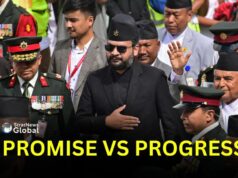
On Friday, the UAE is expected to formally withdraw from OPEC (Organisation of Petroleum Exporting Countries), and about two weeks later Prime Minister Narendra Modi will be in Abu Dhabi on a visit expected to last no more than three hours.
But those three hours will be crucial with the focus on energy security, bilateral trade and deepening defence cooperation. The timing underscores shifting geopolitical and energy dynamics in West Asia, with implications for India’s strategic and economic interests.
The UAE’s withdrawal from OPEC is expected to give it greater flexibility to scale production beyond quota limits historically influenced by Saudi Arabia. Experts view the move as both strategic and opportunistic.
Dr. Lakshmi Priya, Associate Professor at Jawaharlal Nehru University, said: “UAE’s exit is well planned and designed for pursuing its national interests and seems to have been motivated by the ongoing disruptions in the Strait of Hormuz. With its exit, OPEC becomes weakened as the UAE was one of the major producers within the group. For India, it might be a positive development given the consistently strengthening ties with the UAE.”
She said that increased Emirati oil production could help stabilise prices and expand supply access for India, while also strengthening crude storage cooperation, including reserves in Mangalore.
Defence Partnership
In January this year, the UAE and India had signed a strategic framework aimed at expanding bilateral military ties. The agreement outlines collaboration across defence manufacturing, advanced technologies, cybersecurity, counter-terrorism and joint training.
Both sides are focused on transitioning from a traditional buyer-seller relationship to co-development and co-production of military platforms. This aligns with India’s domestic manufacturing push and positions the UAE as a gateway for Indian defence exports into West Asia and Africa.
The upcoming visit follows a series of high-level exchanges. National Security Adviser Ajit Doval met UAE President Mohamed bin Zayed Al Nahyan on April 26, where both sides reviewed the comprehensive strategic partnership and discussed regional security and energy concerns.
The meeting, also attended by Crown Prince Sheikh Khaled bin Mohamed bin Zayed Al Nahyan, highlighted shared concerns over regional stability amid ongoing geopolitical tensions.
Earlier in April, India’s External Affairs Minister S. Jaishankar also held talks with the UAE leadership, stressing the resilience of bilateral ties despite a complex regional landscape.
Doval’s outreach extended to Saudi Arabia as well, reflecting India’s broader diplomatic engagement in the Gulf amid uncertainty surrounding the next round of U.S.-Iran talks.
The UAE’s OPEC exit is widely seen as part of a broader recalibration of its regional posture. Frictions with Saudi Arabia, differences over oil policy, and evolving alignments involving Pakistan and the United States have all contributed to the shift.
At the same time, ongoing tensions involving Iran and disruptions in key energy corridors have heightened the urgency for stable supply chains, an area where India-UAE cooperation is becoming increasingly critical.
Bilateral trade is projected to reach $200 billion by 2032, with both countries investing in long-term economic and security collaboration. The UAE’s role in India’s strategic petroleum reserves and its emergence as a key defence partner reflect the deepening relationship.