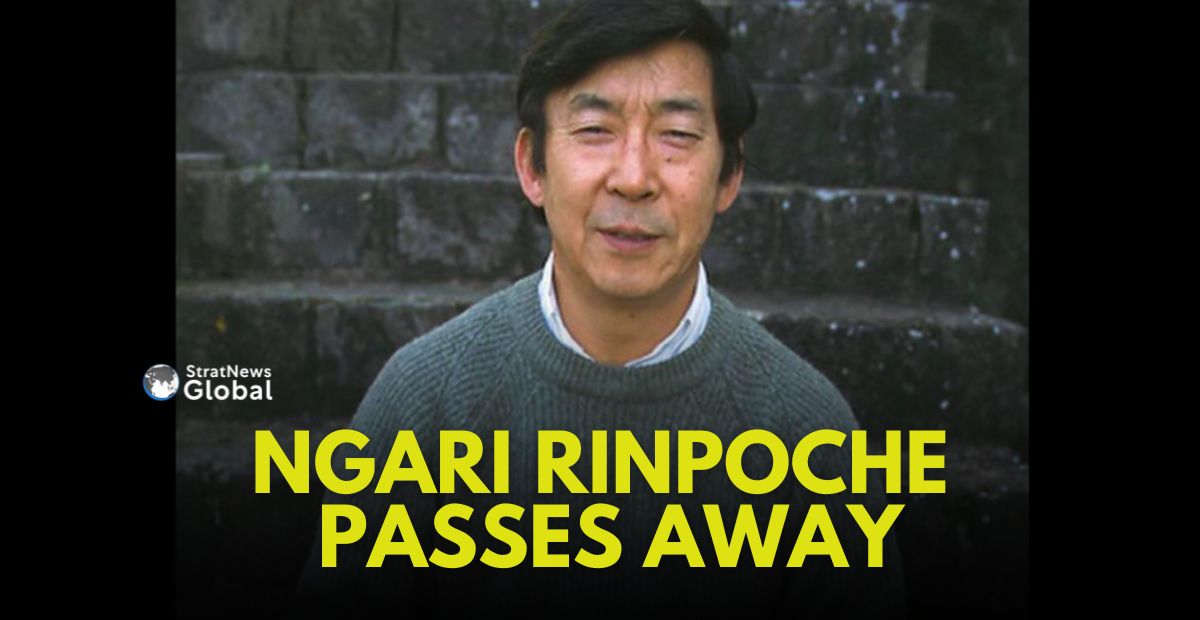
Ngari Rinpoche Tenzin Choegyal, the youngest brother of the 14th Dalai Lama and a distinguished figure in the Tibetan exile community, died on February 17 at his residence, Kashmir Cottage in Dharamshala, India, at the age of 80, Tibetan sources confirmed.
His passing has drawn widespread tributes from Tibetan leaders, activists and international advocacy groups, who praised his decades-long commitment to preserving Tibetan religion, culture and the political aspirations of his people.
Born in Lhasa, Tibet, in 1946 Tenzin Choegyal was recognised at a young age as the 16th incarnation of a revered lama known as Ngari Rinpoche, a lineage associated with western Tibet. He was given the name Tenzin Choegyal by his brother, the Dalai Lama, and began his religious studies in the traditional monastic system, including at the famed Drepung Monastery, before the family’s exile.
In 1959, when he was 12, Ngari Rinpoche fled Tibet as part of the larger entourage accompanying the Dalai Lama following the Chinese invasion and occupation, which led to the Tibetan government and spiritual leadership establishing a government-in-exile in India. A few weeks after arriving in India, he was enrolled in a boarding school in Darjeeling, where he received his first formal modern education, and later pursued studies in the United States.
Unlike many reincarnated lamas who remain entrenched in monastic life, Ngari Rinpoche chose a lay path while retaining deep spiritual insight. He was widely respected for his candid, thoughtful perspectives on Tibetan issues and often spoke at educational institutions in India and abroad on the challenges facing the Tibetan people and culture under Chinese rule. According to the International Campaign for Tibet, he “detested ritualistic practice and monastic protocols that created a distance between the lama and the monastic community,” and worked to make spiritual institutions more accessible and relevant to everyday Tibetans.
After completing his studies and returning to Dharamshala, Ngari Rinpoche dedicated his life to public service within the Tibetan exile community. He worked in the Tibetan Children’s Village, an organisation dedicated to the education and welfare of Tibetan refugee children; served in the Office of His Holiness the Dalai Lama; and was engaged with the Tibetan Department of Security. He also briefly served in the Special Frontier Force, a paramilitary unit, and was elected to the Tibetan Parliament in Exile. Throughout his life, he maintained a close working relationship with the Dalai Lama, accompanying him on tours in the 1950s, including visits to China and India, and in post-exile journeys to many countries.
Ngari Rinpoche also held prominent roles in Tibetan civil society, including as President of the Tibetan Youth Congress from 1974 to 1976. The Congress is one of the largest Tibetan non-governmental organisations, known for its advocacy of Tibetan independence and community mobilisation. He later represented Domey (Amdo) as a member of the Tibetan Parliament in Exile during its Eleventh Assembly, contributing to the development of democratic institutions in the exile government.
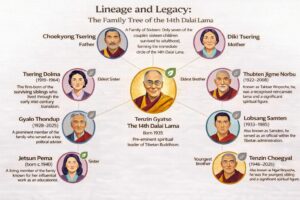
In his personal life, Ngari Rinpoche took lay status and married Rinchen Khando Choegyal, a prominent Tibetan activist who headed the Tibetan Women’s Association, founded the Tibetan Nuns Project, and served as a minister in the Tibetan Cabinet. The couple had two children, Tenzin Choezom and Tenzin Lodoe, and raised a family deeply engaged in the Tibetan cause. He is also survived by his elder sister Jetsun Pema and her family.
The loss has resonated widely across the global Tibetan diaspora. Penpa Tsering, President of the Central Tibetan Administration, expressed “deep sorrow” on X (formerly Twitter), honouring Ngari Rinpoche’s lifelong devotion to the Tibetan cause and extending condolences and prayers to his family. Penpa Tsering said Ngari Rinpoche “remained steadfast in his support of the Tibetan Administration and bore the hardships and aspirations of the Tibetan people as his own,” underscoring the deep respect with which he was held within the exile community.
སྤྱི་ནོར་༸གོང་ས་༸སྐྱབས་མགོན་ཆེན་པོ་མཆོག་གི་སྐུའི་གཅུང་པོ་དམ་པ་མངའ་རིས་རིན་པོ་ཆེ་བསྟན་འཛིན་ཆོས་རྒྱལ་མཆོག་དེ་རིང་སྐུ་གཤེགས་ཚུལ་བསྟན་པ་ལ་མྱ་ངན་གུས་འདུད་དང་།…
— Sikyong Penpa Tsering (@SikyongPTsering) February 17, 2026
The International Campaign for Tibet also issued a statement mourning his passing, highlighting his close personal relationship with the Dalai Lama and his active engagement in educational and cultural work that bridged traditional and modern perspectives.
Ngari Rinpoche’s death comes less than a year after the passing of his elder brother Gyalo Thondup in February 2025, another towering figure in modern Tibetan history and a key interlocutor in Sino-Tibetan relations. Gyalo Thondup’s memoir and political engagements made him a well-known voice in the struggle for Tibet’s rights, and his death marked a significant moment of loss for the Tibetan community.
As tributes continue to pour in from across the Tibetan world and beyond, many remember Ngari Rinpoche as a bridge between tradition and modernity, a dedicated public servant and an unwavering advocate for the preservation of Tibetan identity in exile. His legacy is seen as a testament to a life lived in service of his people’s cultural and political aspirations.
Tenzin Choegyal, Youngest Brother of His Holiness the 14th Dalai Lama and Founding Trustee, Foundation for Universal Responsibility, Ngari Rinpoche (TC to many) passed away in Dharamsala on 17 February 2026, at the age of eighty, ” said a note from the Foundation. “He was, at heart, a gentle and kind man, deeply devoted to his brother and to the people whose cause he made entirely his own. “For us at the Foundation, his presence carried a more intimate meaning. As a Founding Trustee of the Foundation for Universal Responsibility, he belonged to the circle that helped give institutional form to His Holiness’s vision of universal responsibility, an ethic rooted in non-violence, dialogue and the conviction that moral courage must be made practical in the world. His commitment to its purposes was a reflection of values he had lived, not merely endorsed, ” it said.
“He was a hero known for fairness, discipline, straightforwardness, and dedication for Tibet”, said Tenzin Tsundue, Tibetan writer and activist based in Dharamshala. “Unlike his brother His Holiness the Dalai Lama, he was known for standing up to China and even played an important role in India’s Tibetan regiment, the Special Frontier Force. He was known for being a strict disciplinarian”