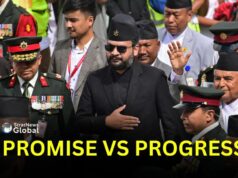
Myanmar’s parliament convened on Monday for the first time since the military coup five years ago, marking one of the final steps in what authorities describe as a return to democratic governance, although the armed forces are expected to retain strong control.
The new legislature follows a phased election dominated by the military-backed Union Solidarity and Development Party (USDP), held amid low voter turnout and the absence of a strong opposition.
USDP chairman and retired brigadier-general Khin Yi was elected speaker of the lower house on Monday. Analysts say the position could play an important role in advancing the military’s political agenda.
Country Still Facing Conflict
Myanmar has been gripped by conflict and a humanitarian crisis since the military seized power in 2021, overthrowing the elected government of Nobel laureate Aung San Suu Kyi.
The coup took place just as Suu Kyi’s party was preparing to begin a second five-year term after winning a landslide election.
Since then, fighting between the military and resistance groups has spread across large parts of the country, displacing millions of people.
Military Dominates Legislature
The USDP, originally created by the military in 2010, won 81% of the contested seats in the recent election.
Under Myanmar’s constitution, the armed forces are automatically allocated 25% of parliamentary seats, ensuring a significant military presence in the legislature.
This structure effectively gives the military the ability to shape government leadership and policy decisions.
Junta chief and coup leader Min Aung Hlaing is widely expected to become president under the new political arrangement.
Criticism From Western Governments
Many Western countries have rejected the election as illegitimate, arguing it was designed to strengthen military rule and provide political legitimacy to the generals after years of international isolation and sanctions.
Analysts say the parliament is unlikely to challenge the military leadership.
“This level of control makes it clear that one can expect nothing substantial from this body,” said independent analyst Htin Kyaw Aye.
New Power Structure Planned
Authorities also plan to create a new five-member panel called the Union Consultative Council, which some analysts describe as a “superbody” that could allow Min Aung Hlaing to maintain influence over both military and civilian administration.
The junta says a new government will be formed in April and has suggested that international engagement and foreign investment could increase afterwards.
State media said the new parliament should act in the national interest and avoid political bias.
(with inputs from Reuters)