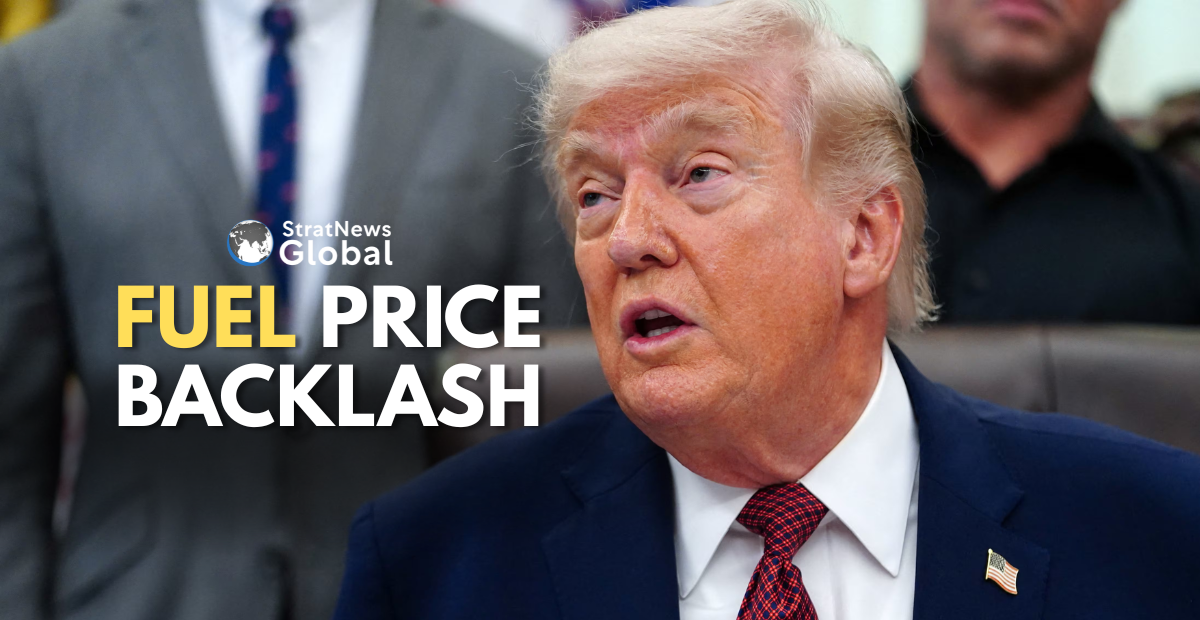
A clear majority of Americans believe Donald Trump is responsible for rising fuel prices, according to a new Reuters/Ipsos poll, in a development that could weigh on Republicans ahead of November’s congressional midterm elections.
The survey found that 77% of registered voters said Trump bears at least some responsibility for the surge in petrol prices, which followed his decision to launch a war on Iran alongside U.S. ally Israel.
Blame Cuts Across Political Lines
The view was shared across party lines, with 55% of Republicans, 82% of independents and 95% of Democrats attributing the rise in fuel costs to the president.
Rising prices appear to be shaping voter behaviour, with 58% of respondents saying they would be less likely to support candidates in the November 3 midterms who back Trump’s handling of the Iran conflict.
War Impact Drives Price Surge
The U.S. and Israel launched strikes on Iran in February, triggering retaliation from Tehran that disrupted key oil infrastructure and shut down roughly a fifth of global oil trade.
As a result, U.S. petrol prices have climbed to around $4 a gallon, roughly a dollar higher than before the conflict began, adding pressure on household budgets.
Republicans Face Growing Pressure
The surge in fuel costs is emerging as a political challenge for Republicans, who face an uphill battle to retain control of the House of Representatives and risk losing the Senate in the midterms.
“Right now, it’s bad. People are upset,” said Sarah Chamberlain, president of the Republican Main Street Partnership, noting concerns within the party about the electoral impact of rising prices.
Economic Concerns Undermine Messaging
Despite Trump’s claims that the U.S. economy is “booming”, the poll found 70% of respondents disagreed, while 82% said inflation remains a major concern.
The data also showed a sharp erosion in the Republican Party’s traditional advantage on economic issues. Just 38% of voters now prefer the Republican approach to the economy, compared to 37% for Democrats a narrow margin down from a 14-point lead earlier in Trump’s second term.
(with inputs from Reuters)