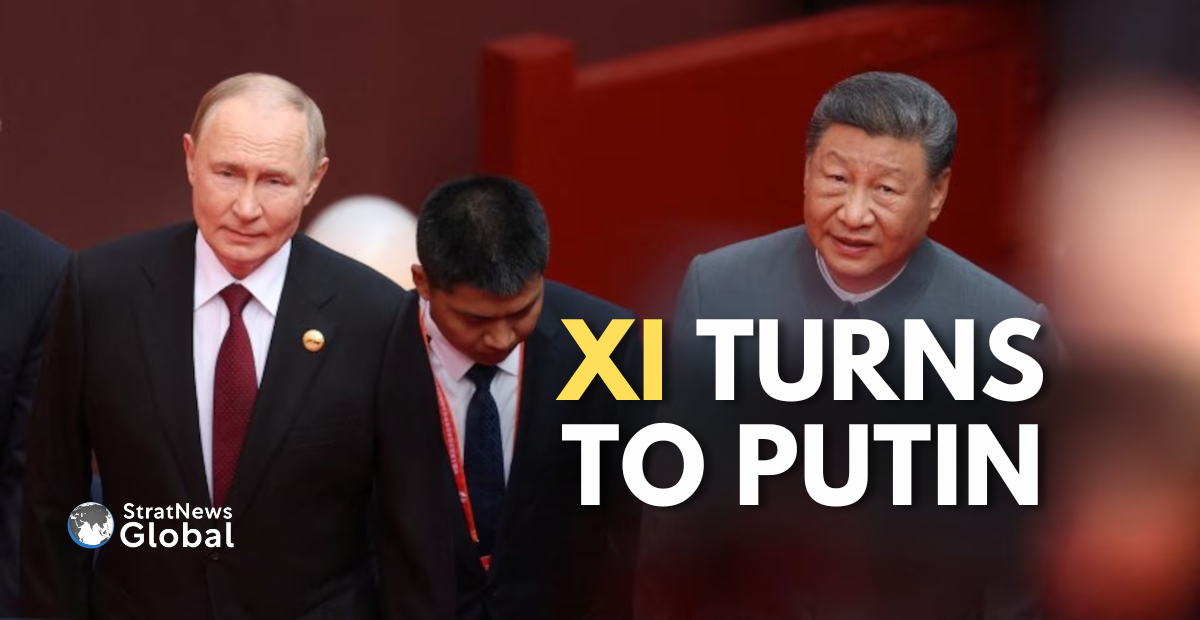
Chinese President Xi Jinping is preparing to host Russian President Vladimir Putin this week, less than a week after U.S. President Donald Trump concluded his closely watched visit to Beijing.
The timing of the visit is significant. By welcoming two rival world leaders within days of each other, Beijing appears eager to project itself as a stable and predictable global power at a time when international politics is increasingly shaped by trade tensions, wars, energy insecurity and strategic competition.
Putin’s upcoming trip, his 25th visit to China, is being presented by both Moscow and Beijing as further proof of their deepening “all-weather” partnership.
China And Russia Showcase Strategic Alignment
Russia and China have steadily strengthened ties over the past decade, particularly after Moscow’s relations with the West deteriorated following the Ukraine war.
The two countries signed a “no limits” strategic partnership in early 2022, shortly before Russia launched its invasion of Ukraine.
Ahead of the visit, Putin said Russia and China were ready to support each other on issues involving sovereignty, territorial integrity and national unity.
Relations between the two countries, he said, had reached an “unprecedented level” of trust and cooperation.
Analysts say the optics of the Xi-Putin summit are aimed at showing that efforts by Washington to divide Beijing and Moscow have failed.
“The Xi-Putin summit will telegraph to the world that the China-Russia strategic partnership remains the cornerstone of both countries’ foreign policies,” said Ian Storey of the ISEAS-Yusof Ishak Institute in Singapore.
Beijing’s Stability Messaging
The Putin visit comes immediately after Trump’s Beijing summit, which generated strong symbolism but relatively few major commercial breakthroughs.
During his talks with Trump, Xi repeatedly stressed the need for “strategic stability” in China-U.S. relations, positioning Beijing as a responsible global actor seeking predictability rather than confrontation.
By hosting world leaders from both Washington and Moscow in quick succession, China appears to be reinforcing a broader diplomatic message: Beijing wants to be seen as a centre of stability while global crises continue to intensify.
Chinese officials have also tried to reassure foreign businesses and investors that China remains economically reliable despite growing geopolitical uncertainty.
The White House itself said after Trump’s visit that both sides had reached understandings aimed at enhancing “stability” for global businesses and consumers.
Ukraine And Western Pressure
Western governments have continued urging China to pressure Russia into ending the war in Ukraine, though analysts believe Beijing is unlikely to significantly alter its position.
China has consistently presented itself as neutral in the conflict while maintaining strong political and economic ties with Moscow.
“It’s unrealistic to expect Xi to put pressure on Putin to end the war in Ukraine,” Storey said.
According to analysts, Beijing views Russia as an important strategic counterweight to the United States and has little interest in weakening Putin politically.
China continues to provide Russia with diplomatic backing at the United Nations and has deepened trade cooperation, though Beijing insists it has not supplied lethal weapons to either side in the conflict.
Energy Talks Expected To Dominate
Energy cooperation is expected to be one of the key issues during the summit.
Russia and China are still negotiating details of the proposed Power of Siberia 2 gas pipeline, a major project that would significantly expand Russian gas exports to China.
Although both sides agreed last year to move forward with the pipeline in principle, pricing negotiations remain unresolved.
The worsening global energy crisis and instability linked to the Iran conflict may strengthen Russia’s argument that China should secure more long-term energy supplies through Russian pipelines.
China already remains the largest buyer of Russian oil, including pipeline deliveries and seaborne shipments, with many transactions increasingly settled in Chinese yuan instead of U.S. dollars.
Russia also agreed in 2025 to increase oil supplies to China through Kazakhstan.
Putin recently said Moscow and Beijing had reached a “high degree of consensus” on taking “a very substantial step forward” in oil and gas cooperation.
Beijing’s Balancing Act
The rapid succession of the Trump and Putin visits highlights China’s increasingly complex diplomatic balancing act.
While Beijing continues to compete strategically with Washington, it also wants to avoid uncontrolled confrontation that could damage trade and economic growth.
At the same time, China’s close partnership with Russia allows Beijing to signal that it will not reshape its foreign policy under Western pressure.
Together, the two visits reflect China’s broader attempt to position itself as a central power capable of engaging rivals, managing crises and shaping the global order on its own terms.
(with inputs from Reuters)