
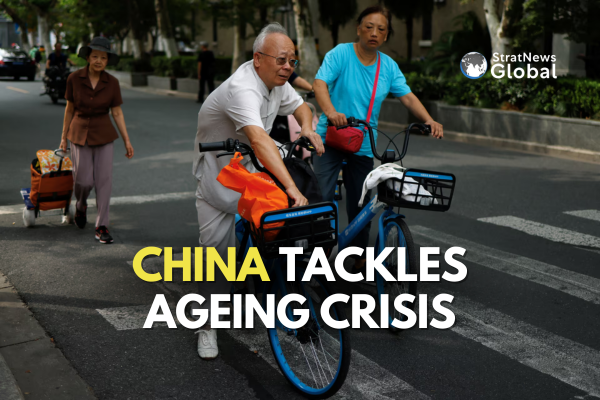
China has announced the rollout of a long-term care insurance system, a move aimed at easing the burden on families caring for a rapidly growing elderly population and strengthening the country’s social safety net.
Support for Elderly and Disabled
The plan, released by China’s State Council on Wednesday, pledges to provide services or financial support for basic nursing and medical care for people with sustained disabilities lasting six months or more.
State news agency Xinhua said the plan is an important component of China’s social security system and key to “actively addressing population aging.”
Policy Push After National Congress
The announcement comes around three weeks after China’s National People’s Congress, where authorities said they would refine supportive policies for seniors, including pension financing, wellness and care.
Aging Population Pressures Grow
By 2035, the number of people aged over 60 in China is expected to reach 400 million roughly equal to the combined populations of the United States and Italy.
This means hundreds of millions of people are set to leave the workforce at a time when pension budgets are already under strain.
Experts have also warned of further population decline, with China’s population falling for a fourth consecutive year in 2025 as the birth rate dropped to a record low.
Nationwide System Within Three Years
The long-term care insurance framework sets a three-year target to build “a unified system covering the entire population.”
It follows pilot programmes that began in 2016.
Officials said the programme addresses a fundamental need for disabled individuals and significantly improves quality of life.
“Bathing, haircuts, eating, dressing changes these are no longer distant hopes for those confined to a sickbed, but rather bedside, accessible, attentive care,” said Wang Wenjun, deputy head of the National Healthcare Security Administration, during a press conference on Thursday.
Funding and Rural-Urban Gap
Funding will come from employers, individuals and government subsidies, with a total contribution rate of roughly 0.3%.
Residents in both rural and urban areas will draw from the same fund pool and receive the same benefits, Wang said.
China still faces wide gaps in care and services between rural and urban areas, and authorities have pledged to “markedly narrow” the healthcare divide by 2035.
(with inputs from Reuters)