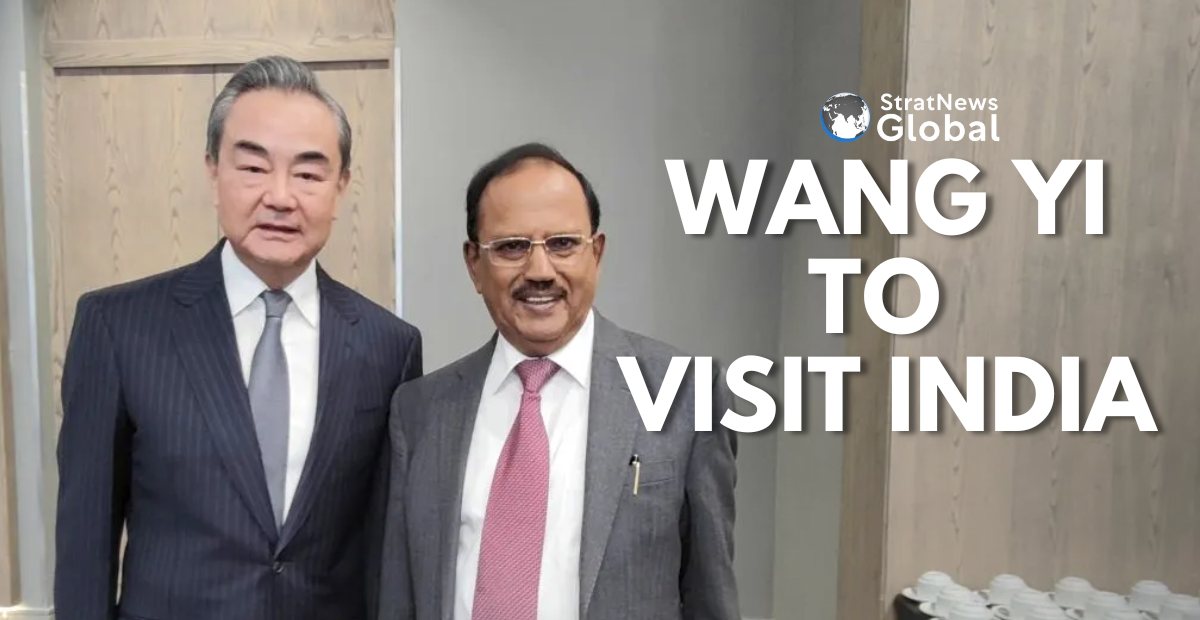
China has confirmed that Foreign Minister Wang Yi will visit India later this month to attend the 16th Meeting of BRICS National Security Advisors (NSAs) and High Representatives on National Security.
The meeting is scheduled to take place from June 22 to 23 and will be hosted by India as part of its BRICS chairmanship.
Invitation from NSA Ajit Doval
According to China’s Foreign Ministry, Wang Yi will attend the gathering at the invitation of India’s National Security Advisor, Ajit Doval.
A spokesperson for the ministry stated that Wang, who is also a member of the Political Bureau of the Communist Party of China Central Committee and Director of the Office of the Central Commission for Foreign Affairs, will participate in discussions with security representatives from BRICS member states.
India’s BRICS Chairmanship
India is serving as BRICS chair in 2026 under the theme “Building for Resilience, Innovation, Cooperation and Sustainability.”
The theme reflects the people-centric and humanity-first approach outlined by Prime Minister Narendra Modi during the 17th BRICS Summit held in Rio de Janeiro in 2025.
The upcoming security meeting is expected to focus on regional and international security issues, cooperation among BRICS members and broader discussions on global governance.
China Highlights BRICS Cooperation
Ahead of the visit, China’s Ambassador to India, Xu Feihong, welcomed India’s role in hosting recent BRICS meetings.
Following the BRICS Foreign Ministers’ Meeting in May, Xu said the chair’s statement and outcome document reflected broad consensus among member countries on international and regional issues, the future development of BRICS and reforms to global governance and the multilateral system.
Continued China-India Engagement
Wang Yi’s visit represents another significant diplomatic engagement between Beijing and New Delhi within the BRICS framework.
The meeting comes as BRICS continues to expand its role as a platform for cooperation among major emerging economies, with member states increasingly coordinating on issues ranging from security and development to international governance reform.